|
Canadian Yukon Ranges
The Yukon Ranges are a portion of the Rocky Mountain range comprising the mountains in the southeastern area of the U.S. state of Alaska and most of the Rocky Mountains in the Canadian Yukon Territory. Named after the Yukon River, this range has area of 140,820 square miles (364,710 square kilometres).
Yukon Ranges Information:
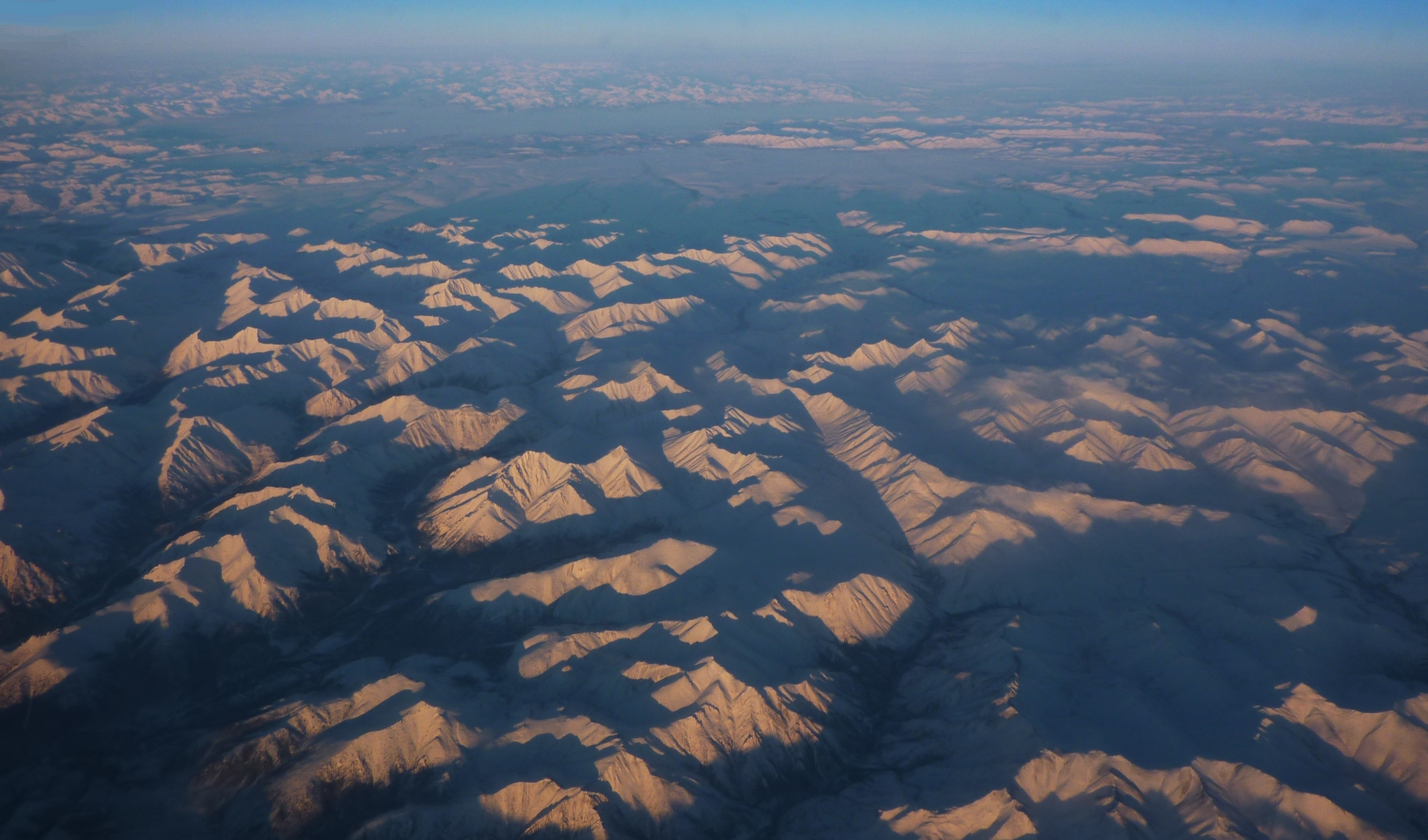
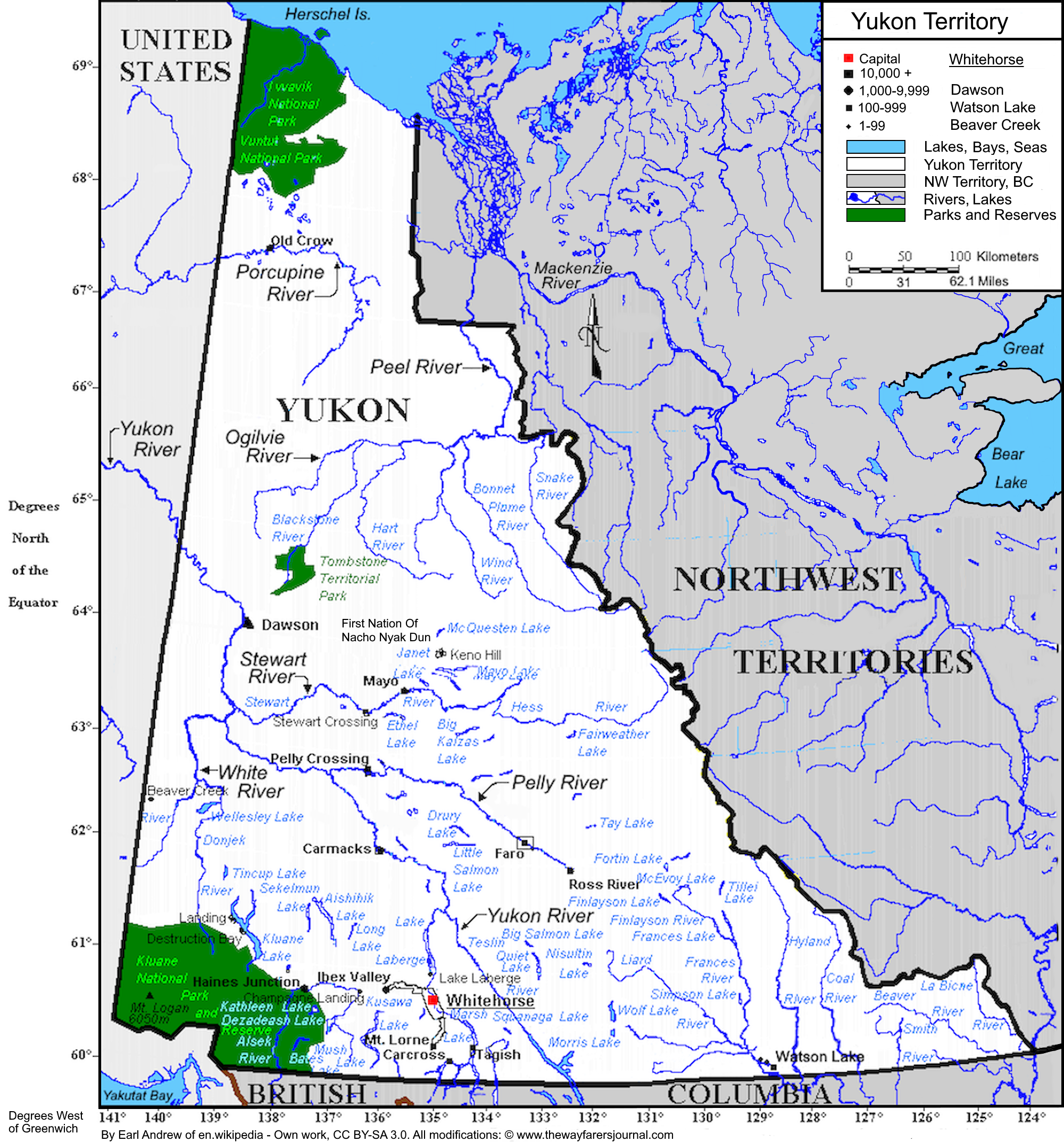
The Yukon Ranges is in the northwestern corner of Canada and is bordered by Alaska, British Columbial and the Northwest Territories. This region of Canada is sparsely populated and abounds with abundant natural scenery, snow melt lakes and perpetually white-topped mountains, many of which are the highest summits in Canada. The Yukon Ranges ecoregion enters Yukon Territory from Alaska near the Beaufort Sea and then traverses across the Yukon Territory along a path averaging one hundred miles wide, in a southeasterly direction to the British Columbia border and then exits the Yukon territory into northcentral British Columbia.
The climate in the Yukon territory is Arctic in the region north of Old Crow, subarctic in the region between Old Crow and Whitehorse, and humid continental from Whitehorse southward. Most all of the Yukon Territory is Boreal forest (also know as Taiga or snow forest) which is a biome characterized by coniferous forests consisting mostly of pines, spruces and larches.
Description:
Location:
Coordinates:
64.71543523661333, -139.19632041349755
Elevation:
16,000 - 19,550 feet
Geographical Region:
Rocky Mountains
The Ancients
First Wayƒarer
First Migration
(The Algonquian Cultures)
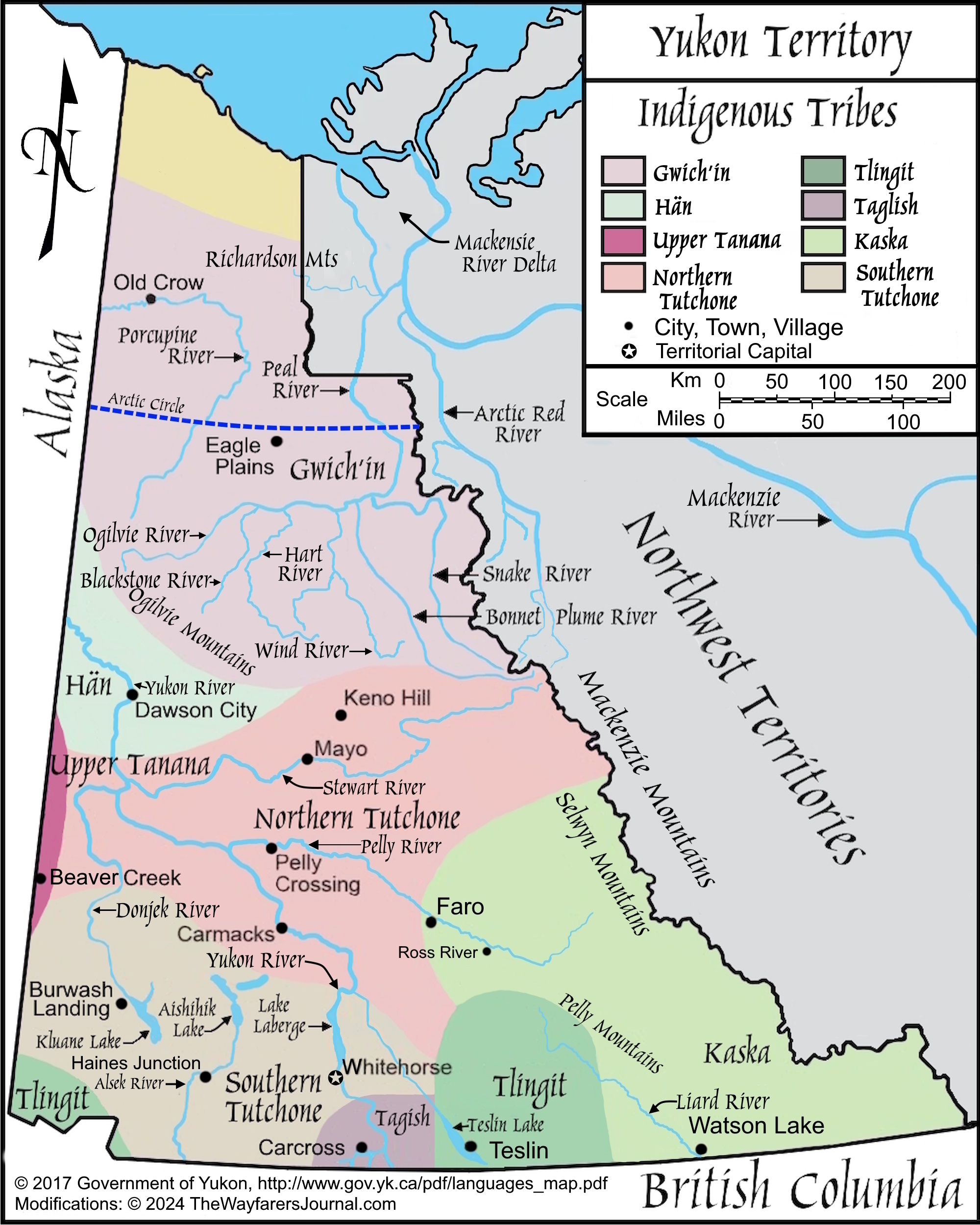
Upon their arrival onto the North American continent the Algonquin indigenous tribes begin immediately to walk separate pathways and disperse into the different regions of the continent. One of the first tribes to separate from the remaining nation of people, all sons of Joktan, was the Tribe of Shepleh, who when arriving at what is now called the Yukon River in Alaska, decided to travel downstream while the remaining tribes of the nation left eastward upstream.
When the tribe of Shepleh arrived at the
Yukon Delta, they departed from the Yukon River and continue southward, climbing up and over the
Alaska Coastal Range and upon arriving at the range pass, see the expansive coastal area below. They then continue down from the pass towards the coast of Alaska, Yukon and there settle.
Shepleh had three sons who became the
Aleut people (Unangam Tunuu Language). These Aleut indigenous people settled primarily in Alaska but some migrated into the area which is now known as the Yukon.
Third Migration
(The Athabascan Cultures)
Most of the indigenous people of the Yukon Territory are of the
Athabascan cultures. Upon their arrival on the North American, some of the tribe of the Athabascan settled in Alaska. Other moved further into the interior of the continent.
The Earth
Saint Elias Mountain Range
The Saint Elias Mountains are a subgroup of the Pacific Coast Ranges
that are found in southeastern Alaska which range spans across the US/CAN
border in the extreme southwestern area of the Yukon Territory.
Alaska Range
The Alaska Range is a relatively narrow 600 mile-long mountain range in the
south central area of Alaska which traverses from Lake Clark at its southwest
end in an arc first northward and gradually turning eastward into Canada to
its westernmost end in the Yukon Territory south of the town of Beaver Creek,
Yukon and near the source of the White River.
Ogilvie Mountain Range (64.667778, -138.478056)
Nahoni Range
Mount Frank Rae
7,749 feet, ()
Tombstone Mountain
Tombstone Territorial Park
Mount Monolith
Mount Logan
19,551 feet (60.567222, -140.402778)
Yukon, Highest point in Canada, Second highest in NAM, Non-volcanic
Mount Saint Elias
18,009 feet (60.292222, -140.931389)
Mount Luciania
17,146 feet (61.0215, -140.4661)
King Peak
16,976 (60.5833, -140.6549)
Mount Steele
16,644 (61.0929, -140.3118)
Mount Wood
15,945 (61.2326, -140.5123)
Mount Vancouver
15,787 feet (60.3589, -139.698)
Mount Slaggard
15,558 feet (61.1727, -140.5851)
Mount Hubbard
14,951 feet (60.3194, -139.0726)
Mount Walsh
14,783 feet (61.0037, -140.0171)
Mount Alverstone
14,500 feet (60.3518, -139.0749)
McArther Peak
14,370 feet (60.6069, -140.2144)
Mount Augusta
14,070 feet (60.3074, -140.4584)
Mount Strickland
13,976 feet (61.2365, -140.6755)
Avalanche Peak
13,871 feet (61.2401, -140.7597)
Mount Cook
13,871 feet (60.1816, -139.9811)
Mount Craig
13,320 feet (61.2636, -140.88)
Spring Glacier Peak
13,045 feet (61.0408, -139.9328)
Mount Harrison
12,910 feet (61.0781, -140.1019)
Mount Queen Mary
12,887 feet (60.6286, -139.7247)
Centennial Peak
12,533 feet (60.947, -140.7217)
Mount Malaspina
12,388 feet (60.3182, -140.5719)
Mount King George
12,272 feet (60.5314, -139.7841)
Mount Johansen
12,270 feet (60.6832, -140.6823)
Keele Peak
9,685 feet (63.4314, -130.3243)
Mount Cairnes
9,252 feet (60.8683, -138.2764)
Mount Macdonald
9,055 feet (64.7256, -132.7781)
Alsek Peak
8,990 feet (60.0325, -137.5915)
Buckwell Peak
8,927 feet (59.4188, -136.7653)
Other Ranges in the Yukon Territory
Alaska Range, Bennett Range, Big Salmon Range, Brooks Range,
Cassiar Mountains, Centennial Range, Coast Mountains, Dezadeash Range,
Glenlyon Range, Interior Mountains, Mackenzie Mountains, Nahoni Range,
Nutzotin Mountains, Ogilvie Mountains, Pelly Mountains,
Richardson Mountains, Saint Cyr Range, Selwyn Mountains, Yukon Ranges.
The Modern Man
The Steps
Steps Afoot
Yukon Footpath Journey Index
Steps Afield
Yukon Roadpath Journey Index
The Appendixes
|