|
Coastal Ranges
The term Coastal Range is used in the US to refer only to the ranges south of the Strait of Juan de Fuca in Washington to the California-Mexico border, and to those west of Puget Sound, the Willamette Valley, and those west of the California Central Valley including the Sacramento and San Joaquin valleys. However, in a continental sense, the term Coastal Range also includes those ranges along the Canadian and Mexican coasts, as well those mountains along the coast of Alaska.
The Washington coastal range ecoregion includes: (1) Coastal Lowlands; (2) Coastal Uplands; (3) Low Olympics; (4)Volcanics; (5) Outwash; (6) Willapa Hills; and the (7) High Olympics sub-ecoregiona.
High Olympic Range
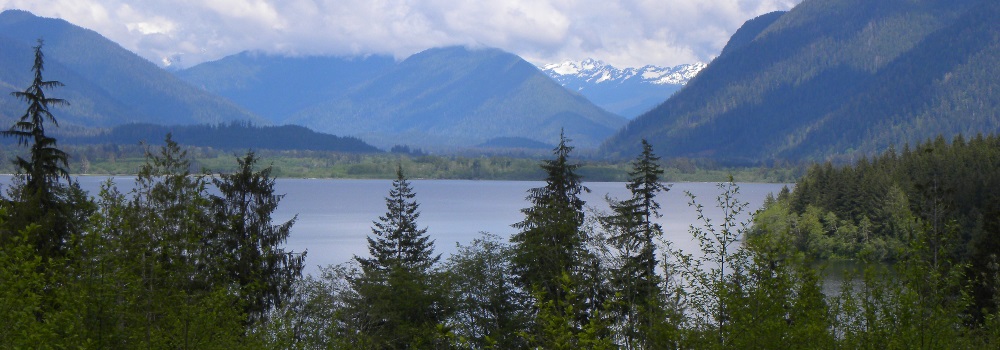
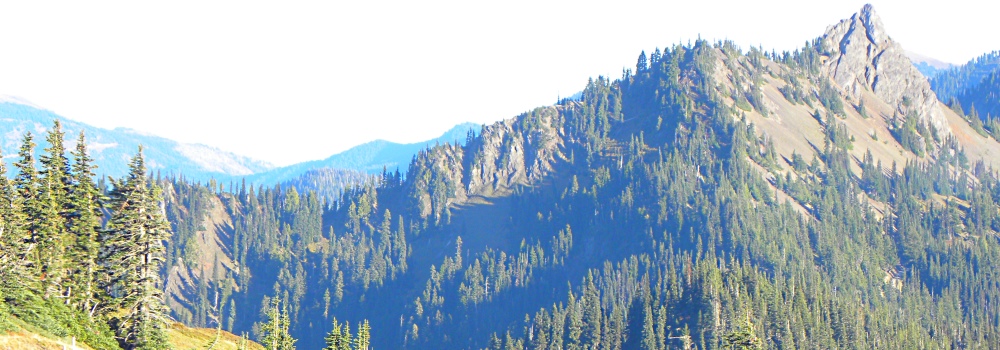
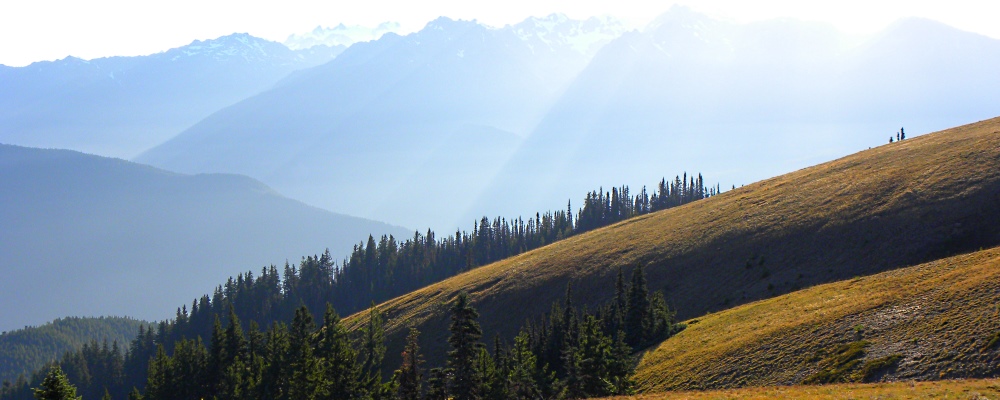
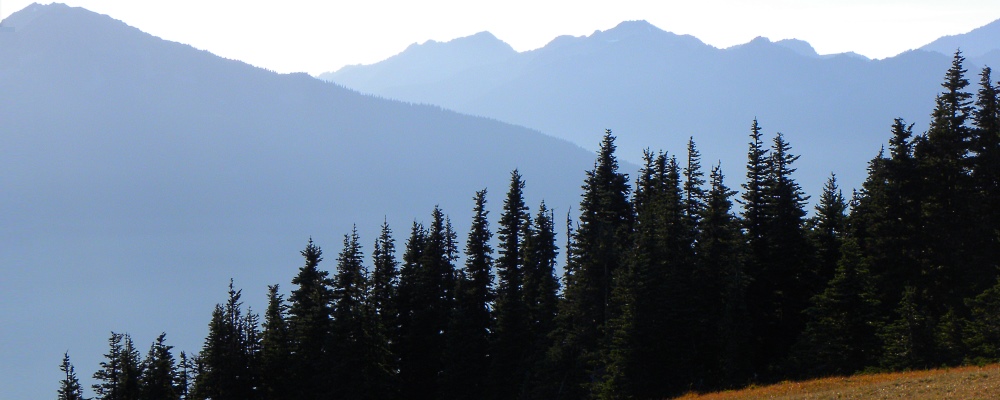
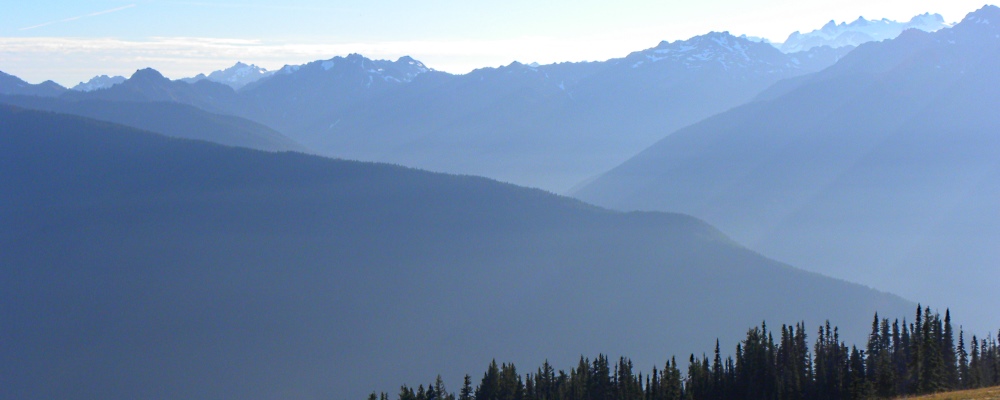
The Olympic Range are a mountain range within the Olympic peninsula of the Pacific Northwest part of the state of Washington and part of the Pacific Coastal Region in Washington.
These mountains are not especially high in elevation with Mount Olympus rising to the high point of the range at 7,965 feet. The eastern slopes of this range rise out of Puget Sound from sea level but the western slopes are separated from the Pacific Ocean by a low-lying 12 to 22 mile wide coastal plain. These western slopes of the Olympic Mountain are typically the wettest location in the 48 contiguous states, averaging from 150 to 200 inches of rain a year.
Most all of the mountains and much of the Pacific coastal plain are protected within the boundaries of the Olympic National Park and adjoining segments of the Olympic National Forest.
Willapa Hills
The Willapa Hills is a geologic, physiographic, and geographic region in southwest Washington, which is bounded by the Pacific Ocean to the west, the Columbia River to the south, the Olympic Mountains to the north, and the Cascade Range to the east, except for in the northeast where the Salish Basin is to the east of the Willapa Hills.
Included within the region are the Black Hills, the Doty Hills, and a number of broad river valleys, some of which open up into broad estuaries on the Pacific such as Grays Harbor and Willapa Bay. The Willapa Hills are one of the Pacific Coast Ranges, which continue north as the Olympic Mountains and south, across the Columbia River, as the Oregon Coast Range.
The highest point is 3,087-foot (941 m) Boistfort Peak. The Willapa Hills are the lowest uplands in the entire Pacific Coast Range system. Almost all of the land is privately held and has been repeatedly logged. Only a few long corners remain with virgin forest. Alders less than twenty years old are typically harvested for pulp mills.
The Willapa Hills receive abundant rainfall and a number of rivers originate in the region, including the Chehalis River, Willapa River, North River, Bone River, Niawiakum River, Palix River, Bear River, Naselle River, Grays River, Elochoman River, and more.
Sol Duc River
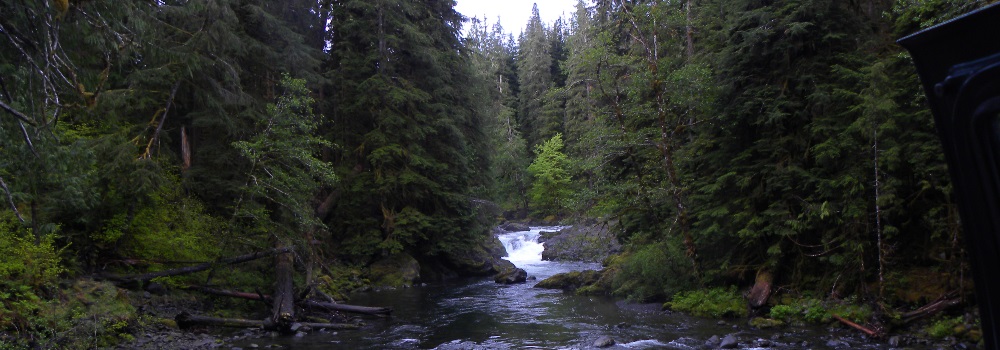
The Sol Duc, (from the Quileute language meaning Sparkling Waters) river rises near Haigs Lake high in the Olympic Mountains (47.927413, -123.701700). It then flows mostly northwest, cascading frequently and forms a river valley in the mountains. After crossing over the Sol Duc Falls, it continues cascading to the Olympic Highway (US 101) crosses it briefly and then river continues westward in the valley, along with the highway, where they cross once again by Lake Pleasant.
At this point, the river leaves the mountains turns to the southwest and crosses the coastal plain, crosses the highway one more time and after traveling some 78 miles, it joins with the Bogachiel River to become the Quillayute river. The Quillayute River travels west for four mile and merges with the Dickey River and flows another mile and a half to reach its mouth at the Pacific ocean at La Push, Washington.
Mount Olympus (7,969 feet),
Mount Deception (7,788 feet),
Mount Constance (7,756 feet),
Mount Anderson (7,321 feet),
Mount Carie (6,995 feet) and others.
Willapa Hills
Boistfort Peak, 3,087 feet
Dotty Hills
Olympic National Park
Sol Duc Falls, Sol Duc River, (47.951399, -123.819747)
Sol Duc Falls Trailhead, (47.954909, -123.834956)
Hot Springs
Olympic Hot Springs (47.976231, -123.688252)
Olympic Hot Springs Trailhead (47.986423, -123.652494)
Lighthouses:
Cape Disappointment Light, Iwaco 1856 (46.2756, -124.0518) Auto: 1973
Cape Flattery Light, Tatoosh Island 1857 (48.3917, -124.7366) Auto: 1977
Destruction Island Light, Destruction Is. 1892 (47.6745, -124.4869) Auto: 1968
Grays Harbor Light, Westport 1898 (46.8882, -124.1169) Auto: 1960
North Head Light, Iwaco 1898 (46.2989, -124.078) Auto: 1961
Ediz Hook Light, Port Angeles, Replaced 1946, 48.1401, -123.4023
Willapa Bay Light, (46.71, 124.08) 1858 Demolished 1938
Pathway Journeys:
Footpath Journeys
Roadpath Journeys
|