
The Wayƒarers Journal ©

The Journal

The Wayƒarers

The Selƒ

The Journey

The Burden

The Mountain

   The Ancients
   The Earth

     Geochronology
     Continents

       Africa
       Antarctica
       Asia
       Europe
       North America

         Geographical

           Arctic Mtns
           Greenland Isl
           CAN Lowlands
           CAN Shield
           Int. Lowlands
           Rocky Mtns
           Basin-Range
           Pacific Coast
           Great Plains
           Appalachian
           Int. Highland
           Coastal Plains
           N. Sierra Mad.
           Volcanic Mtns
           S. Sierra Mad.
           S. M. de Chipas
           S. Pacific Cst
           Island Lands
           Continent Shelf

         Geological

       Oceania
       South America

     Oceans

   The Life
   The Modern Man
   The Nonpareils
   The Steps
   The Way

The Appendix

The Wayƒarer
The Mountain
Go to bottom of this page
THE GEOGRAPHICAL REGIONS
The Great Plains Region, New Mexico

The Western High Plains Go Down Go Back
Higher and drier than the Central Great Plains (4F) to the east, and in contrast to the irregular, mostly grassland or grazing land of the Northwestern Great Plains (4C) to the north, much of the Western High Plains is characterized by smooth to slightly irregular plains having a high percentage of cropland.
Buffalograss (buchleo dactyloides) is the natural vegetation in this region as compared to mostly wheatgrass or needlegrass to the north, Trans-Pecos shrub savanna to the south, and taller grasses to the east.
The northern boundary of this ecological region is also the approximate northern limit of winter wheat and sorghum and the southern limit of spring wheat.

Ancient Steps:

Campgrounds:

Land forms:

Parks:

Sites:
Fort Union National Monument

Pathway Journeys:
Footpath Journeys

Roadpath Journeys
Santa Fe Trail

The 2021 Journey Western High Plains Go Down Go Up
(Day 167 TN) 45°F. 6:00 am, sunny
Journey On, Day 71
Valley of Fires Recreation Area
Elevation: 5371 feet
At two this afternoon, I drive out of Roswell, travel east on US 380 and continue over the flat grass lands east of Roswell, which are commonly called the Great Plains, but more specifically, the Western High Plains.
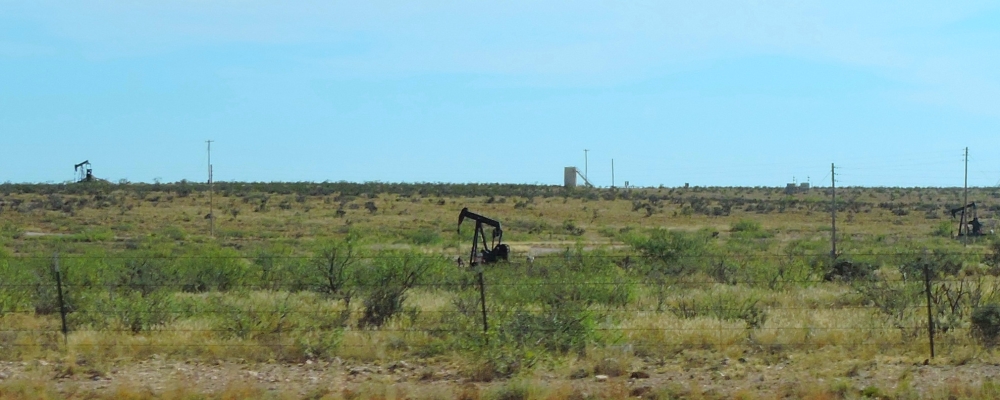
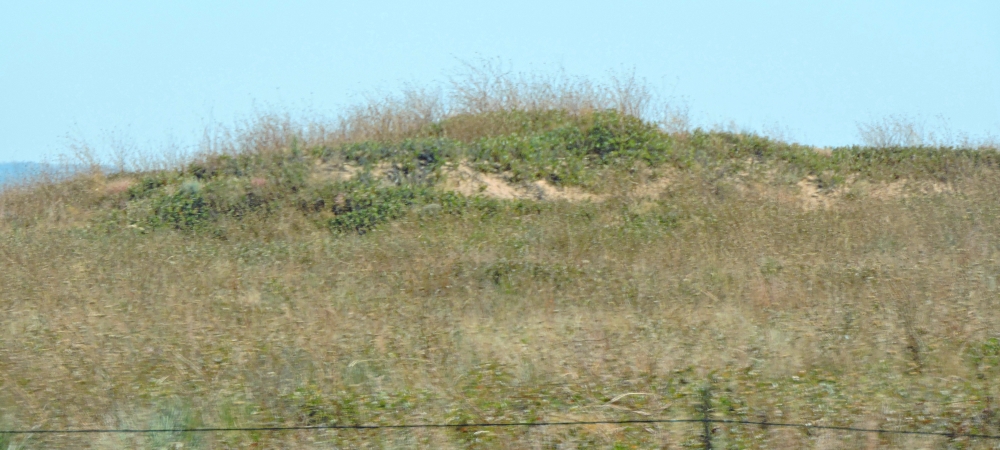
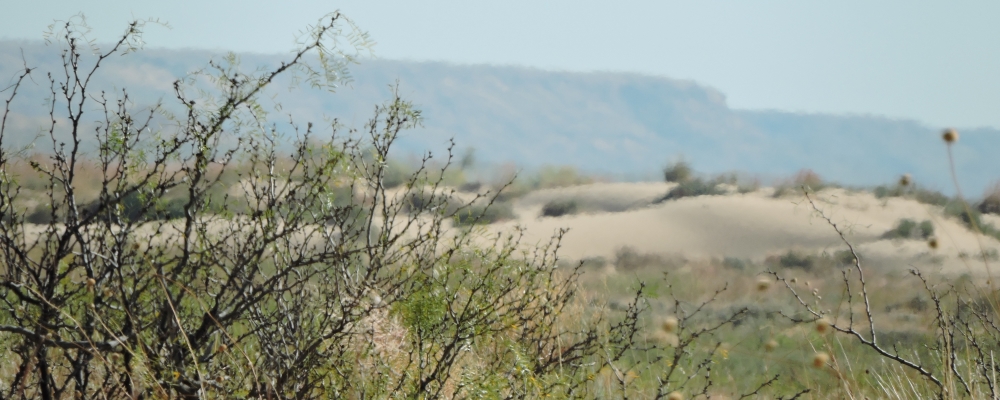
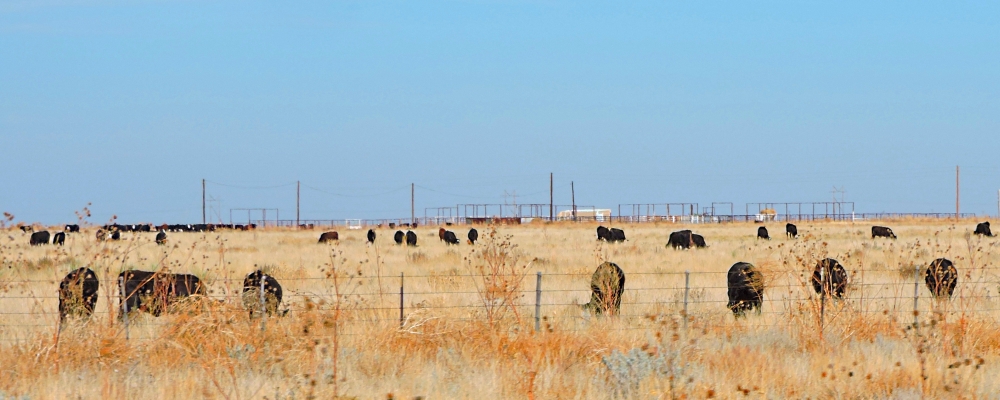
What I see in this region is oil well pumps and cattle ranches and sometimes the two over lap, nothing more just oil and beef. Well, there then began to appear some sand dunes and when I stopped at a road side map, found out that this was called the Mescalero Sands.
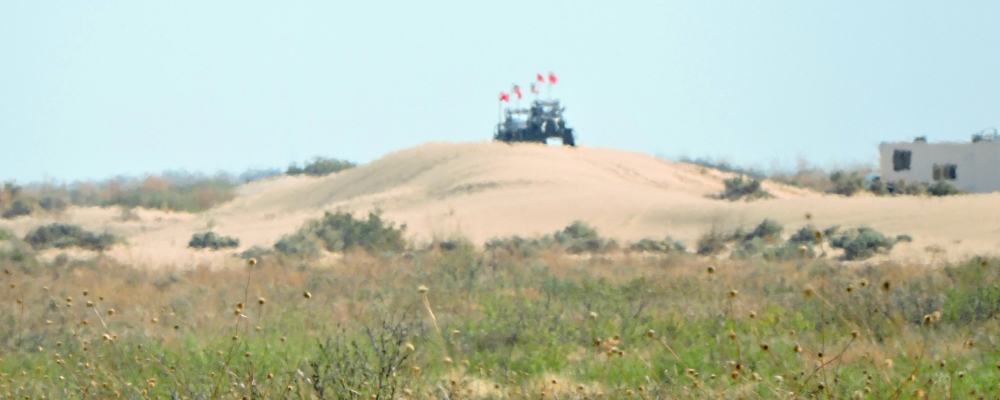
At first, there are scattered sand dunes but then, about 36 miles east of Roswell, I come upon a road with a sign indicating that these dunes are in fact a BLM Recreational Area and that there is free camping allowed, however, there are no improvements.
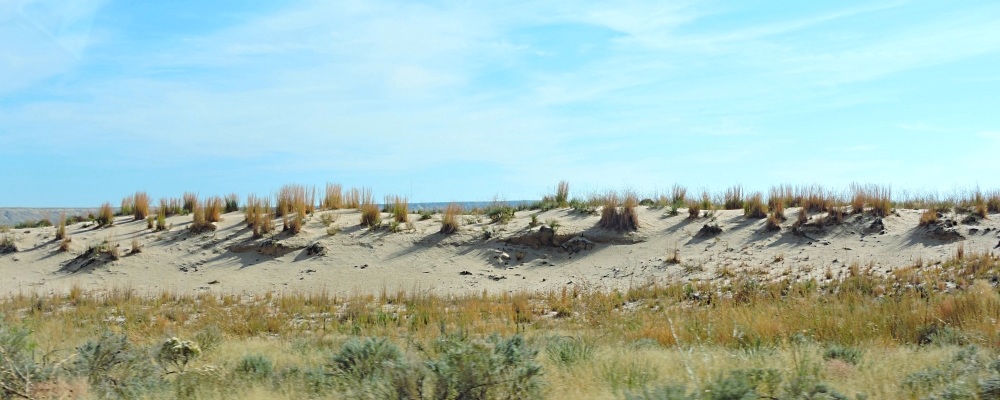
Too, the escarpment in the background is the Llano Estacado, which is Spanish and means a fortified plain because of the fortress like appearance of the escarpment.
The Great Plains Region
The Western High Plains Ecoregion
(m2cont-nam-geog-09-nm-9d-2021-1031.1343) Oil Well Pumps on the NM Western High Plains
The Great Plains Region
The Western High Plains Ecoregion The Great Plains Region
The Western High Plains Ecoregion
(m2cont-nam-geog-09-nm-9d-2021-1031.1401) The Mescalaro Sands Recreation Area
The Great Plains Region
The Western High Plains Ecoregion The Great Plains Region
The Western High Plains Ecoregion
(m2cont-nam-geog-09-nm-9d-2021-1031.1405) Mescalaro Sands with Llano Estacado
The Great Plains Region
The Western High Plains Ecoregion
(m2cont-nam-geog-09-nm-9d-2021-1031.1418) Western High Plains Cattle Ranches

To go back to the Gallery Index, click on down arrow. Go Back Go to previous section
on this page

Thank you for visiting The Wayƒarers Journal.

See Ya above the Treeline!

This Passage Last Updated: 26 March 2024


To continue to the next Episode Level page, Click here go to top
 
The Wayƒarers Journal © ::: Come Join the Journey ™
by Thom Buras
Come Join the Journey ™