|
Order: Pelecaniformes, Family: Pelecanidae
Genus: Pelecanus, Species: Occidentalis, L 48 inches
Range
Brown Pelicans are seen year round in the
Coastal Plains region, primarily along the coast from south Texas across the Gulf and up the East Coast as far as north as Maryland. Some can also be seen on the south California coast.
These pelicans were decimated in the 1960s from pesticides but have now come back in numerous numbers along the East Coast and California. However, the Gulf Coast numbers are not as progressive.
Habitat
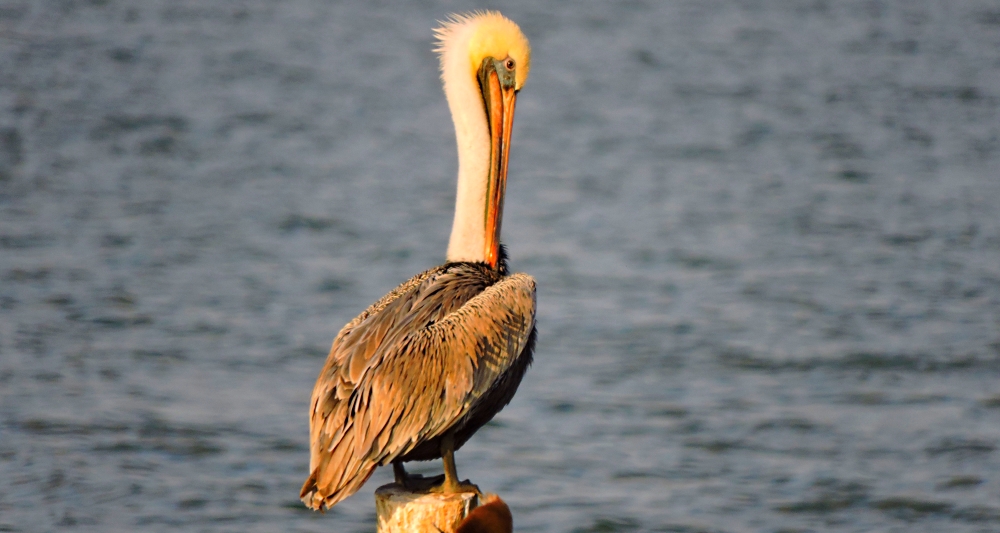
The brown pelican is a large water bird that frequent the coast bays, wetlands, and seen in harbors standing on a pier post. Too, these pelican are often seen flying in long lines, flapping and gliding low over water.
Description
The brown pelican is a stocky bird with a very large bill and has a gray-brown body. During the winter, the head is golden with a white neck. During the summer the head fades to white and the neck is brown with the lower hind neck turning a chocolate brown.
The immature brown pelican has a dark head and during the first year, has a brown body with a white belly. During the second year, the body becomes grayer and the belly darkens somewhat. Immature reach adult plumage by third year.
Pelicans, like frigatebirds have an appearance that is so distinctive that they can be recognized even from great distances. Brown pelicans make dramatic plunge dives into the water using its bill to scoop up fish. Another habit common to brown pelicans is to frequent fishing piers looking for handouts.
The brown pelicans were decimated in the 1960s by pesticides but now are becoming abundant on the East Coast, southern California and parts of the Gulf Coast. These birds are often seen flying in long lines and gliding low over water.
|