|
Order: Passeiformes, Family: Laniidae
Genus: Lanius, Species: ludovicianus, 9 L inches
Range
The loggerhead shrike is found year round in the southern states, including central Virginia, central North and South Carolina; western Tennessee, western Kentucky; all of Georgia, Florida, Alabama, Mississippi, Louisiana, Texas, Arkansas, Oklahoma; the south of and most of Missouri, Kansas, New Mexico, Arizona; most of California and Oregon
Also, during the summer season, the loggerhead strike is found in the rest of the states, except for New England, New York, Pennsylvania, Maryland, West Virginia; nor any of the eastern coastal areas; nor eastern Tennessee, Kentucky, Ohio; or western Virginia; nor western Montana; nor northern Idaho or Washington.
The loggerhead shrike also travels during summer dinto southern Alberta, Manitoba and Saskatchewan.
Habitat
This shrike has been declining, even becoming scarce. It can be seen in open areas, often perched atop a leafless tree or other open perch. Shrikes tend to be quite wary of people. The shrike is know by storing prey by impaling it on thorns and have earned the nickname, butcher-birds.
Description
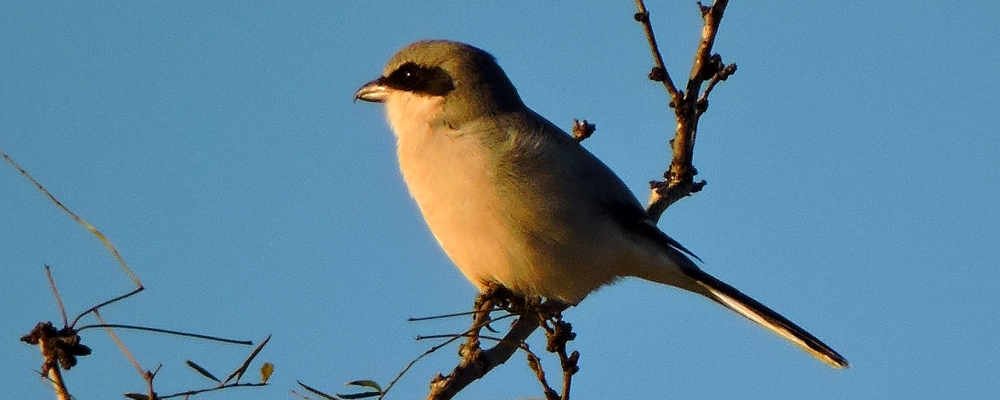
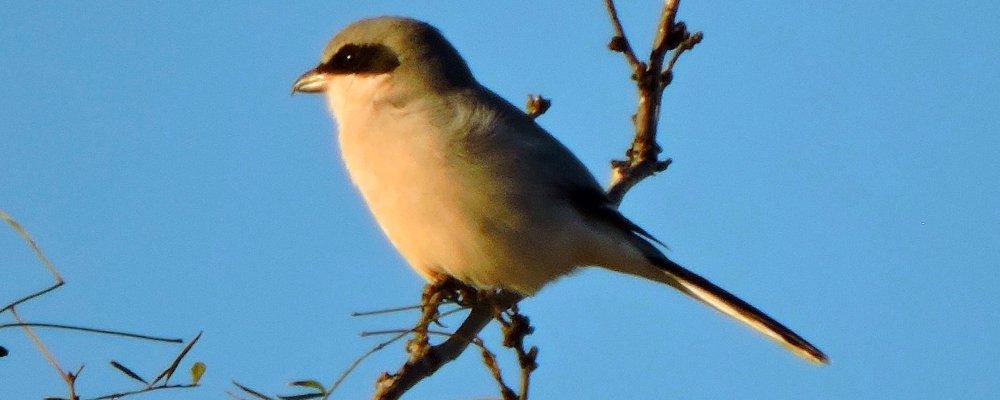
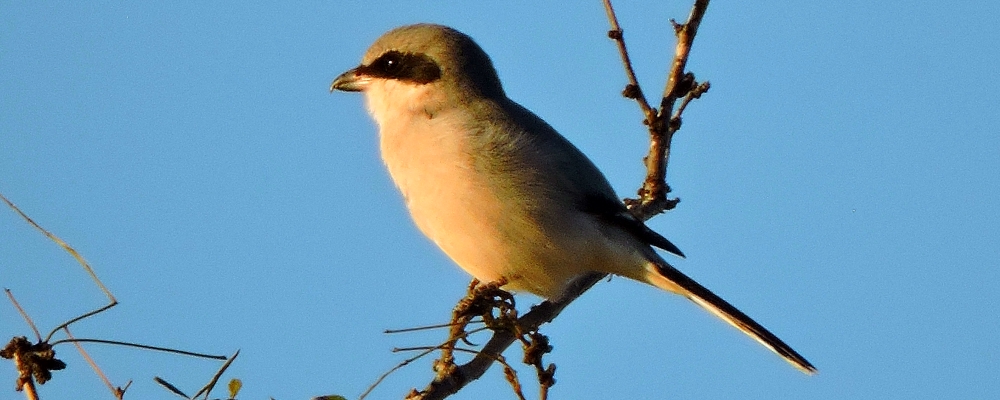
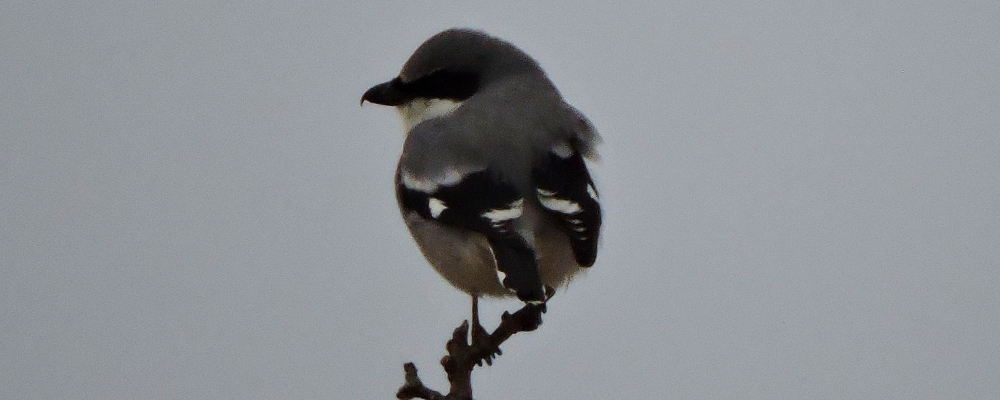
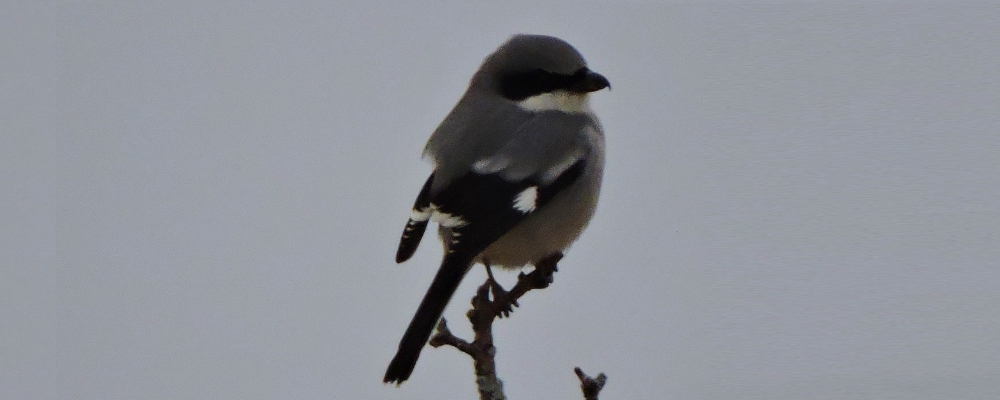
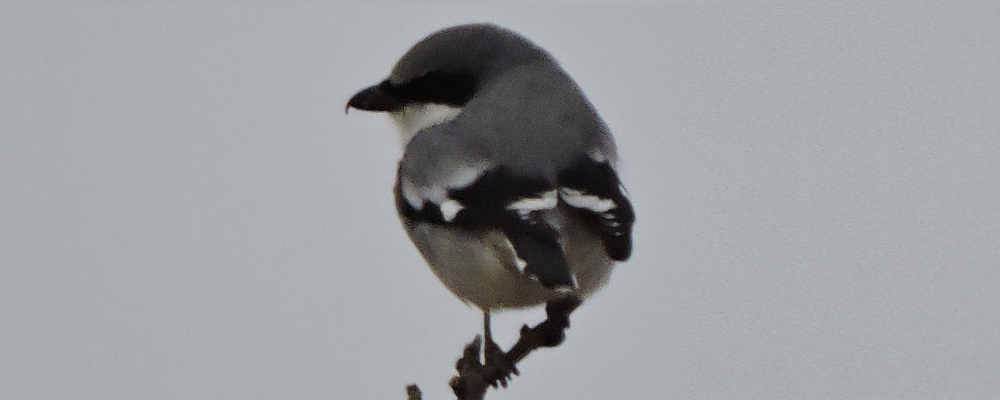
Often confused with the mockingbird, shrikes have different and a bit smaller wing pattern. Shrikes differ from a mockingbird by having a larger head with a black mask and a hooked bill.
Bill is shorter than the northern shrike and not as distinctly hooked. Black mask extends across forehead, over eyes and to the back of head.
Juvenile is like adult but has baring on bib, chest, head, back and rump, but disappears before first winter.
Flight is low and undulating, swooping up to perch at end.
|