|

|
|
|

|

|
|
The Class Eudicotyledon, Order Ericales
|
|
|
The Family Ericaceae,
Genus Arbutus


|
|
Pacific Madrona
(Arbutus menzielii)
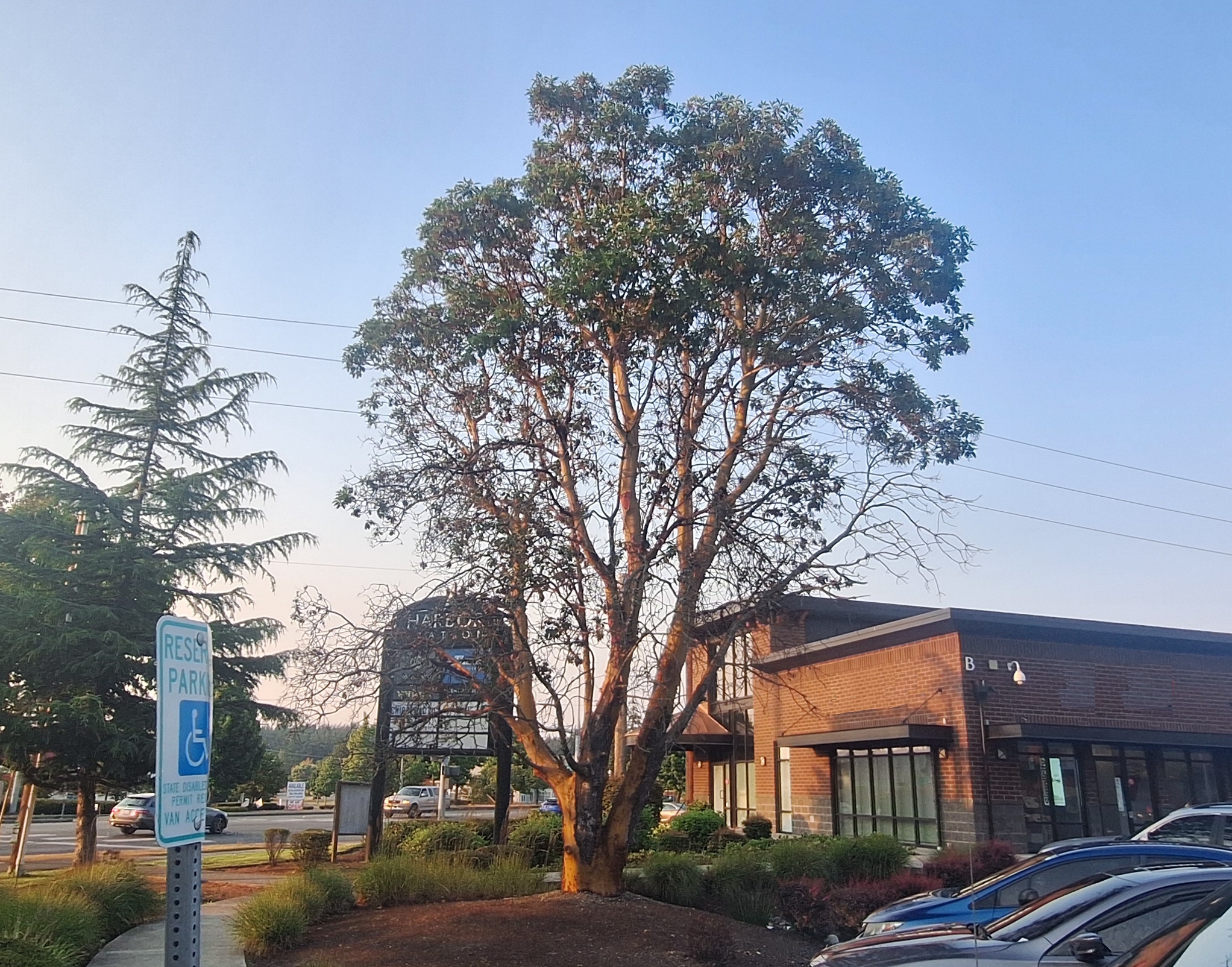
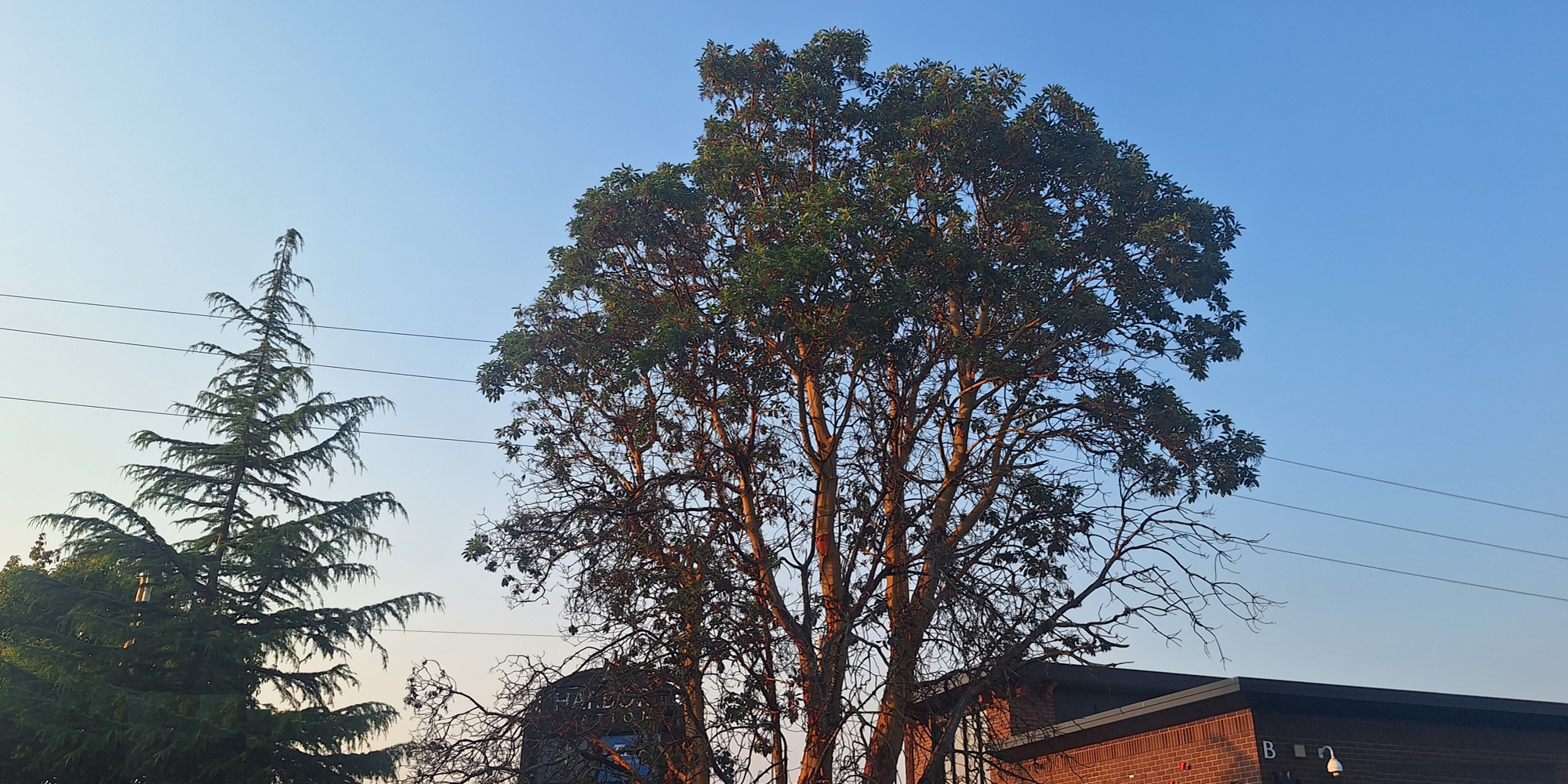
The species Arbutus menziesii, which is commonly called the Pacific madrone (or, in the United States: madrone or madrona and just arbutus in Canada) is a species of broadleaf evergreen tree in the Phulum Angiosperm, Class Eudicotyledon, Order Ericales and Family Ericaceae. The Pacific madrone has waxy foliage, a contorted growth habit, and flaky bark.
| |
|
The Species
A. menziesii
|
|
|
Taxonomy:
Genus:
Arbutus
Species:
A. menziesii
Common Name:
Pacific Madrona
Description:
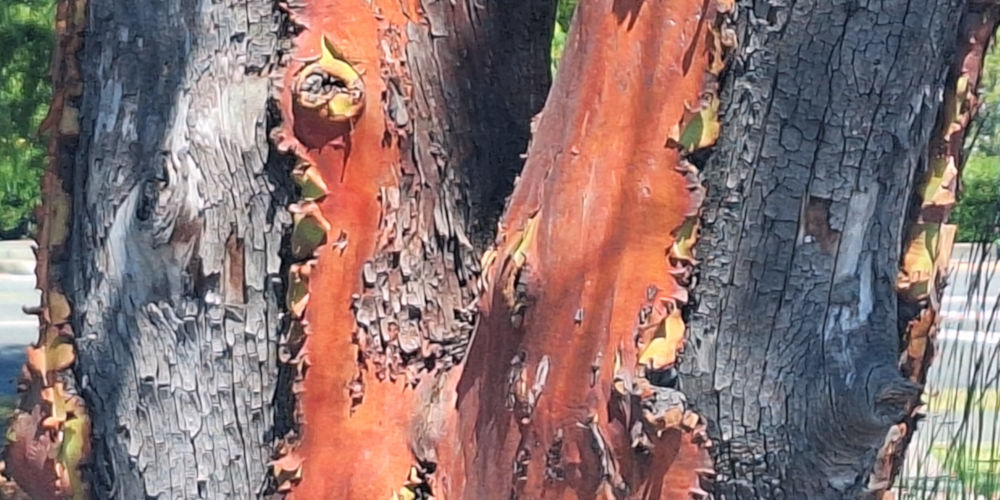
Arbutus menziesii is an evergreen tree about 10 to 25 metres (33 to 82 feet) in height, but in the right conditions up to 30 m (98 ft). The trunk is usually about 60 centimetres (24 inches) thick. The thin bark is a rich orange-red, and when mature naturally peels away in thin sheets, leaving a greenish, silvery appearance that has a smooth satin sheen. Older trunks are gray-brown near the base.[5] Individual trees can live for over 300 years.
The leaves are thick with a waxy texture, elliptical, 7 to 15 cm (2+3/4 to 6 in) long and 4 to 8 cm (1+1/2 to 3+1/4 in) broad, arranged spirally; they are glossy dark green above and a lighter, more grayish green beneath, with an entire margin. The leaves are evergreen, lasting a few years before detaching. Some second-year leaves turn orange to red and detach in the autumn. In the north of its range, wet winters often promote a brown to black leaf discoloration due to fungal infections; the stain lasts until the leaves naturally detach at the end of their lifespan. In spring, the tree bears sprays of small white to pink bell-like flowers,and in autumn, red berries.
Range:
It is native to the
Pacific Coast region of North America from British Columbia (chiefly Vancouver Island and the Gulf Islands) to California. They are mainly found in Puget Sound, the Oregon Coast Range and the California Coast Range but can also be seen scattered on the west slope of the Cascade and Sierra Nevada mountain ranges.
Arbutus menziesii exists in a few relict strands in southern California, believed to be survivors from the last glacia age. Here, populations are found on Santa Cruz Island, the San Gabriel Mountains, and south to the Santa Ana Mountains, the Agua Tibia Mountains and Palomar Mountain. The southernmost population is located on Roderick Mountain overlooking the canyon of the San Luis Rey River in San Diego County, where several hundred are found. George Bishop Sudworth reported a few shrubby individuals of Pacific madrone from the Santa Monica Mountains in Los Tuñas Canyon, but this population may not still survive.
|
Habitat:
It fares well in dry and rocky sites, is tolerant of salt water, but fairly intolerant of shade.
| |
|
The 2026 Journey
Pacific Madrona
|
|
Wednesday, 05 August 2026, Oak Harbor, Washington.
(Day 906 TS) 50°F. 7:00 am, sunny but smoky
Summer Sojourn, Day 21
Day 21 in the Rain Shadow
Awake, arise, dress in my fall blues, drive to the w-mart for coffee, com and computer.
|
| |
|
The 2024 Journey
Pacific Madrona
|
|
|
(Day 130 TS) 49°F. 7:00 am, sunny
Summer Sojourn, Day Four
Day Four in the Rain Shadow
Summer Solstice, 13:50 PT, 15:50 UTC
Sleeping in the Jammer
Overnighting in a Parking Lot
|
| |
| |
|
To Go Back to Class Index, click on the down arrow.
|
|
|
Thank you for visiting
The Wayƒarers Journal.
| |
See Ya above the Treeline!
| |
This Page Last Updated: 31 July 2026
|
|
|
|
To continue to the next Episode Level page,
Click here

|
|
| |