The Wayƒarers Journal ©

The Journal

The Wayƒarers

The Selƒ

The Journey

The Burden

The Mountain

   The Ancients
   The Earth
   The Life

     The Animals
     The Archaea
     The Bacteria
     The Chromista
     The Fungi
     The Plants

       Angiosperm
       Bryophyta
       Gymnosperm
       Pteridophyta

     The Protozoa

   The Modern Man
   The Nonpareils
   The Steps
   The Way

The Appendix

The Wayƒarer
The Mountain
Go to bottom of this page
THE ORDER NEricales
Family Ericaceae

The Family Ericaceae, Genus Rhododendron Go Down Go Up
General Information:
Rhododendron is the largest genus in the Ericaceae family with over 1,024 species of woody plants in the heath family, with possibly as many as 1,200 species. Most species are native to eastern Asia and the Himalayan region, but smaller numbers occur elsewhere in Asia, as well as in North America, Europe and Australia.
The Rhododendron is the national flower of Nepal, the state flower of Washington and West Virginia in the United States, the state flower of Nagaland and Himachal Pradesh in India, the provincial flower of Jiangxi in China and the state tree of Sikkim and Uttarakhand in India. Most species have brightly colored flowers which bloom from late winter through to early summer
Class Eudicotyledon
Order Ericales, Family Ericaceae
(m3pl-ang-eud-eric-eric-rhod-garden) Rododendrum Wikimedia Commons
Description:
The common and generic name Rhododendron comes from the Ancient Greek words: rhodon meaning rose and dendron meaning tree.
Rhododendron is a genus of woody flowering plants ranging from low=growing ground covers to shrubs and small trees, which can be either evergreen or deciduous. In some species, the undersides of the leaves are covered with scales known as lepidote or hairs known as indumentum. Some of the best known species are noted for their many clusters of large flowers.
A recently discovered species in New Guinea has flowers up to six inches in width, which is now the largest flower in the whole genus. There are alpine species with small flowers and small leaves, and tropical species such as section Vireya that often grow as epiphytes. Species in this genus may be part of the heath complex in oak-heath forests in eastern North America.
Rhodendron are most commonly broadleaf evergreen shrubs with thick, leathery leaves, and large rounded clusters of flowers. There are three main types within this genus: 1. azaleas (azaleas can either be deciduous or evergreen.); 2. vireyas (epiphytes: plants which live on other trees); and 3. trees. (trees can vary from dwarf trees, (some forming low to the ground mats) to massive tress as tall as forty feet high.)
Azaleas
Azaleas are not a separate genus but make up two of the sub-genera within the genus Rhododendron. Azaleas which have only five anthers per flower which distinguish them from true rhododendrons that have ten or more anthers per flower.
Range:
Species of the genus Rhododendron are widely distributed between latitudes 80°N and 20°S and are native to areas from North America to Europe, Russia, and Asia, and from Greenland to Queensland, Australia and the Solomon Islands.
The wise men of this world believe the plant′s origin is in the Himalayas and Maritime Southeast Asia, with the greatest species diversity in the Sino-Himalayan region, Southwest China and northern Burma, from India – Himachal Pradesh, Uttarakhand, Sikkim and Nagaland to Nepal, northwestern Yunnan and western Sichuan and southeastern Tibet.
However, my belief coincides with what the Bible tells me, in that the Rhodedendron originated on the third day of creation which is described in the Bible which reads at Genesis 1:11 And God said, Let the earth bring forth grass, the herb yielding seed, and the fruit tree yielding fruit after his kind, whose seed is in itself, upon the earth: and it was so. 12. And the earth brought forth grass, ans herb yielding seed after his kind, and the tree yielding fruit, whose seed was in itself, after his kind: and God saw that it was good.
Habitat:
Also, in the United States, native Rhododendron mostly occur in both lowland and montane forests, which are found in the Pacific Northwest, California, the Northeast, and the Appalachian Mountains.
Species in the genus rhododendron are native to the temperate regions in each of the continental areas where they are found.
The plants in the genus Rhododendron belong to the heath family (Ericaceae) and thrive best in cool, moist, acidic soils.

The Genus Rhododendron Taxonomy Go Down Go Up
Taxonomy:
Kingdom: Plantea
Phylum: Angiosperm
Class: Eudicotyledon
Order: Ericales
Family: Ericaceae

Genus: Rhododendron
Sub-genus: Azaleastrum
Section Azaleastrum (10 species)
Type Species: R. Ovatum
Common Name: Azalea
Native To: CHN, TWN
Species: R. hongkongense
Common Name: Hong Kong Rhododendron
Native To: Hong Kong
Section Sciadorhodion (16 species)
Type Species: R. Schlippenbachii
Common Name: Royal Azalea
Native To: KOR, PRK, CHN, JPN, E. RUS
Section Tsutsusi (2 sub-sections, 81 species)
Type Species: R. indicum
Native: JPN
Common Name: Azalea Indica
Sub-genus Choniastrum (20 species)
Species: R. cavaleriei
Native To: CHN, VNM
Species: R. championiae
Common Name: Champion′s Rhododendron
Species: R. dayaoshanense
Native To: CHN: Guangxi
Species: R. feddei
Native To: CHN: Guangxi
Species: R. hancockii
Common Name: Rhododendron Hankcockii
Native To: ASI:SW, CHN, IDN
Species: R. henryi
Native To: CHN: Fujian, Guangdong, Guangxi, Jiangxi. TWN
Species: R. huguangense
Native To: CHN: Guangxu, Guangdong, Hunan
Species: R. latoucheae
Native To: CHN, TWN
Species: R. longilobum
Native To: CHN: Yunnan
Species: R. mackenzianum
Native To: CHN: Xizang, Yunnam. MMR
Species: R. mitriforme
Native To: CHN: Guangdong, Guangxi, Hunan
Species: R. moulmainense
Common Name: Westland′ Rhododendron
Native To: CHN, HKG, IND, IDO, MYS, MMR, THA, VNM
Species: R. stamineum
Native To: CHN: Anhui, Guangdong, Guangxi, Hunan, Jiangxi.
Species: R. subestipitatum
Native To: CHN: Guangdong
Species: R. taiense
Native To: THA
Species: R. taishunense
Native To: CHN: Zhejiang
Species: R. truncatoarum
Native To: CHN: Yunnan
Species: R. tutchrae
Native To: CHN: Yunnan
Species: R. vaniotii
Native To: CHN: Guizhou
Species: R. westlandii
Native To: CHN: Guizhou
Sub-genus Hymenanthes (225-270 species)
Section Ponticum (24 sub-sections, 200 species)
Type Species: R. Ponticum
Common Name:
Native To:
Section Pentanthera (15 species)
Sub-section Pentanthera
Deciduous Azaleas
Species: R. alabamense
Common Name: Alabama azalea
Native To: USA: AL, GE, TN, FL
Species: R. arborescens
Common Name: sweet azalea, smooth azalea
Native To: USA: PA to GA and AL
Species: R. atlanticum
Common Name: coastal azalea, dwarf azalea
Native To: USA: GA to PA
Species: R. austrinum
Common Name: Florida flame azalea
Native To: USA: NW-FL, SE-MS
Species: calendulaceum
Common Name: flame azalea
Native To: USA: GA to PA
Species: R. canescens
Common Name: Piedmont azalea, Southern pinxter
Native To: TX to FL and NC
Species: R. cumberlandense
Common Name: Cumberland azalea
Native To: GA to KY
Species: R. flammeum
Common Name: Piedmont azalea, Oconee azalea
Native To: GA, SC
Species: R. luteum
Common Name: Yellow azalea, Pontic azalea
Native To:
EUR: E, TUR, Caucasus
Species: R. occidentale
Common Name: Western azalae, Pacific azalea
Native To: USA: CA to S-WA
Species: periclymenoides
Common Name: Pink azalea, Wild azalea
Native To: USA: GA to New England, OH, TN
Species: R. prinophyllum
Common Name: Roseshell azalea, Early azalea
Native To: CAN: QC. USA New England to VA, WV, OH, KY
Species: R. prunifolium
Common Name: Plumleaf azalea
Native To: USA: GA, AL
Species: R. viscosum
Common Name: Clammy azalea, Swamp azalea
Native To: New England to FL, then west to SE-TX
Sub-section Sinensia
Deciduous Azaleas
Species: R. molle
Common Name: Chinese azalea, Molle azalea
Native To: S-CHN, JPN
Species: R. japonicum
Common Name: Japanese azalea, Rengetsutsuji
Native To: JPN
Section Rhodora (2 species)
Species: R. canadense
Common Name: rhodora, Canada rosebay
Native To: CAN: NL to USA: NJ
Species: R. vaseyi
Common Name: pinkshell azalea, vasey rhododendron
Native To: USA: NC
Section Sciadorhodion (4 species)
Species: R. albrechtii
Common Name: Albrecht′s azalea, Deep Mountain azalea
Native To: JPN: Hokkaido, Honshu
Species: R. pentaphyllum
Common Name: fiveleaf azalea
Native To: JPN: Honshu, Shikoku, Kyushr
Species: R. quinquefolium
Common Name: Cork Azalea, Shiroyashio
Native To: JPN: N. Honshu to Shikoku
Species: R. schlippenbachii
Common Name: Royal azalea
Native To: PKR, KOR, CHN: Manchuria, RUS: E
Section Viscidula (1 species)
Species: R. nipponicum
Common Name: Nippon azalea, Oba-tsutsuji
Native To: JPN: N.Honshu
Sub-genus Rhododendron
Section Pogonanthum (16 species)
Species: R. Anthopogon, (2 Subspecies)
subsp. anthopogon
subsp. hypenanthum
Common Name: Dwarf Rhododendron
Native To: PAK, MMR, TIB and the Himalayas
Species: R. anthopogonoides
Common Name: rare
Native To: CHN: Qinghai, Gansu
Species: R. cephalanthum (2-Sub-species)
subsp. cephalanthum
subsp. platyphllum
Common Name: flowering head
Native To: CHN, TIB, MYA, Himalayas
Species: R. collettianum
Common Name: Collet′s azalea
Native To: AFG, PAK
Species: R. fragrans
Common Name: rare hybrid
Native To:
Species: kongboense
Common Name: Kongbo rhododendron
Native To: TIB: Xizang
Species: R. laudandum
Common Name: Mao guan du juan (hairy-corolla rhododendron)
Native To: CHB: Tibet
Species: R. primuliflorum
Common Name: primrose-flowered rhododendron
Native To: CHN: SE-Tibet, SW-Sichuan, NW-Yunnan
Species: R. sargentianum
Common Name: Sargent′s rhododendron
Native To: CHN: Sichuan
Species: R. trichostomum
Common Name: hairy-mouthed rhododendron
Native To: CHN: Sichuan, Yunnam
Section Rhododendron (28 sub-sections, 179 species)
Sub-section Afghanica (1 species)
Species: R. afghanicum
Common Name: Afghan rhododendron
Native To: AFG, PAK
Sub-section Baileya
Species: R. baileyi
Common Name: tall scaly rhododendron
Native To: IND: Sikkim. BTN, CHN: Tibet
Sub-section Boothia (7 species)
Sub-section Camelliiflora (1 species)
Species: R. camelliflorum
Sub-section Campylogynum (1 species, 2 varieties)
Species: R. campylogynum
Common Name: bent-style rhododendron
Native To: IND: NE, MYN: NE
Species Variety: var. leucanthum
Species Variety: var. eupodum
Sub-section Caroliniana (1 species, 2 varieties)
Species: R. minus
Common Name: Piedmont Rhododendron
Native To: USA: NC, SC, TN, GA, FL, AL
Species Variety: R. minus, var. minus
Species Variety: R. minus, var. champmanii
Sub-section Cinnabarinum (1 species, 3 sub-species)
Species: R. cinnabarunum
Common Name: Cinnabar rhododendron
Native To: Mountainous regions in IND, BTN, Tibet, NPL
Sub-section Edgeworthia
Sub-section Fragariflora
Sub-section Genesieriana
Sub-section Glauca
Sub-section Heliolepida
Sub-section Lapponica
Sub-section Ledum
Sub-section Lepidota
Sub-section Maddenia
Sub-section Micrantha
Sub-section Monantha
Sub-section Moupinensia
Sub-section Rhododendron
Sub-section Rhodorastra
Sub-section Saluenensia
Sub-section Scabrifolia
Sub-section Tephropepia
Sub-section Trichoclada
Sub-section Triflora
Sub-section Uniflora
Sub-section Virgata
Section Schistanthe
Sub-section Pseudovireya
Section Vireya (3 sub-section, 300 species)
Type Species: R. javanicum.
Common Name: Cepaka
Native To: ASI: SE, THA, AUS
Sub-genus Therorhodion (2 species)
Type Species: R. camtschaticum
Common Name: Kamchatka Rododendrum
Native To: ASI:NE
Species: R. redowskianum
Common Name:
Native To: ASI

The 2024 Journey, Family Ericaceae Go Down Go Up
Thursday, 30 May 2024, Cascade Locks, OR.
(Day 109 TS) 48°F. 7:00 am, sunny
Journey On, Day 109
Overnighting on a city street
Awake from the alarm this morning and sure glad I decided to come here to park for the night. (With this being a small town, I really like the ambiance.) I start the jammer and straightway find most all of the stores and cafes closed, so I pull in at a g-mart to look for a cup of coffee but there is a sign stating, Not Working on the coffee machine. Someone in the checkout line stay, We had a power outage last night and the coffee machine isn′t working.
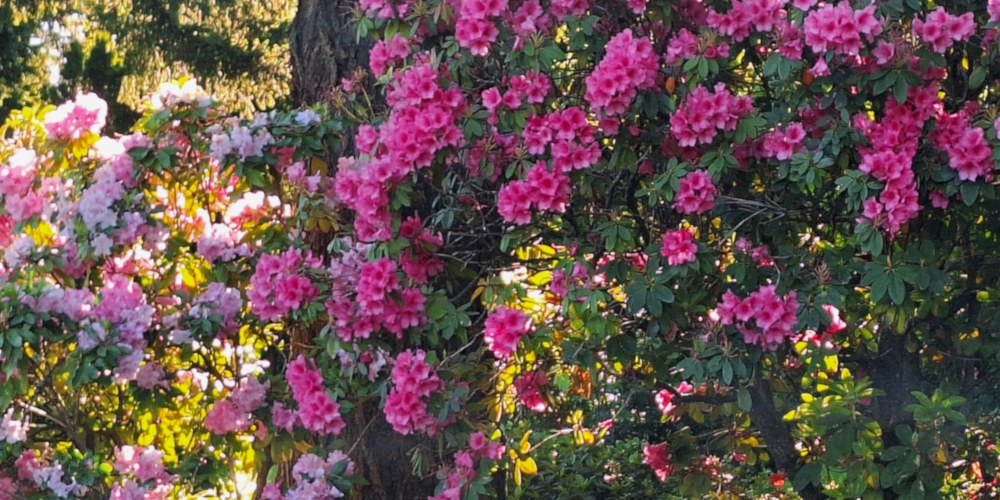
I was hoping to have some coffee this morning, sip on it here while sitting near the Bridge of the Gods, hang out until about noon, and then later, drive to the state park where I have made reservations for my next Oregon State Park stay, but that just does not seem to be happening. So, instead, I stop in the parking lot under the bridge deck, park and then begin thinking what I will be doing for the next several hours and while I am here, notice that the Rhododendron are in full bloom. It does not take me long to decide that I will drive the twenty miles east back to Hood River, stop in at the w-mart for coffee and then after having some coffee and uploading this journal entry, drive back west the eight or so miles to the state park to begin my next and final Oregon State Park camping experience during this northbound journey on.
Class Eudicotyledon
Order Ericales, Family Ericaceae Class Eudicotyledon
Order Ericales, Family Ericaceae

The 1978 Journey, Family Ericaceae Go Down Go Up
Chapter Seven: North Carolina
What impresses me first and foremost in the North Carolina forest are the numerous beautiful and intriguing rhododendron tunnels. These robust lush-green rhodo-tunnels have been formed by bunch after bunch of thick growing bushes on both side of the trail and joining overhead. Too, it is curious to me what these bushes would look like when in bloom.
Class Eudicotyledon
Order Ericales, Family Ericaceae
(m3pl-ang-eud-eric-eric-rhod-tunnel) Rododendrum Tunnel Wikimedia Commons
Saturday, 01 April 1978, Muskrat Creek lean-to.
(Day 11 AT) 37°F. 7:00 am, sunny
Muskrat Creek lean-to
Up after sunrise, it must be about seven o′clock. The exact time escapes me because my watch stopped working after dropping it yesterday. And yes, simplicity has been gloating since then because for days, has pestered me about getting rid of more of my nonessential gear, particularly the pocket watch. Repeatedly, simplicity reminds me that my Scout training includes knowing how to tell time by the sun, but my answer continues to be, Well than depends entirely on being able to see the sun and there has been a short supply of that lately.
(Excerpt from pate 47 of: The Wayƒarers Journal by Tommy Michel, Episode One, Journey to Katahdin

To Go Back to Class Index, click on the down arrow. Go to previous section
on this page

Thank you for visiting The Wayƒarers Journal.

See Ya above the Treeline!

This Page Last Updated: 31 July 2026


To continue to the next Episode Level page, Click here go to top
 
The Wayƒarers Journal © ::: Come Join the Journey ™
by Thom Buras
Come Join the Journey ™