The Wayƒarers Journal ©

The Journal

The Wayƒarers

The Selƒ

The Journey

The Burden

The Mountain

   The Ancients
   The Earth

     Geochronology
     Continents

       Africa
       Antarctica
       Asia
       Europe
       North America

         Geographical

           Arctic Mtns
           Greenland Isl
           CAN Lowlands
           CAN Shield
           Int. Lowlands
           Rocky Mtns
           Basin-Range
           Pacific Coast
           Great Plains
           Appalachian
           Int. Highland
           Coastal Plains
           N. Sierra Mad.
           Volcanic Mtns
           S. Sierra Mad.
           S. M. de Chipas
           S. Pacific Cst
           Island Lands
           Continent Shelf

         Geological

       Oceania
       South America

     Oceans

   The Life
   The Modern Man
   The Nonpareils
   The Steps
   The Way

The Appendix

The Wayƒarer
The Mountain
Go to bottom of this page
THE GEOGRAPHICAL REGIONS
The Great Plains Region, Nebraska

The Nebraska Sand Hills Go Down Go Back
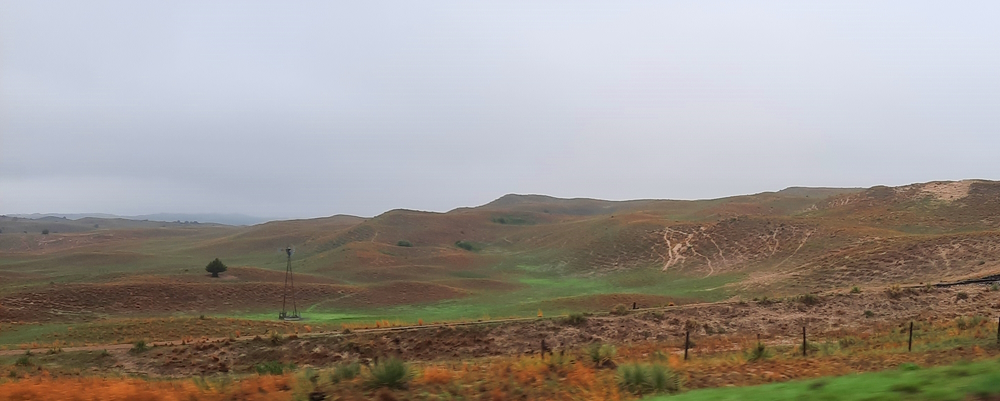
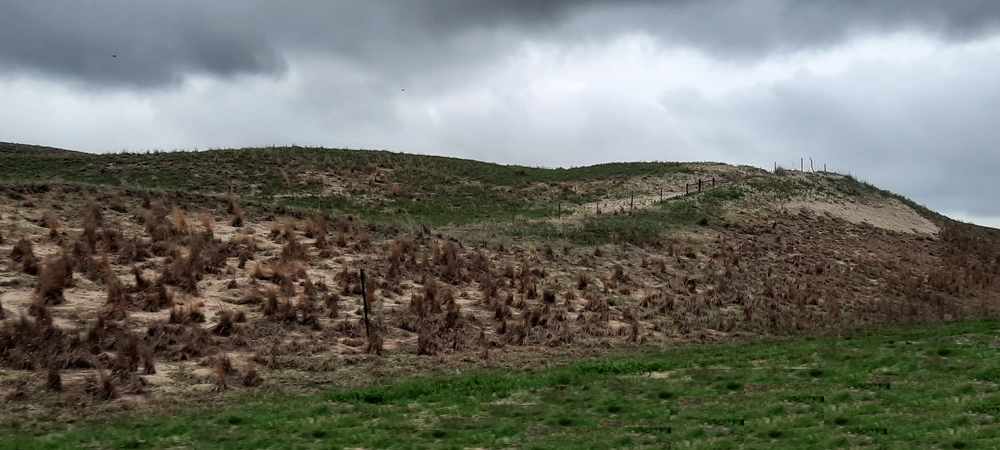
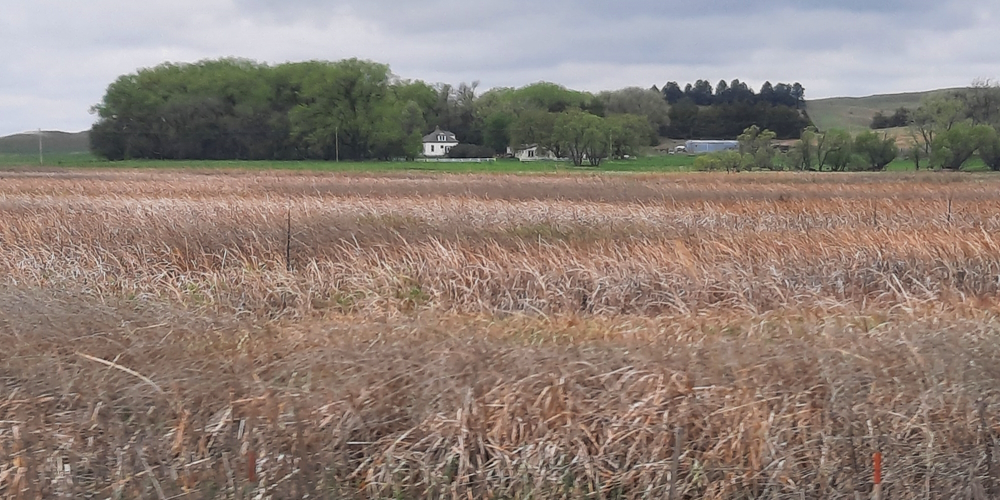
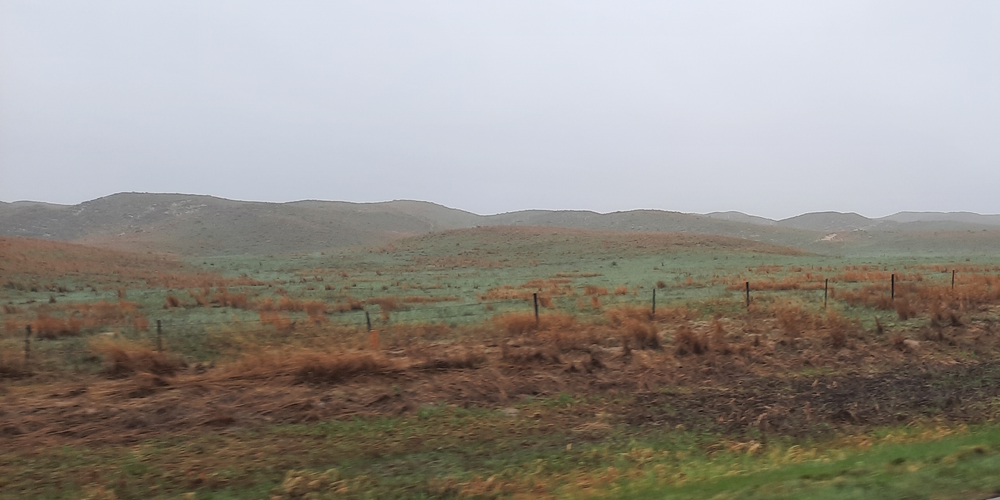
The Nebraska Sandhills, (also Sand Hills) ecoregion (4E) comprise one of the most distinct and uniform ecoregion in North America. First and foremost, this area is one of the largest areas of grass stabilized sand dunes in the world. According to Paleoclimate studies, these sand hill dunes have been stabilized for over a thousand years.
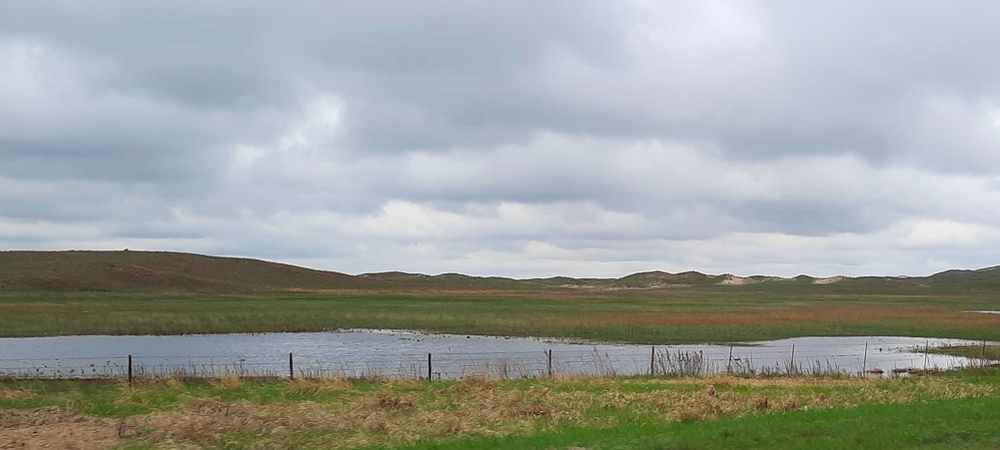
Also, with the except of a few riparian areas in the north and east, the region is treeless. Too, large portions of this ecoregion contain numerous lakes and wetlands without any streams or rivers. Many of the wetlands form several National Wildlife Areas.
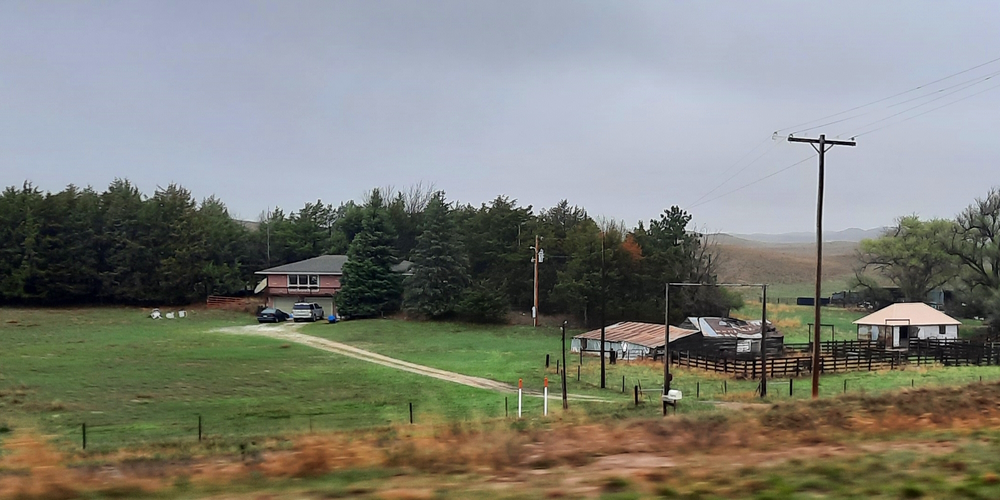
The area is sparsely populated and generally devoid of cropland agriculture. However, large cattle ranches are found throughout the region. In 1984, the dunes were designated a National Natural Landmark.
The Sandhills is distinct from other grasslands of the Great Plains due to as much of 85% of the ecoregion is intact natural habitat, the highest level of any ecoregion in the Great Plains and due to the lack of crop production, leaving most of the Sandhills without ever seeing a plow.
The climate is a semi-arid region with annual rainfall averaging 23 inches in the east but less than 17 inches in the west. Temperatures are continental and range from -30 °F for the winter lows to 105 °F for summer highs.
Geography:
Defined with variously boundaries by different organization, the area of this ecoregion is from about 19,000 square miles to about 23,600 square miles in area. The average elevation in the region is about 1800 feet in the east to about 3600 feet in the western side of the ecoregion, with dunes sometimes exceeding 330 feet in height.
The Sandhills rise atop the massage Ogallala Aquifer and commonly found in the low lying valley within the grass stabilized dunes are shallow lakes, some permanent and some only temporary. The central and eastern area are drained by tributaries of the Loup river and the Niobrara River. The Loup River, in central Nebraska, flows into the Platte River at Columbus, Nebraska, which then flows to the Missouri river at Omaha, Nebraska at the Iowa state line. The Niobrara river flows across the top of Nebraska, joining the Missouri at Niobrara, Nebraska at the Soutn Dakota state line.
The wester area of the Sandhills is primarily composed of small interior drainage basins, commonly called endorheic basins.
History:
Prior to the mid 1800s, the Sandhills were considered to be an irreclaimable desert, but by the 1870s, cattlemen discovered the potential of this area as rangeland for Longhorn cattle. However, most all attempts at farming in the 1800s failed due to the unsuitableness of the sandy soil.
In 1904, the Kinkaid Act allowed homesteaders to claim 640 acres of land, instead of the 160 acres of land allowed by the Homestead Act on 1862. Due to this new law, there were nearly nine million acres claimed between 1910 and 1917, but by the 1930s, even these attempts failed.
Now, in the 21st century, the Sandhills are a productive cattle ranching area which supports over a half million beef cattle. Still, as older generations die out and the younger generations move to the cities, most of the remaining ranches are consolidated. The entire region continues to maintain many small towns.
Ecology:
Because of the limited crop production throughout the Sandhills, there has been and extensive and continuous habitat for both plant and animal species, which habitat has preserved the biodiversity of the area.
There are at least 314 vertebrate species including mule deer, white-tailed deer, jackrabbits, Pronghon antelope, elk, coyotes, red fox, Western meadowlark (the Nebraska state bird), prairie dogs, bull snakes, prairie rattlesnakes, ring-necked pheasant, ruffed grouse, badgers, ground squirrel, skunks, native bat species and many fish species.

Ancient Steps:

Campgrounds:

Landforms:
Rivers:
Dismal River
Missouri River
Niobrara River

Parks:

Sites:
Bryan Arch Bridge
Valentine Trestle Bridge

Pathway Journeys:
Foot Path Journeys
Cowboy Trail
Road Path Journeys

The 2023 Journey, Nebraska Sand Hills Go Down Go Up
Monday, 15 May 2023, North Platte, Nebraska.
(Day 728 TN) 50°F. 7:30 am, sunny
Summer Sojourn, Day 15
Overnighting in a parking lot
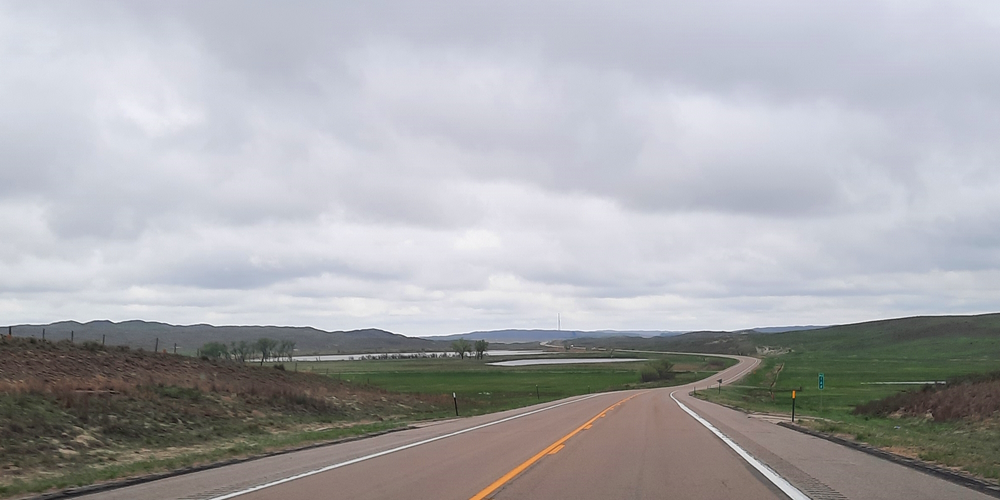
After first stopping to wash a load of clothes, I then leave out of North Platte, Nebraska driving north on US 83 and my drive begins with a thick mist in the air, not any rain, just mist which requires that I keep my windshield washer turn on.
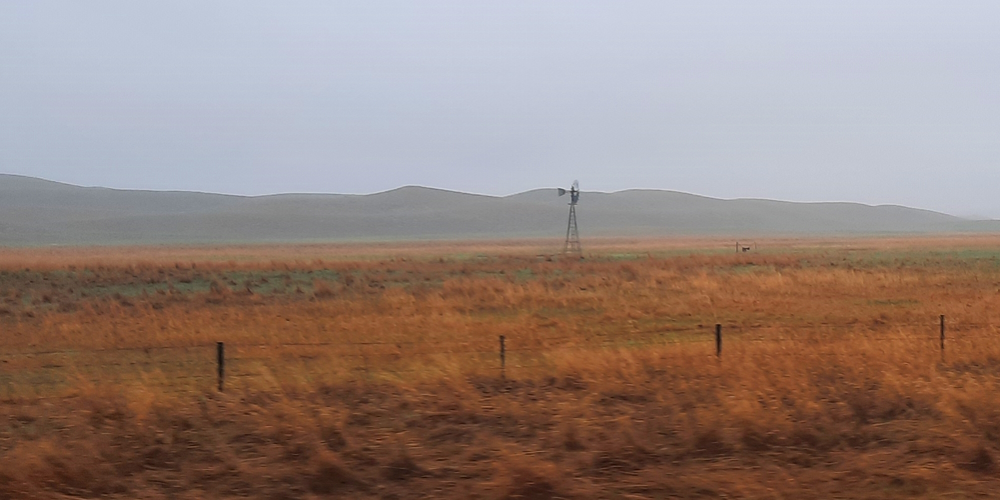
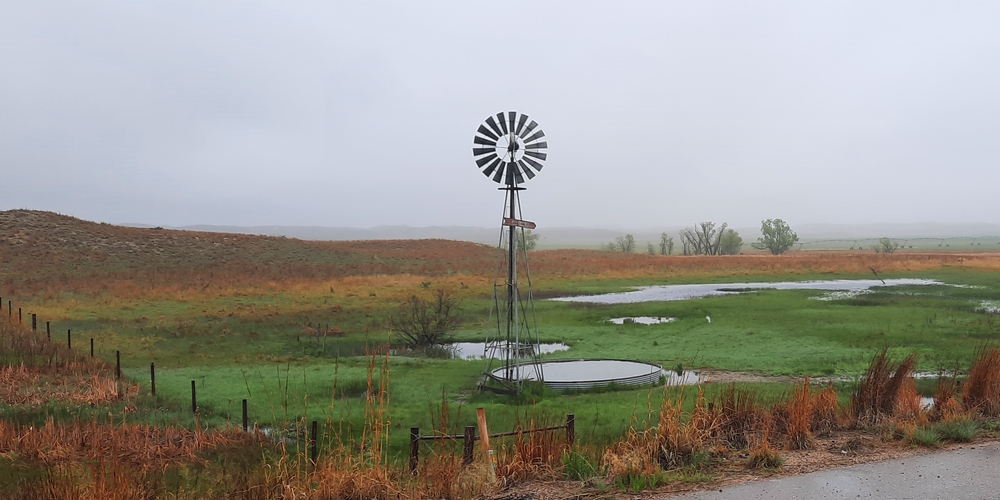
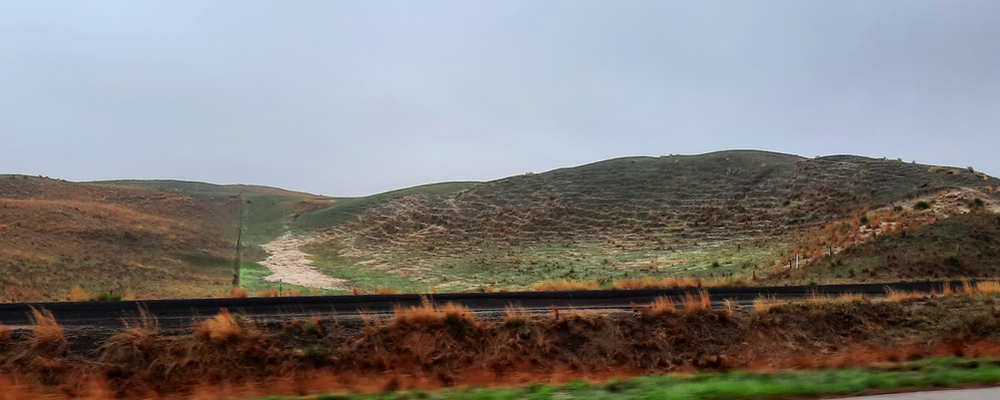
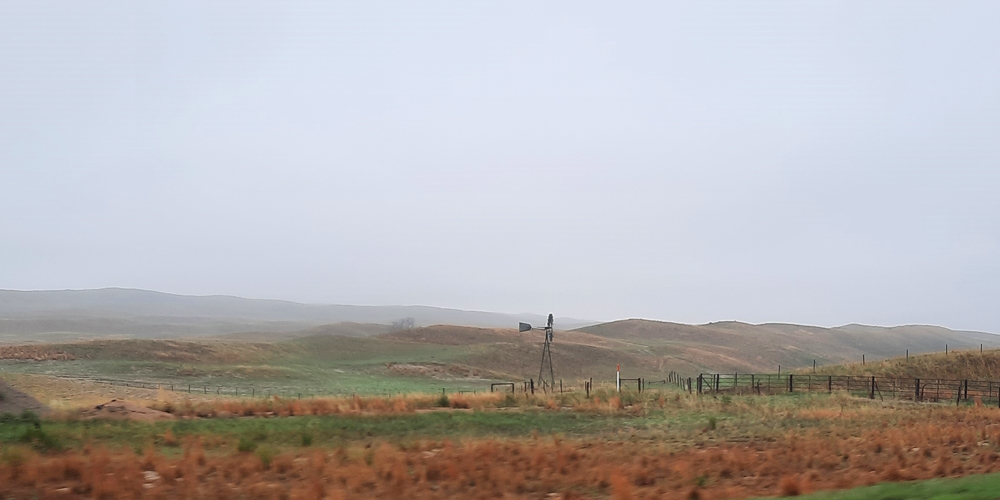
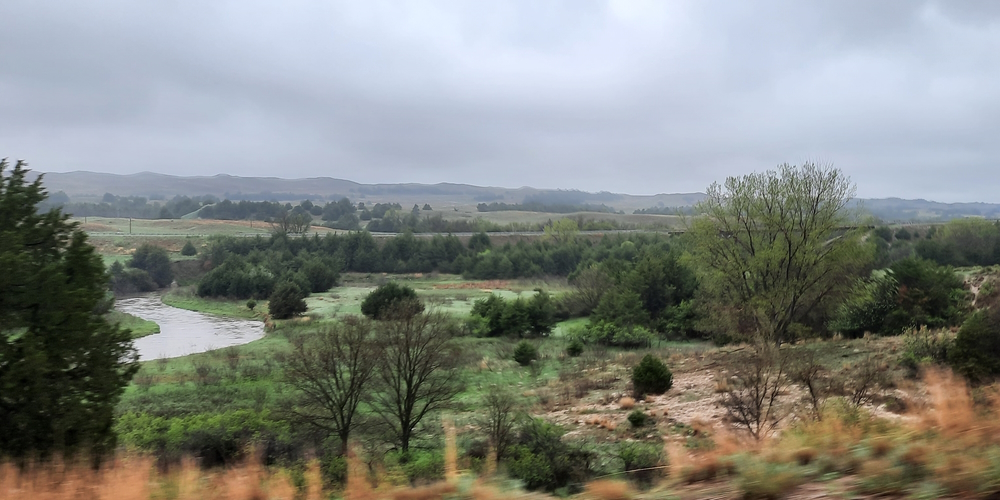
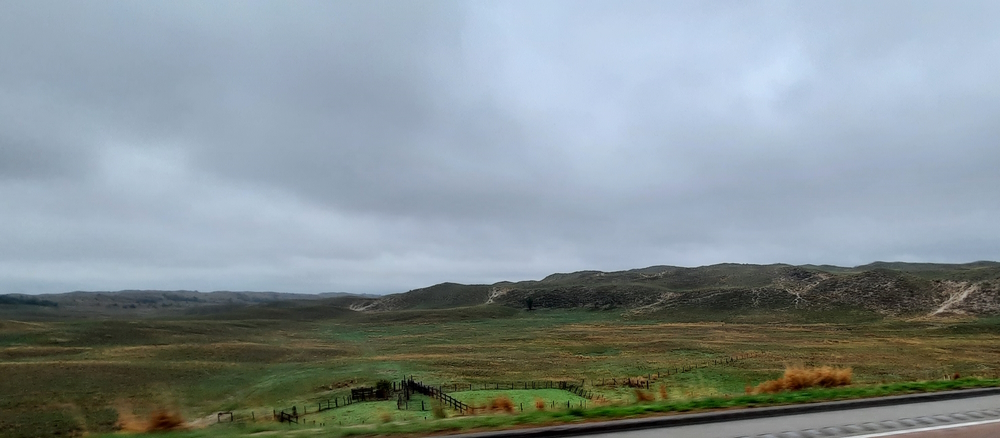
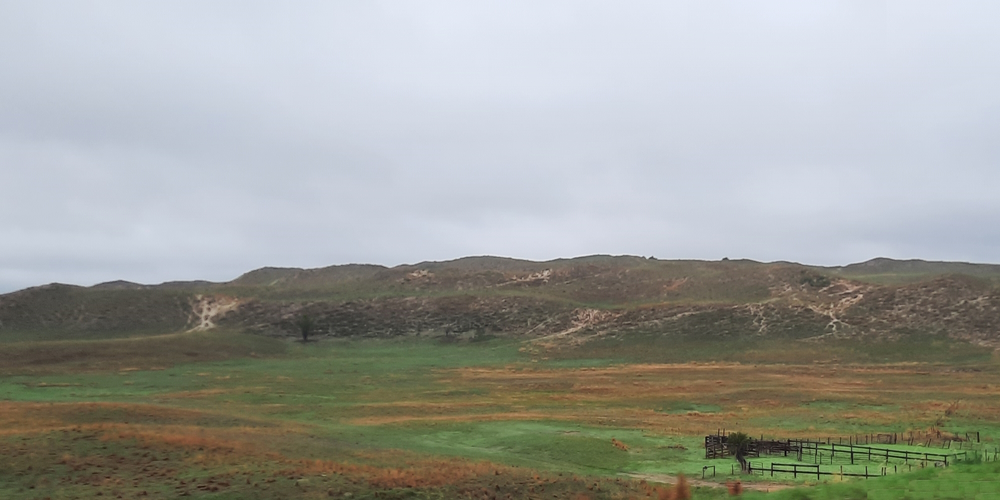
I had not been driving very long when I realized that I was driving in the Nebraska Sand Hills, something that I had forgotten that existed. So, I begin taking photos of the many patches of sand along the way. When I read on my website, I find out that this is the largest areas of grass stabilized sand dunes in the world. This ecoregion is sparsely populated and generally devoid of cropland agricultues, however, large cattle ranches are found throughout the region. During this drive through the sand hills, this is exactly what I see.
Most of the early morning continues with the heavy mist, but there is enough light to get some colorful photos, so I keep driving and only pausing for the photos, and true to the ecoregion description, all that I see are pasture lands and an occasional cow.
The Great Plains Region
The Nebraska Sand Hills Ecoregion
(m2cont-nam-geog-09-ne-9e-2023-0515.1011) The Nebraska Sand Hills Ecoregion
The Great Plains Region
The Nebraska Sand Hills Ecoregion
(m2cont-nam-geog-09-ne-9e-2023-0515.1012) The Nebraska Sand Hills Ecoregion
The Great Plains Region
The Nebraska Sand Hills Ecoregion
(m2cont-nam-geog-09-ne-9e-2023-0515.1016) The Nebraska Sand Hills Ecoregion
The Great Plains Region
The Nebraska Sand Hills Ecoregion
(m2cont-nam-geog-09-ne-9e-2023-0515.1022) The Nebraska Sand Hills Ecoregion
The Great Plains Region
The Nebraska Sand Hills Ecoregion
(m2cont-nam-geog-09-ne-9e-2023-0515.1023) The Nebraska Sand Hills Ecoregion

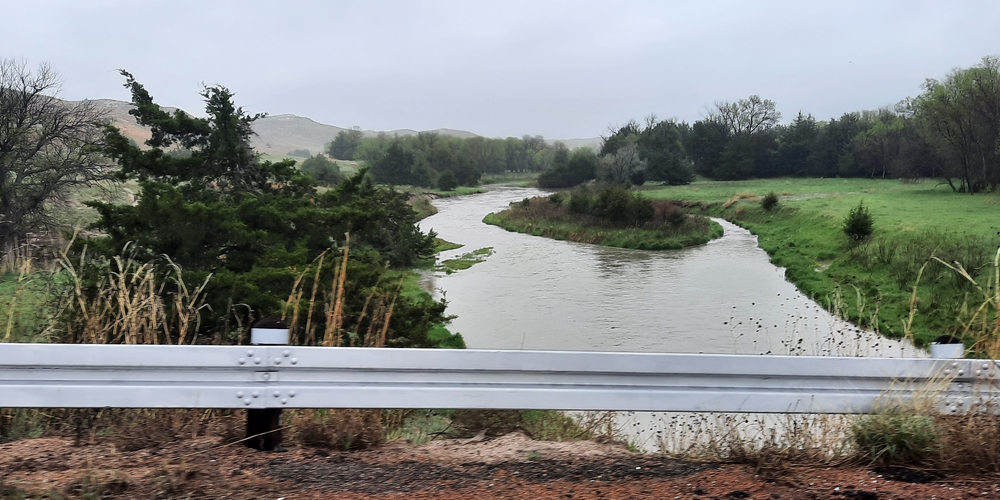
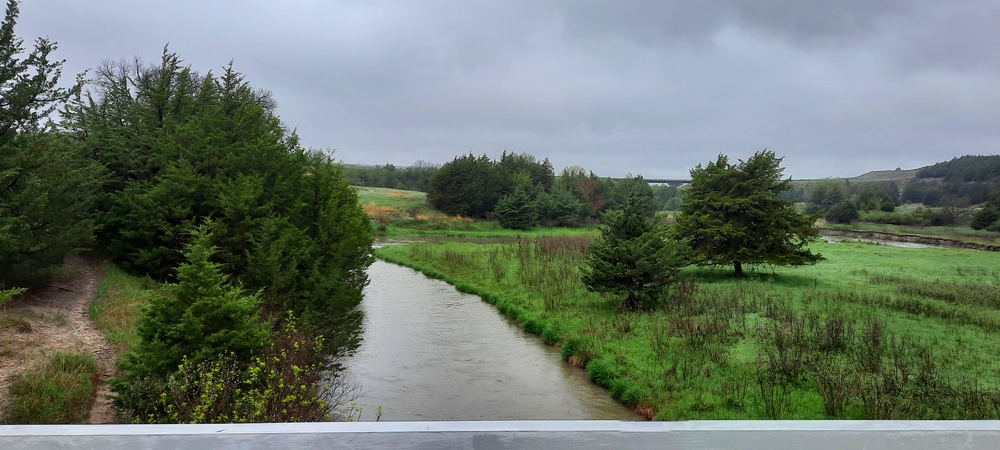
Dismal River
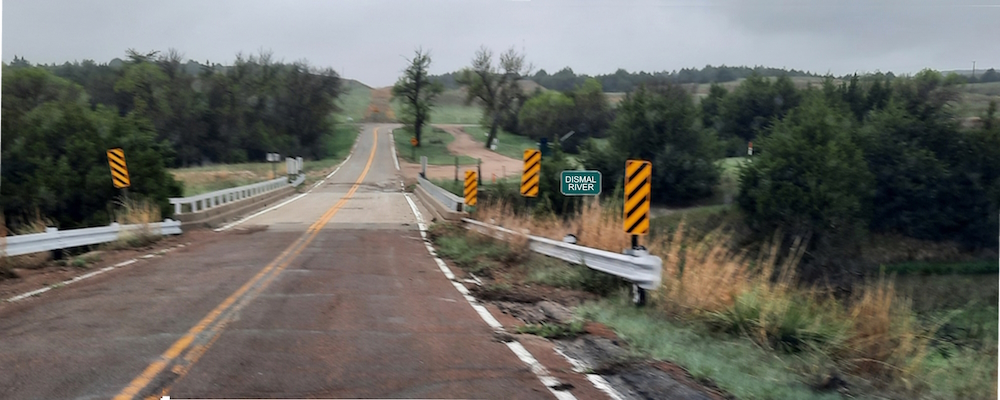
At about ten-thirty, I see a sign informing that there is a side loop on the east side of the highway that provides a view of the Dismal River, so, I choose to look at something other than just cattle pastures and cows.
I suspect that like more of the US 83 that I have been driving, they highway department uses the old alignment of the highway to provided the view points. This loop proved to be no different and when I drive the loop, I can see the new highway US 83 bridge just to the west. Still, this provides a break from the mostly straight northbound US 83.
The Great Plains Region
Nebraska Sand Hills: Dismal River
(m2cont-nam-geog-09-ne-9e-dismal-2023-0515.1027) Nebraska Sand Hills: Dismal River
The Great Plains Region
Nebraska Sand Hills: Dismal River
(m2cont-nam-geog-09-ne-9e-dismal-2023-0515.1028) Nebraska Sand Hills: Dismal River
The Great Plains Region
Nebraska Sand Hills: Dismal River
(m2cont-nam-geog-09-ne-9e-dismal-2023-0515.1029) Nebraska Sand Hills: Dismal River
The Great Plains Region
Nebraska Sand Hills: Dismal River
(m2cont-nam-geog-09-ne-9e-dismal-2023-0515.1030) Nebraska Sand Hills: Dismal River

Back to Cattle Ranches and Sand Dunes
Even though the mist has dried up, there is still a lot of clouds in the sky why keeps the day like the last river, very dismal.
The Great Plains Region
The Nebraska Sand Hills Ecoregion
(m2cont-nam-geog-09-ne-9e-2023-0515.1030) The Nebraska Sand Hills Ecoregion
The Great Plains Region
The Nebraska Sand Hills Ecoregion
(m2cont-nam-geog-09-ne-9e-2023-0515.1032) The Nebraska Sand Hills Ecoregion
The Great Plains Region
The Nebraska Sand Hills Ecoregion
(m2cont-nam-geog-09-ne-9e-2023-0515.1033) The Nebraska Sand Hills Ecoregion
The Great Plains Region
The Nebraska Sand Hills Ecoregion
(m2cont-nam-geog-09-ne-9e-2023-0515.1038) The Nebraska Sand Hills Ecoregion
The Great Plains Region
The Nebraska Sand Hills Ecoregion
(m2cont-nam-geog-09-ne-9e-2023-0515.1121) The Nebraska Sand Hills Ecoregion
The Great Plains Region
The Nebraska Sand Hills Ecoregion
(m2cont-nam-geog-09-ne-9e-2023-0515.1125) The Nebraska Sand Hills Ecoregion

Wildlife Refuges
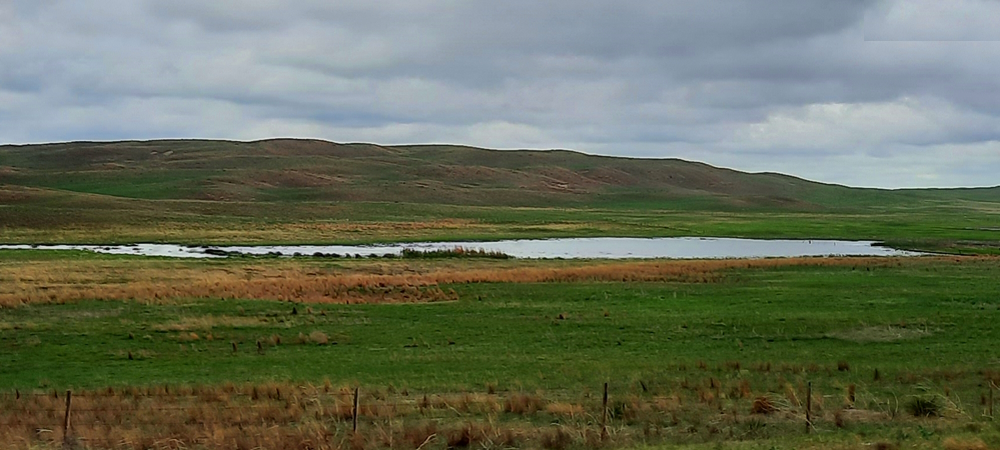
Any other time, I would have stopped to photograph the birds here, however, I feel that it is to cold and wet for me to get out into the weather.
The Great Plains Region
Nebraska Sand Hills: Wildlife Refuges
(m2cont-nam-geog-09-ne-9e-2023-0515.1127) Nebraska Sand Hills: Wildlife Refuges
The Great Plains Region
Nebraska Sand Hills: Wildlife Refuges
(m2cont-nam-geog-09-ne-9e-2023-0515.1130) Nebraska Sand Hills: Wildlife Refuges
The Great Plains Region
Nebraska Sand Hills: Wildlife Refuges
(m2cont-nam-geog-09-ne-9e-2023-0515.1132) Nebraska Sand Hills: Wildlife Refuges

Niobrara River
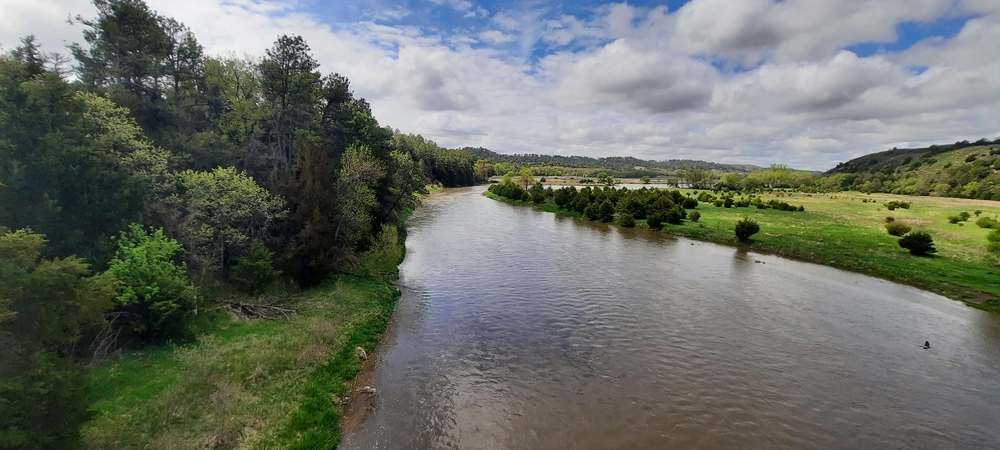
The Niobrara River rises near Lusk, in Niobrara county, eastern Wyoming, and flowing east across the High Plains and along the northern edge of the Sand Hills, and the eastern plains of Nebraska to join the Missouri River near the village of Niobrara, Nebraska, at the South Dakota state line.
The Niobrara river has a more uniform flow than do most plains streams, which gives credit to steady contributions from groundwater and tributaries within the Sand Hills, The lower reaches of the Niobrara river prove to be wide and shallow.
From its source, 42.820833, -104.647222, the Niobrara River flow about 30 miles before it crosses into the state of Nebraska not far from US highway 20 at coordinates of 42.6610539, -104.0527182. It then flows across Nebraska for another 538 miles until it joins with the Missouri River at 42.766111, -98.047222, near Niobrara, Nebraska on the South Dakota state line.
The name originally from the Omaha-Ponca tribe and means “wide spreading out water.”
The Niobrara′'s watershed includes the northern tier of Nebraska Sandhills, a small south-central section of South Dakota, as well as a small area of eastern Wyoming, draining approximately 12,000 square miles.
The Niobrara River
From the Bryan Bridge
(m4bridge-arch-ne-bryan-2023-0515.1206) View of Niobrara River from near US 83
But Wait, There′s More
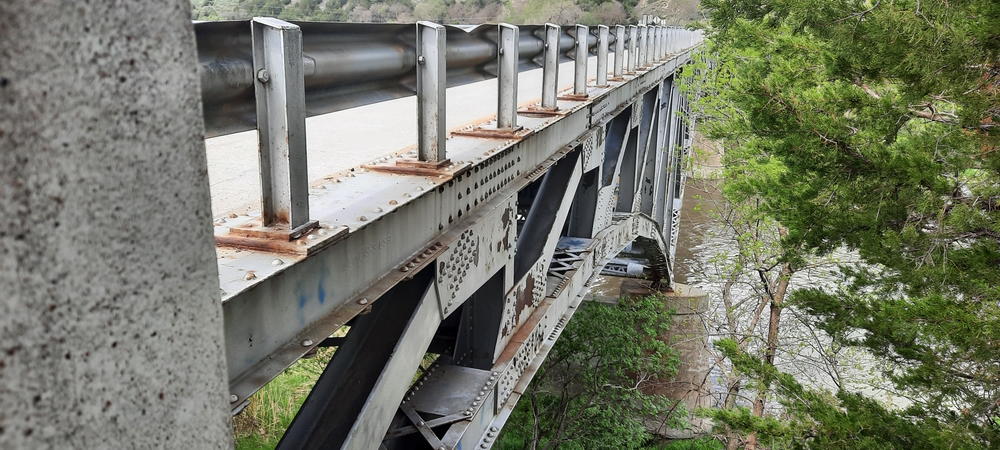
Upon arriving at the next river, I find that there is the same here, the new US 83 highway bridge and the old bridge, which for the old bridge, the sign on US 83 reads: "Historical Bridge ➜", which sequesters me to leave the northbound journey to see how historic this bridge really is. I drive down the old alignment of US 83 and come upon a very remarkable bridge. As I read the information board, I find out just how extraordinary the Bryan Bridge actually proves to be.
The Arch Bridges
The Bryan Bridge
(m4bridge-arch-ne-bryan-2023-0515.1203) The Bryan Bridge

To go back to the Gallery Index, click on down arrow. Go Back Go to previous section
on this page

Thank you for visiting The Wayƒarers Journal.

See Ya above the Treeline!

This Page Last Updated: 31 March 2026


To continue to the next Episode Level page, Click here go to top
 
The Wayƒarers Journal © ::: Come Join the Journey ™
by Thom Buras
Come Join the Journey ™