The Wayƒarers Journal ©

The Journal

The Wayƒarers

The Selƒ

The Journey

The Burden

The Mountain

   The Ancients
   The Earth
   The Life

     The Animals

       Annelida
       Arthropoda
       Chordata

         Amphibians
         Birds
         Fish
         Mammals

           Aardvarks
           Armadillos
           Bats
           Carnivores
           Elephants
           Hedgehogs
           Hyraxes
           Manatees
           Marsupial
           Platypus
           Primates
           Rabbits
           Rodents
           Sloths
           Ungulate-Even
           Ungulate-Odd
           Whales

         Reptiles

       Cnidaria
       Echinodermata
       Mollusca
       Nematoda
       Platyhelminthes
       Porifera

     The Archaea
     The Bacteria
     The Chromista
     The Fungi
     The Plants
     The Protozoa

   The Modern Man
   The Nonpareils
   The Steps
   The Way

The Appendix

The Wayƒarer
The Mountain
Go to bottom of this page
THE MAMMALS
The Order Lagamorpha

The Rabbit Families Go Down Go Up
Information:
Rabbit verses Hare
The term rabbit is typically used for all Leporidae species excluding the genus Lepus. Members of that genus are instead known as hares or jackrabbits.
Lepus species are typically precocial, which means young are born relatively mature and mobile with hair and good vision, while rabbit species are altricial, which means young are born hairless and blind, and requiring closer care.
Hares live a relatively solitary life in a simple nest above the ground, while most rabbits live in social groups in burrows or warrens.
Hares are generally larger than rabbits, with ears that are more elongated, and with hind legs that are larger and longer. Descendants of the European rabbit are commonly bred as livestock and kept as pets, whereas no hares have been domesticated.
The breed called the Belgian hare is actually a domestic rabbit which has been selectively bred to resemble a hare.
Terminology:
A male rabbit is called a buck; a female is called a doe. An older term for an adult rabbit used until the 18th century is coney (derived ultimately from the Latin cuniculus), while rabbit once referred only to the young animals.[2] Another term for a young rabbit is bunny, though this term is often applied informally (particularly by children) to rabbits generally, especially domestic ones. More recently, the term kit or kitten has been used to refer to a young rabbit.
A group of rabbits is known as a colony or nest (or, occasionally, a warren, though this more commonly refers to where the rabbits live).[3] A group of baby rabbits produced from a single mating is referred to as a litter[4] and a group of domestic rabbits living together is sometimes called a herd.[5]
The word rabbit itself derives from the Middle English rabet, a borrowing from the Walloon robète, which was a diminutive of the French or Middle Dutch robbe.[6]

Taxonomy
Kingdom: Animalia
Phylum: Chordata
Class: Mammalia
Order: Lagomorpha
Rabbits, hares and pikas were formerly classified in the order Rodentia until 1912, when they were moved into a new order, Lagomorpha.
There are 102 extant species of lagomorph, including 37 species of pika, 33 species of rabbits, and 32 species of hare.
Family Leporidae: hares and rabbits
Genus Brachylagus: Pigmy rabbit 1 species LC
Species: Brachylagus idahoensis
Genus Bunolagus: Riverine rabbit, 1 species
Species: Bunolagus monticularis, CR
Bushman rabbit
Genus Caprolagus: Hispid hare, 1 species
Species: Caprolagus hispidus, EN
Bristly rabbit, South Asia
Genus Lepus: Hares or Jackrabbits, 32 species
Species: Lepus californicus
Black-tailed Jackrabbit
Genus Nesolagus: Striped rabbits, 2 species
Species: Nesolagus netscheri
Sumatran striped rabbit
Species: Nesolagus timminsi
Annamite stripped rabbit
Genus Orycotolagus: European rabbit, 1 species
Species: Orycotolagus cuniculus, EN
Genus Pentalagus: Amami rabbit, 1 species
Species: Pentalagus furnessi, EN
Genus Poelagus: Bunyoro rabbit, 1 species
Species: Poelagu marjorita, LC
Central African rabbit
Genus Pronolagus: Red rock hare, 4 species, South Africa, LC
Species: Pronolagus crassicaudatus
Natal red rock hare
Species: Pronolagus randensis
Jameson′s red rock hare
Species: Pronolagus rupestris
Smith′ red rock hare
Species: Pronolagus saundersiae
Hewitt′s red rock hare
Genus Romerolagus: Volcano rabbit, 1 species
Species: Romerolagus diazi, EN
Genus Sylvilagus: Cottontail rabbit, 20 species,
Species: Sylvilagus aquaticus, swamp rabbit
Species: Sylvilagus audubonii, desert cottontail
Western US from east Montana to Texas and Northern Mexico
Species: Sylvilagus bachmani, brush rabbit
Species: Sylvilagus brasiliensis, forest rabbit
Species: Sylvilagus cunicularis, Mexican cottontail
Species: Sylvilagus dicei, Dice′s cottontail
Species: Sylvilagus floridanus, Eastern cottontail
Species: Sylvilagus graysoni, Tres Marias rabbet
Species: Sylvilagus insonus, Omilteme cottontail
Species: Sylvilagus mansuetus, San Jose brush rabbit
Species: Sylvilagus nuttallii, mountain cottontail
Species: Sylvilagus palustris, marsh rabbit
Species: Sylvilagus transitionalis, New England cottontail

Family Ochotonidae
Genus Ochotona: Pikas: 37 species
Species:
Species:

The 2017 Journey Family Leporidae: Rabbits Go Down Go Up
Family Leporidae
Leporidae is the family of rabbits and hares, containing over 60 species of extant mammals in all. The Latin word Leporidae means those that resemble lepus which is Latin for hare.
The Leporidae (hares and rabbits), together with the Ochotonidae (pikas), constitute the mammalian order Lagomorpha.
Leporidae differ from Ochotonidae (pikas) in that the Lepus have short, furry tails, elongated ears and long hind legs.
The Mammals
The Rabbits
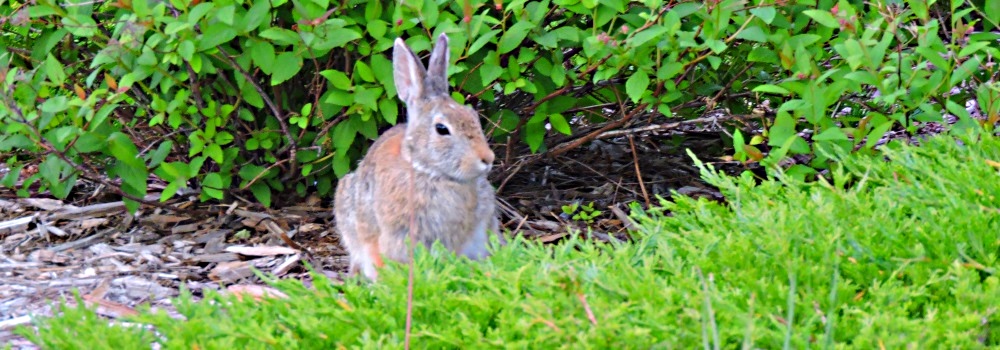
(m3an-chm-rabb-2017-0603.2039) Rabbit in Yellowstone
Family Leporidae:
Genus Sylvilagus: Cottontail Rabit

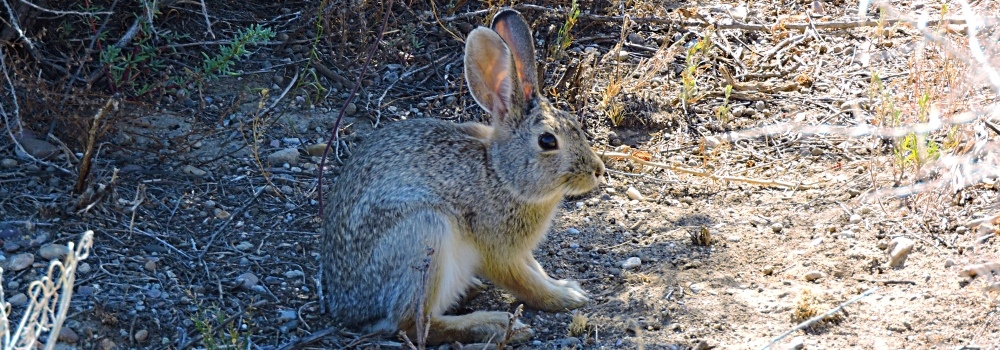
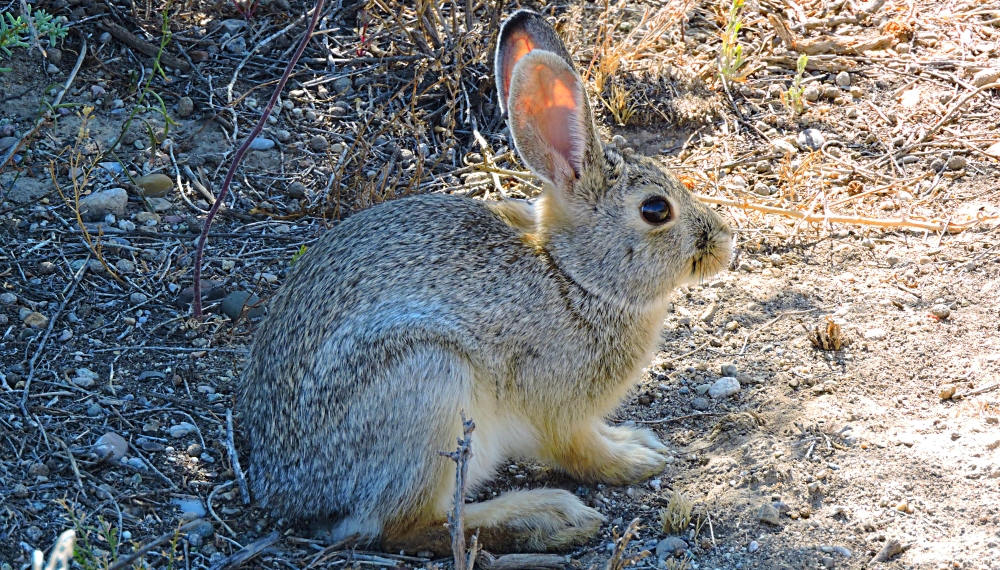
Mountain Cottontail
Genus: Sylviagus, Species: nuttallii, LC
This species is found throughout the intermountaijn area of North America, ranging from just about the Canada-US border south to Arizona and New Mexico from the foothills and east slopes of the Rocky Mountains and westward to the eastern slopes of the Cascade and Sierra Nevada Mountains.

The 2016 Journey, Rabbit Family Go Down Go Up
Pigmy Rabbit
Order: Lagomorpha, Family: Leporidae
Genus: Brachylagus, Species: idahoensis
The Mammals
The Pygmy Rabbit
Range:
The range of the pygmy rabbit includes most of the Great Basin and some of the adjacent intermountain areas of western North America. Pygmy rabbits are found in southwestern Montana from the extreme southwest corner near the Idaho border north to Dillon and Bannack in Beaverhead County. Distribution continues west to southern Idaho and southern Oregon and south to northern Utah, northern Nevada, and eastern California. Isolated populations occur in east-central Washington and Wyoming.

Habitat
Pygmy rabbits are normally found in areas on deep soils with tall, dense sagebrush which they use for shelter and food. Individual sagebrush plants in areas inhabited by pygmy rabbits are often 6 feet or more in height. Extensive, well-used runways interlace the sage thickets and provide travel and escape routes. Dense stands of big sagebrush along streams, roads, and fence rows provide dispersal corridors for pygmy rabbits.
Burrows are usually located on slopes at the base of sagebrush plants, and face north to east. Tunnels widen below the surface, forming chambers, and extend to a maximum depth of about 3.3 feet. Burrows typically have 4 or 5 entrances but may have as few as 2 or as many as 10. In Oregon, pygmy rabbits inhabited areas where soils were significantly deeper and looser than soils at adjacent sites. Site selection was probably related to ease of excavation of burrows. In areas where soil is shallow pygmy rabbits live in holes among volcanic rocks, in stone walls, around abandoned buildings, and in burrows made by badgers or marmots.
The Mammals
The Pygmy Rabbit The Mammals
The Pygmy RabbitB
Pigmy Rabbit
The pygmy rabbit is a native to the United States and the only native rabbit species in North America to dig its own burrow. The pygmy rabbit differs significantly from species within either the Lepus (hare) or Sylvilagus (cottontail) genera and is generally considered to be within the monotypic genus Brachylagus. One isolated population, the Columbia Basin pygmy rabbit, is listed as an endangered species in the US even though the International Union for Conservation of Nature lists the species as lower risk.
The pygmy rabbit is the world's smallest leporid with adults weighing between 0.8 to 1.1 pound (375 and 500 grams), and having a body length between 9.3 and 11.6 inches (23.5 and 29.5 centimeters) with females being slightly larger than males. The pygmy rabbit is distinguishable from other leporids by its small size, short ears, gray color, small hind legs, and lack of white fuzzy fur.

The 2013 Journey, Rabbit Family Go Down Go Up
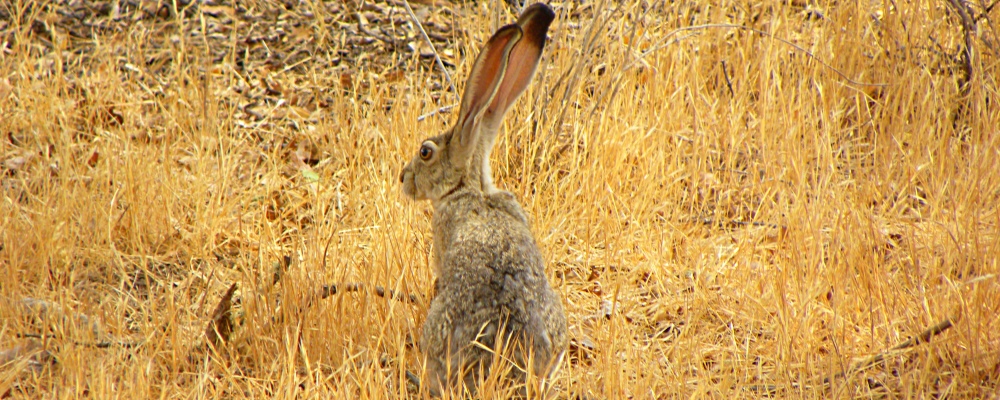
Black-tailed Jackrabbit
Order: Lagomorpha, Family: Leporidae
Genus: Lepus, Species: californicus
The Mammals
The Black-tailed Jackrabbit
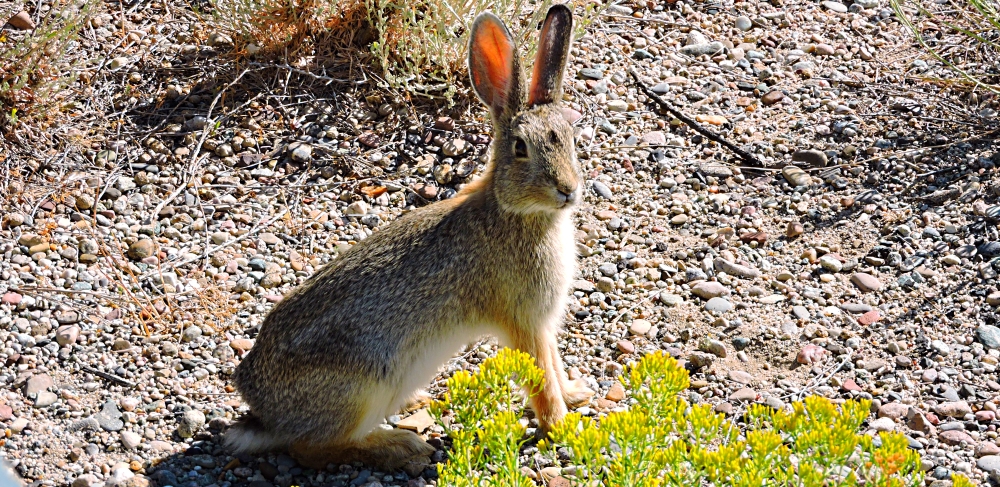
(m3an-chm-rabb-2013-0722.0914) Black-tailed Jackrabbit

Description
The black-tailed jackrabbit, also known as the American desert hare, is a common hare of the western United States and Mexico, where it is found at elevations from sea level up to 10,000 feet. Reaching a length around 2 feet, and a weight from 3 to 6 pounds, the black-tailed jackrabbit is one of the largest North American hares.
Their breeding depends on the location; it typically peaks in spring, but may continue all year round in warmer climates. Young are born fully furred with eyes open; they are well camouflaged and are mobile within minutes of birth, thus females do not protect or even stay with the young except during nursing. The average litter size is around four, but may be as low as two and as high as seven in warm regions.

Habitat
Black-tailed jackrabbits occupy mixed shrub-grassland terrains. The black-tailed jackrabbit does not migrate or hibernate during winter and uses the same habitat of about a mile or less year-round.
The black-tailed jackrabbit can occupy a wide range of habitats as long as diversity in plant species exists. It requires mixed grasses, forbs (herbaceous flowering plant that are not a grasses), and shrubs for food. They use shrubs or small trees for cover. It prefers moderately open areas without dense understory growth and is seldom found in closed-canopy habitats.
The hares host many ectoparasites including fleas, ticks, lice, mites and for this reason, hunters often avoid collecting them.

Range
The black-tailed jackrabbit is the most widely distributed jackrabbit in North America. Native black-tailed jackrabbit populations occur from central Washington east to Missouri and south to Baja California Sur and Zacatecas. Black-tailed jackrabbit distribution is currently expanding eastward in the Great Plains at the expense of white-tailed jackrabbit. The black-tailed jackrabbit has been successfully introduced in southern Florida and along the coastline in Maryland, New Jersey, and Virginia
There are at least six subspecies and as many as seventeen, all of which occur entirely or partially in the United States

To go back to the Mammal Order Index, click on down arrow. Go Back Go to previous section
on this page

Thank you for visiting The Wayƒarers Journal.

See Ya above the Treeline!

This Page Last Updated: 31 March 2026


To continue to the next Episode Level page, Click here go to top
 
The Wayƒarers Journal © ::: Come Join the Journey ™
by Thom Buras
Come Join the Journey ™