|
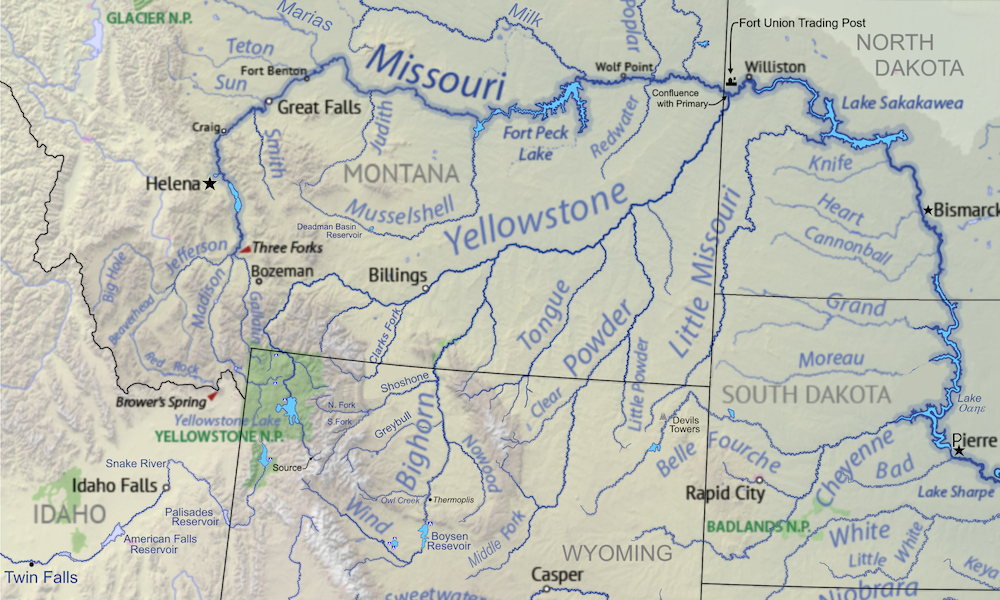
The Yellowstone river enters the Missouri river just after the Missouri river has left the state of Montana and flowed into the state North Dakota. At this confluence, the Yellowstone river has flowed 692 miles down from its source south of the Yellowstone National Park at the location where the North Fork Yellowstone river and the South Fork Yellowstone river merge to form the Yellowstone River.
The Source of the Yellowstone
The Yellowstone river rises southeast of Yellowstone national park in the Washakie Wilderness and in the Absaroka Range (a range of the Rocky Mountains in Wyoming), at the location where the North Fork of the Yellowstone river and the South Fork of the Yellowstone merge. The elevation at this confluence is over 8500 feet.
Both the North Fork (43.981181, -109.859902) and South Fork (43.970065, -109.838085) find their source on the west slopes of Thorofare Mountain which is by far the most remote spot not only in Wyoming but is the single area in the continental United States that is furthest from any roads. It is the perfect spot for going off the grid for a few days and it happens to be breathtaking.
The combined water from these two forks flow down from an area in the Briger-Teton national forest. The Yellowstone River then crosses into the Teton Wilderness just east of the continental divide, then flows into the national park, crosses the south boundary trail, and then meanders over the Two Oceans Plateau for some fifteen miles and enters the national park.
Yellowstone National Park
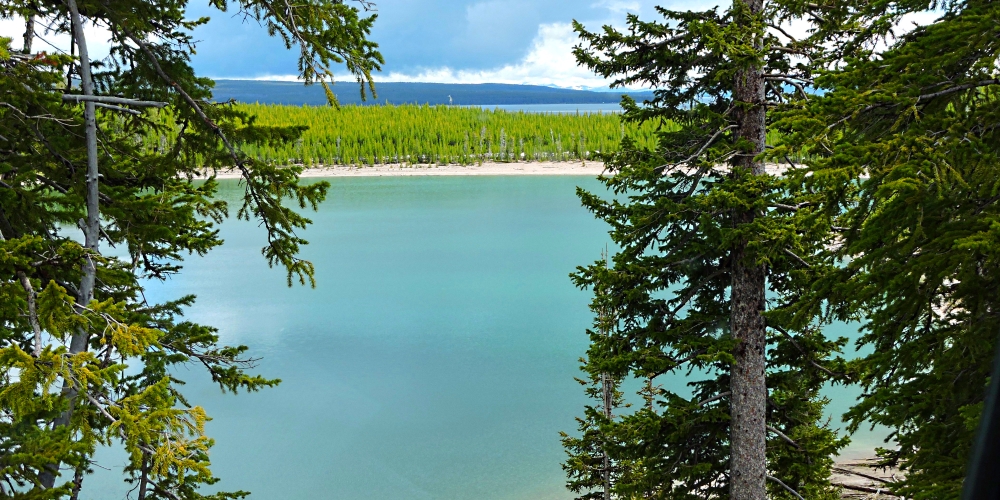
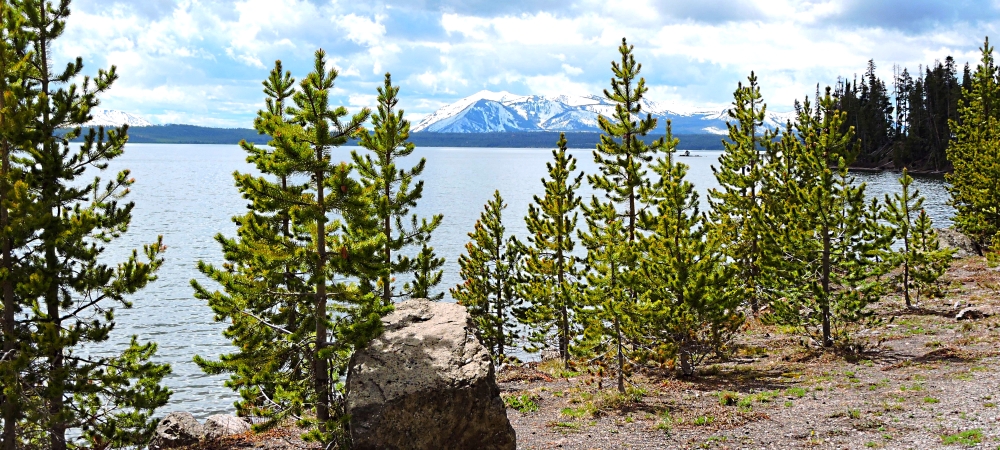
After passing between Hawks Rest Mountain and Two Ocean Plateau South Mountain, then receiving the output of Bridger Lake, the Yellowstone river enters Yellowstone national park just above Thorofare creek. From here, the Yellowstone river meanders through a high valley of above 7800 feet in elevation and slowly descends to the extreme southeast corner of Yellowstone Lake.
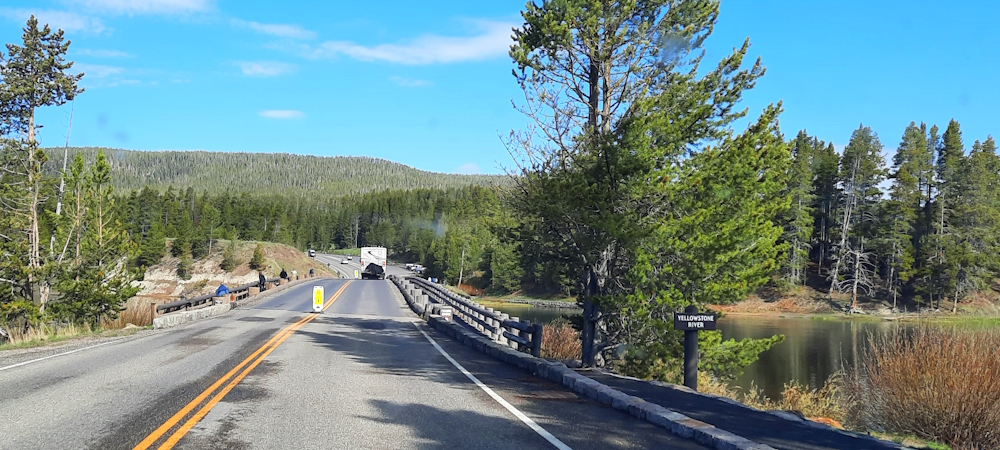
As water flows northward under the Fishing Bridge and out of the northern end of Yellowstone lake, the Yellowstone river resumes it′s northwestward course through Hayden valley, then plummets some one hundred feet over the upper falls and next another three hundred and eight feet over the lower falls. Then, after passing Artists Point, it enters northeastward into the
Grand Canyon of the Yellowstone and does a slow sweeping curve back to a northward direction along it′s path towards Tower Junction where the Lamar river together with it′s tributaries merge with the Yellowstone river. Then the Yellowstone river continues westward, passes under the
Hellroaring foot bridge, then westward further where the river exits the national park only soon after to merge with the Gardiner river.
The Yellowstone River Valley
From the Gardiner junction, the Yellowstone river, now at the elevation of about 5200 feet, continues in a northern direction with mountains on both sides of the river. Further north, after passing Tom Miner Creek, the valley begins to ever widen and have numerous location for growing crops. Some distance north, the river arrives at the city of Livingston, Wyoming and crosses under IH 90.
During the summer, like most of the midwest area of the continent, nearly the entire length of this river valley corridor is green with hay, soy, corn and possibly more crops. Sadly, nearly all of this crop land, like most of this continent, produces GMO crops.
In Billings, the river continues along the interstate highway but now, IH 94 merges with IH 90, and both the interstate highway and the river turn in a westward direction. When the highway and river arrive at Livingston, Montana the highway continues west to Bozeman, but the Yellowstone river turns south toward Gardiner where the Gardiner river forks to the south toward Yellowstone National Park, past
Boiling River hot springs, past Mammoth Hot Springs, and all the way to Norris geyser basin.
The Yellowstone River
At the point where the Yellowstone river merges with the Missouri river, which is near the Montana-North Dakota state line and about two miles downriver along the Missouri river from the
Fort Union Trading Post, the Yellowstone river flow south in North Dakota, then crosses into Montana and follows generally a southwesterly course for many miles along a wide fertile valley. There are several state highways that follow the Yellowstone river from its confluence with the Missouri river to the town of Glendive, Montana where IH 94 crosses the river. Then, IH 94 joins the Yellowstone river in the river valley and both continue in the same southwest direction and eventually arrive at Billings, Montana.
From here, take IH 90 west and continue for about another fifteen miles to the southwest where the Clark Fork of the Yellowstone River joins the Yellowstone River from the south. At this junction of rivers, take exit 434 from IH 90 and drive south on US 212, which for the purposes of this narative is considered the beginning of the Beartooth highway.
Primary:
Missouri River
Confluence with Primary Location:
47.980228, -103.981898
Confluence with Primary Elevation:
1870 feet
Source:
North Fork Yellowstone River at South Fork Yellowstone River
Source Location:
43.988041, -109.928887
Source Elevation:
8507 feet
Total Length:
692 miles
|