|
Taxonomy:
Kingdom:
Animalia
Phylum:
Cordata
Class:
Mamalia
Order:
Atiodactyal
Family:
Cervidae
Sub-family:
Capreolinae
Genus:
Odocoileus
Odocoileus is a genus of medium-sized deer of the family Cervidae, containing two species native to the Americas. The name is sometimes spelled odocoeleus and the word is from a contraction of the odonto- and coelus meaning hollow-tooth.
North America
Species:
O. hemionus
Common Name
Mule Deer
Range:
Western North America
Adult Height at Shoulders:
2.6 to 3.5 feet
Adult Mass in Summer:
Male: 120-330 lbs, Female: 95-200 lbs
Description:
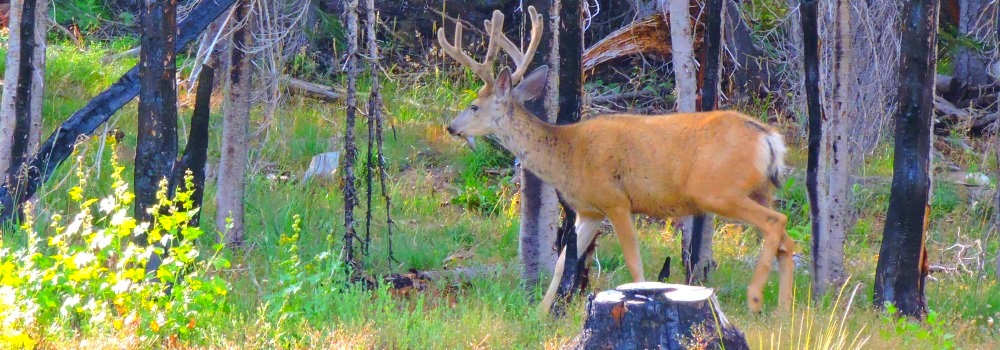
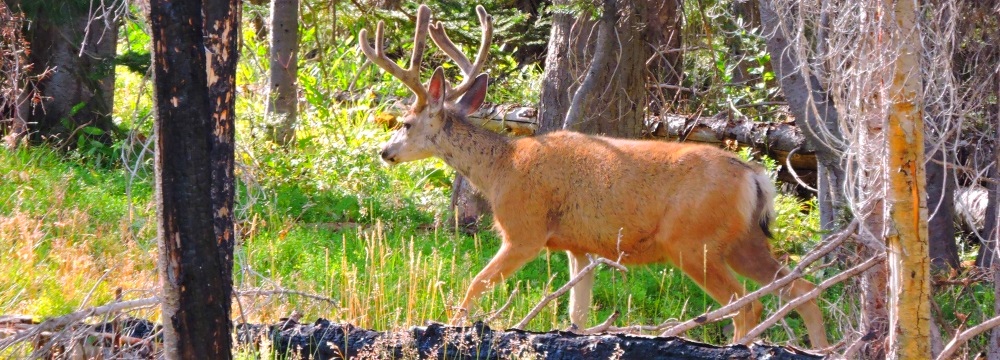
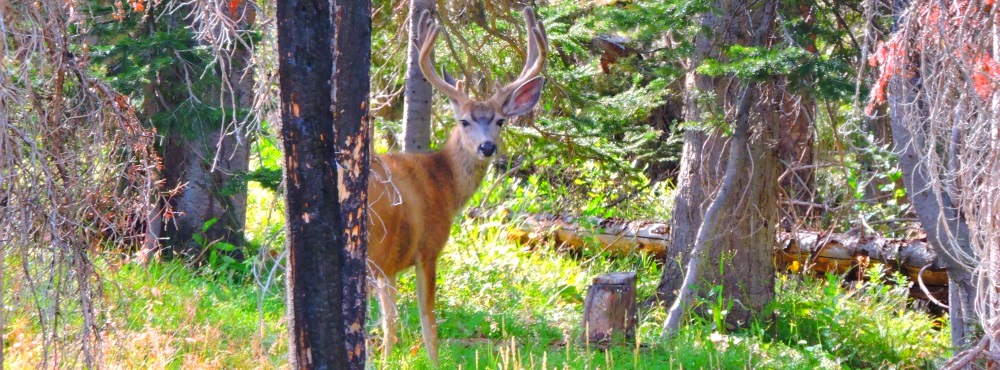
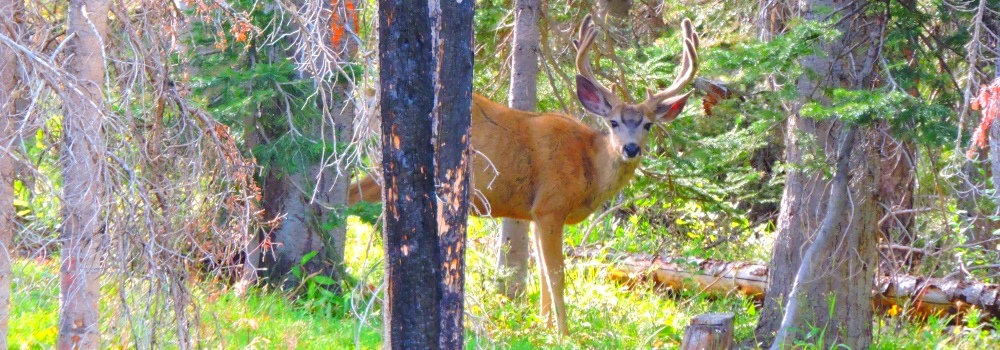
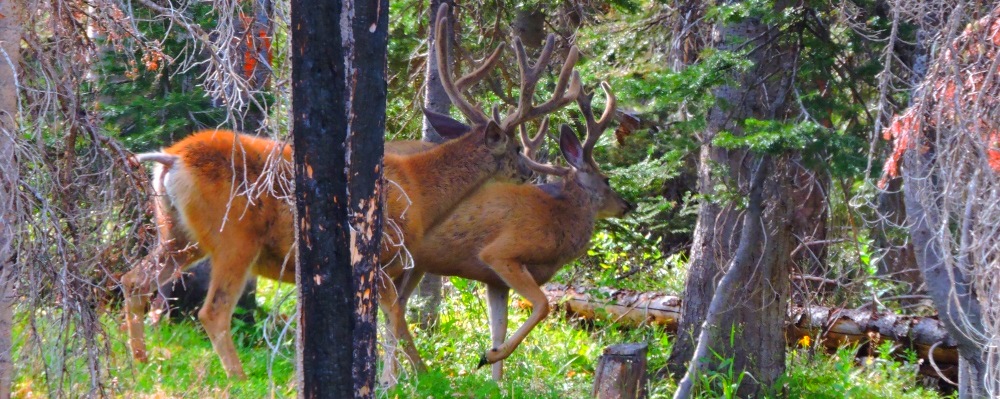
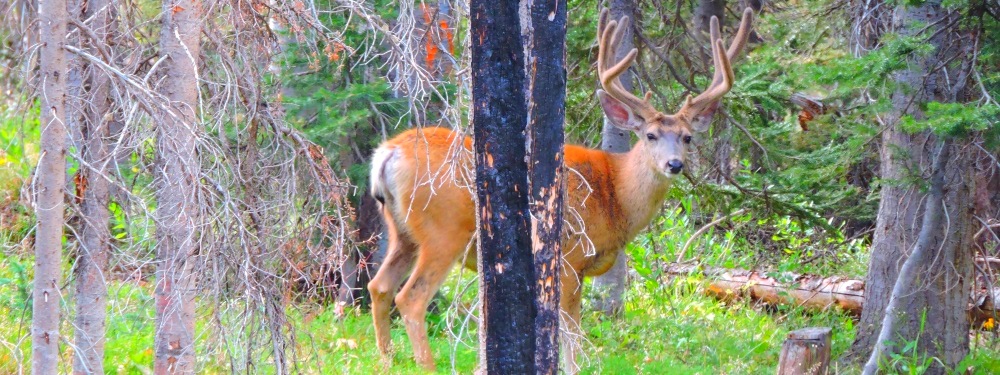
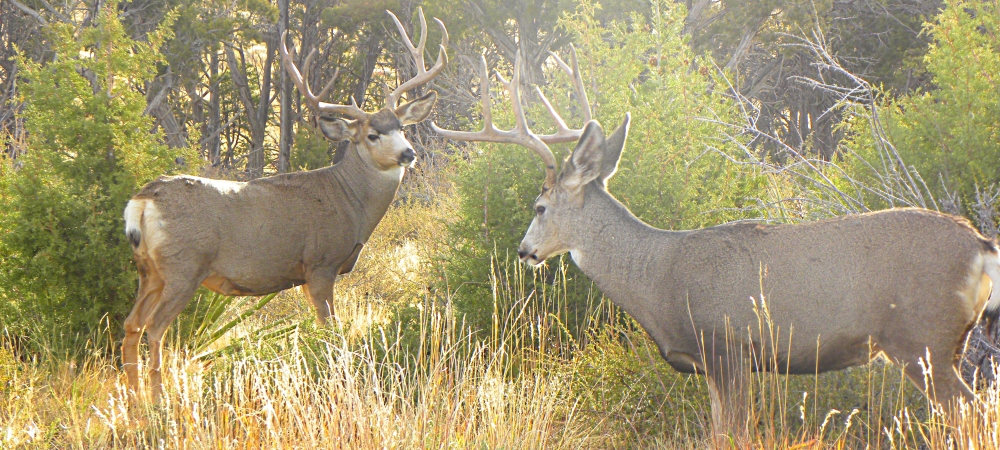
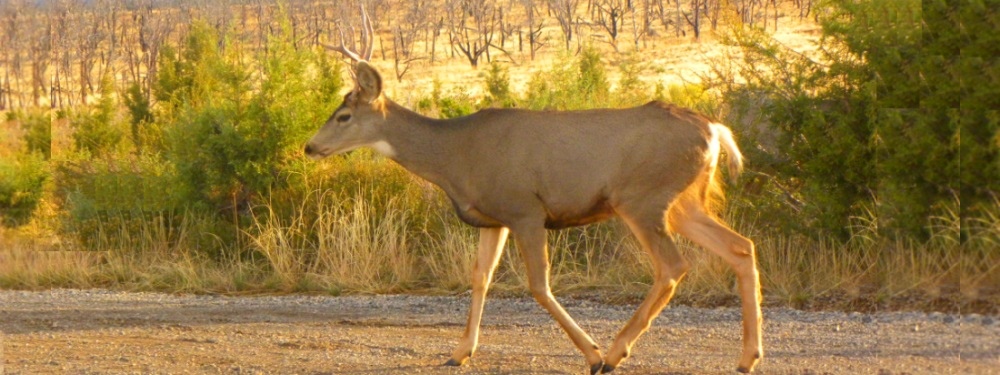
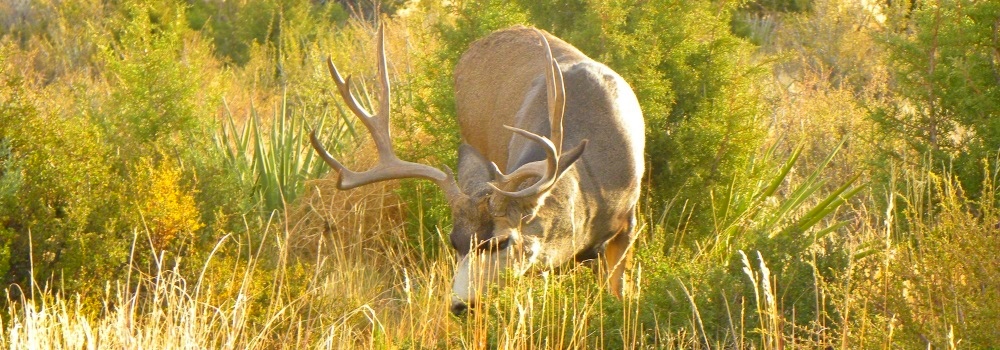
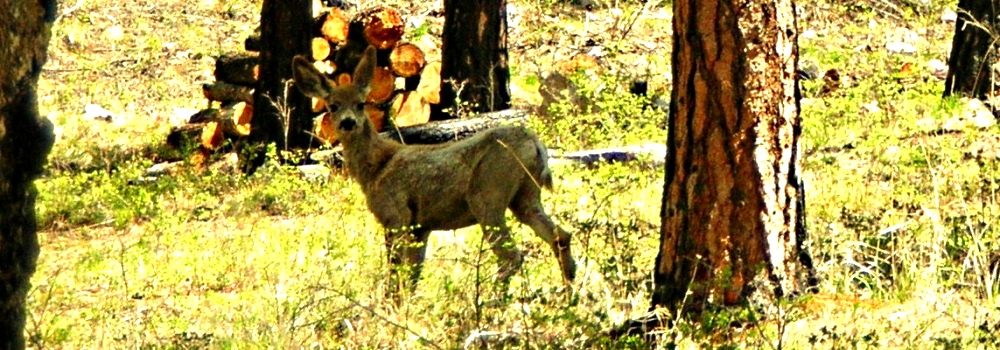
Mule deer are named for their large mule like ears. Also, mule deer have a
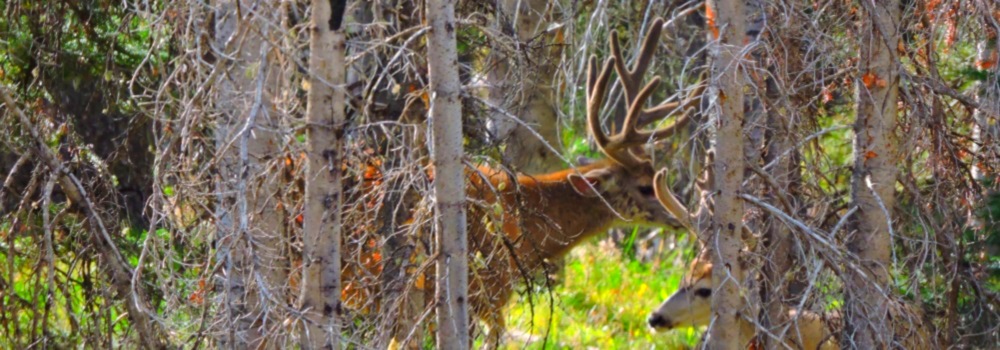
distinctly black tipped tail. Mule deer have bifurcated antlers which means
that they fork off the main beam as they grow.
Habitat:
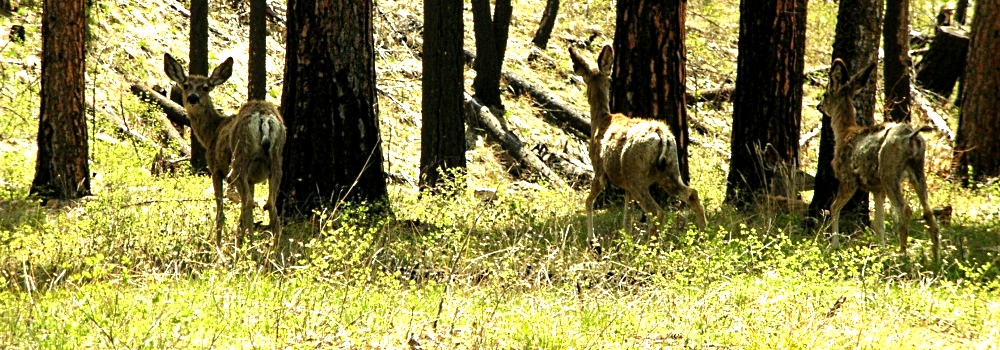
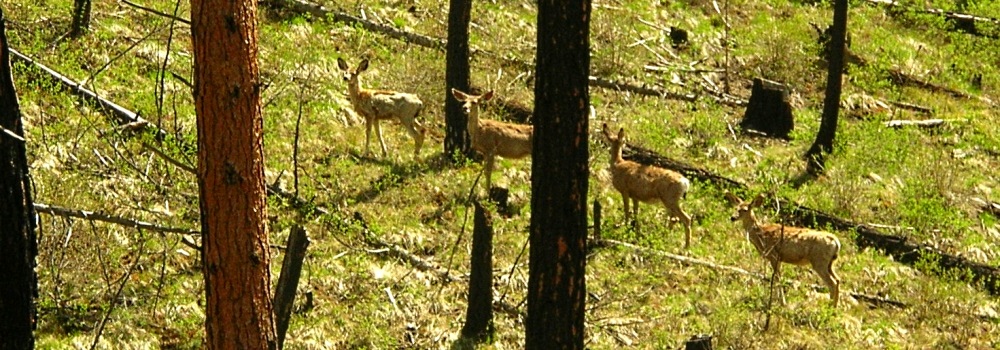
This species is extremely adaptable and inhabit every principal vegetative
ecosystem in western North America including open grasslands, agricultural
land, shrublands, woodlands, mountain forests, semi-deserts, and mountain
high ecosystems. The only exceptions, where mule deer are not found
are tundra, sub-tropic, and extreme desert regions.
Subspecies:
Sitka black-tailed deer (O. hemionus sitkensis)
Columbian black-tailed deer (O. hemionus columbianus)
California mule deer (O. hemionus californicus)
Southern mule deer (O. hemionus fuliginatus)
Peninsular mule deer (O. hemionus peninsulae)
Desert mule deer (O. hemionus eremicus)
Rocky Mountain mule deer (O. hemionus hemionus)
|