|

|
|
|

|

|
|
|
The Santa Fe Trail:
Kansas


|
|
|
The Santa Fe Trail Information
The Santa Fe Trail was the most important national westward route which traversed from the Missouri River near the modern day city of Kansas City, Missouri to Santa Fe, Mexico, which trail predated the building of the railroads along a nearby route. It was used extensively by freighters, Mexican and American traders, those headed to Pikes Peak, and the military from Fort Leavenworth in 1846 to invade Mexico. After the Mexican-American war, the trail became a national road connecting the more settled areas of the US with the southwest territories. Commercial freighting on the trail increased substantially, including military supply hauling to the forts. The trail was used by stagecoach lines, adventurers, gold seekers on their way to the gold fields in California and Colorado, as well emigrants, missionaries, and wealthy families of New Mexico.
Of its approximate 900 miles, there are 481 miles found in the state of Kansas. It also passed through portions of what is now Missouri, Colorado, and New Mexico. The alternate route which is called the Cimarron Cutoff crosses portions of what is now Kansas, Oklahoma and New Mexico, traverses just less than 400 miles.
Numerous segments of the trail were considered much safer to travel than others. Those posing greater risks to the traveler and a liability to traders with their cargoes were found on the central and southwestern parts of the trail.
One such area was known as the Jornado portion, which was located on the "dry routes" to Santa Fe. It lay on what was known as the Cimarron cut-off. This "uninhabitable desert region," as it was known to the early caravans and travelers, encompassed an area bounded on the north by the present-day city of Cimarron to the Cimarron River on the south.
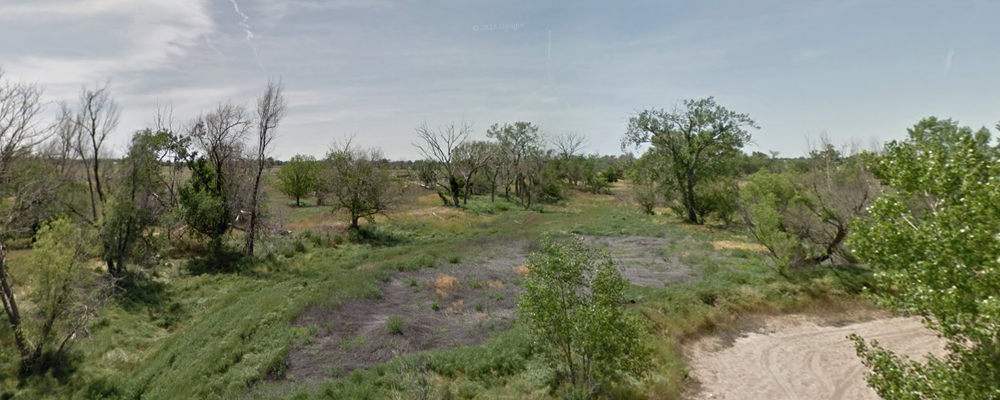
The Spanish word Jornado means "long journey." This approximate 50 to 60 mile stretch was usually devoid of water during the dry season and was considered by those who traveled the region to be traversed without delay. Not only was water a scarce commodity but also the trail markings were invisible with no landmarks to guide the traveler. It was not until the mid-1830s, during an uncommonly wet year, that wagons were to leave their imprints in the form of permanent ruts. It was only then that the trail could be traveled with any degree of certainty.
Stories were told of a large company of men and animals traveling through this region in 1822 who nearly succumbed to thirst. They were only able to satisfy this need by killing buffalo and drinking the blood. In spite of the dangers, the Jornado continued to be traveled as it allowed a shorter route to Santa Fe than the more northerly mountain route.
Historians note more than 130 trail-related sites along the Kansas portion of the Santa Fe Trail, including segments of trail ruts, campgrounds, forts, trading posts, battle sites, and burials. Several Kansas trail sites are listed in the National Register of Historic Places.
Description:
National Roadpath:
Roadpath Type:
National Historic Trail
Roadpath Total Length:
800 miles, 1287 km
Roadpath Waymark:
Brown and white with NHT shield: oxen pulled wagon
Roadpath Use:
tourism, travel
State Roadpath:
Roadpath Length in Kansas:
481 miles, 774 km
Roadpath Modern Path:
US Highway 50 (US 400) and CH 194 (Colorado)
Along north bank of Arkansas River
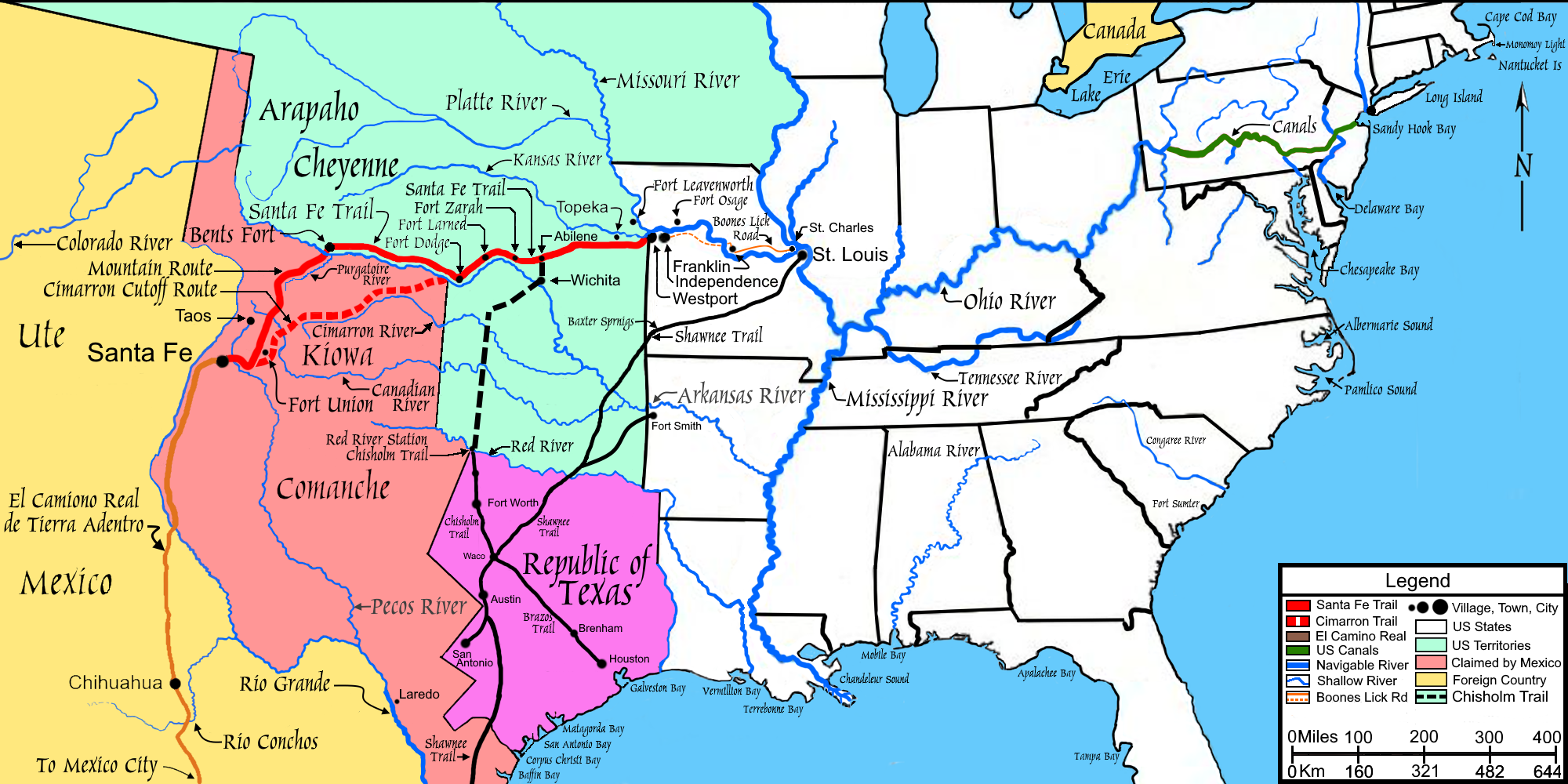
(m0-maps-santafetrail-map) Santa Fe National Historic Trail Map
|
| |
|
The 2023 Journey,
Santa Fe Trail, Kansas: Western Section
|
|
(Day
715 TN) 49°F. 7:30 am, Sunny
Journey On, Day Five
Texhoma Park CG, Dumas, Texas
I have been driving through Oklahoma on US 56, and in doing so, have been following the route of the old Santa Fe Trail on the southern most route, known as the Cimarron Cutoff.
After driving for less than an hour, I come upon the Kansas state line. I continue on US 56 through Kansas and notice that this highway continues to follow the old Cimarron trail toward Dodge City. When I stop for fuel, I also google the Santa Fe trail for a map and find out the there is a major crossover from Garden City on the Santa Fe Trail to the Cimarron Trail coming south out of Dodge City. So, when I get to Sublet, Kansas, I drive north to Garden City so that I can try to connect with an old friend of mine named Craig. After trying, I do not have any success in my effort to contact him, so instead, I search for a w-mart nearby.
However, what I find is that the closest one is in Dodge City, Kansas. Since it is already late in this day, I instead locate a d-mart, drive there and find a good location to park for the night.
(Day 716 TN) 50°F. 7:00 am, overcast
Journey On, Day Three
Overnighting in a parking lot
Coordinates: 37.9860927, -100.8345189
Elevation: 2831 feet
Awake, dress in my fall blues, drive to the w-mart, take my bag inside and set up for another day of work on my computer. However, I pack out a little early today, so that I can explore the downtown area of
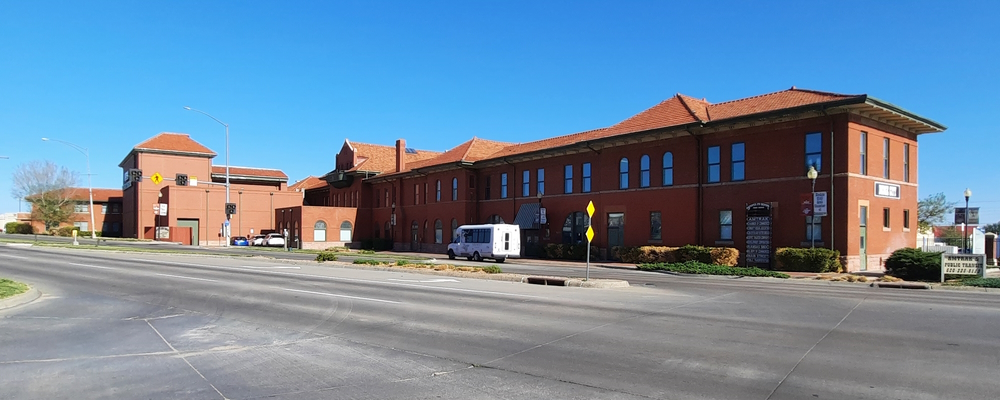
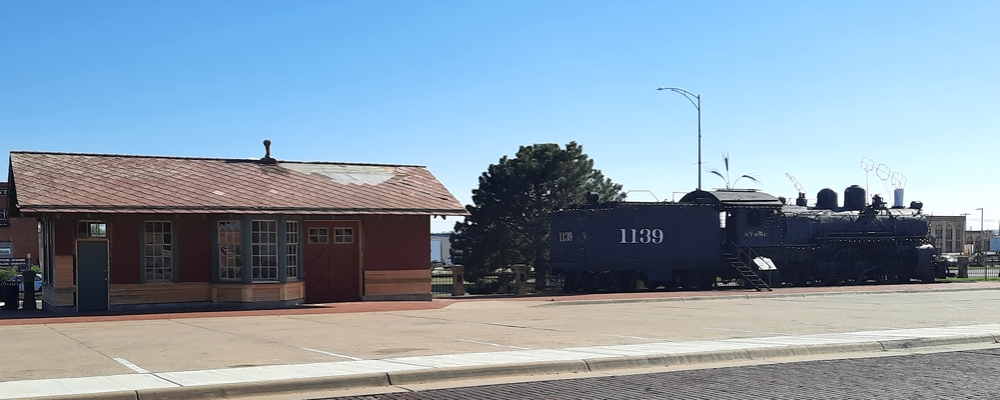
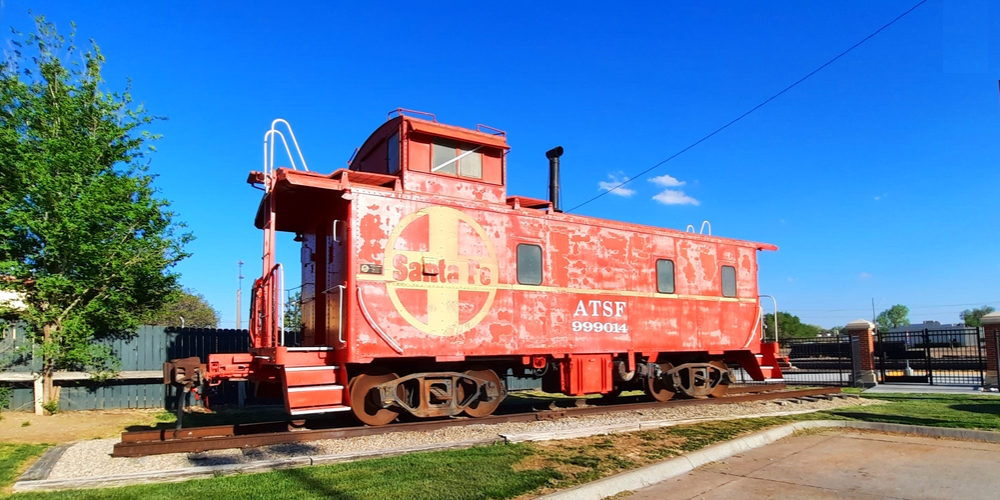
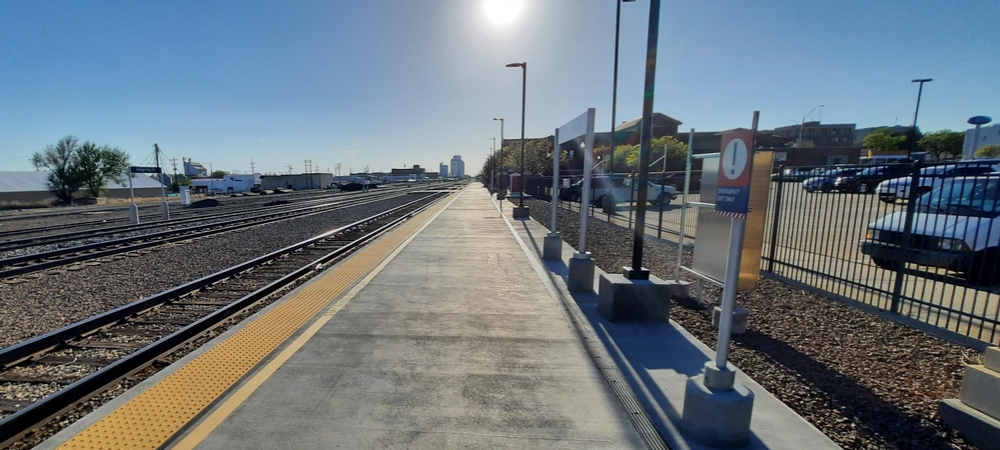
Dodge City. I notice first that all of the older areas of downtown have streets paved with red brick and I find several murals depicting the history of Dodge city painted on the walls of buildings. I also drive to the railroad to see a couple of train cars on display there.
|
| |
| |
|
To go back to the Gallery Index, click on the down arrow.
|
|
|
Thank you for visiting
The Wayƒarers Journal.
| |
See Ya above the Treeline!
| |
This Page Last Updated: 31 March 2026
|
|
|
|
To continue to the next Episode Level page,
Click here

|
|
| |