|
Species:
Tursiops truncatus, Atlantic (common) bottlenose dolphin
Conservation Status:
Least Concern (LC)
Description:
Common bottlenose dolphins are gray, can be between 6 and 13 feet in length and weigh between 330 and 1430 pounds. Males are generally both heavier and larger than females. Average adult length is between 8 and 12 feet and weight is between 440 and 1,100 pounds. The average life expectancy of bottlenose dolphins is about 17 years old, but in captivity, some have lived as long as 50 years.
A group of dolphins is called a pod or school, which typically number about 15 individuals but can be more or less at times. Males are called bulls, females are called cows and babies are called calves. Females give birth to one baby at a time every 1 to 6 years depending on species and the individual.
These dolphins have a short and well defined snout that looks like an old fashioned liquor bottle, hence, there name and on the top of the nose is the blow hole. Also, dolphins have a much more flexible neck because five of the seven vertebrae are not fused together like other dolphines.
As considerable genetic variation has been described within this species, even between neighboring populations, many experts think additional species may be recognized.
Habitat
These dolphins inhabit warm and temperate seas worldwide.
Range:
The common bottlenose dolphin can be found in temperate, subtropical, and tropical oceans around the world, some living closer to the shore and others living further out to sea. Offshore populations can migrate up to 2,600 miles in a season and inshore populations move much less.
Coastal dolphins can be found in bays, estuaries, harbor and lagoons,
Sub-species:
Tursiops truncatus truncatus
Tursiops truncatus ponticus
Tursiops truncatus gephyrus
(Day 950 BR) 37°F. 5:45 am
Goose Island State Park, TX, CRS: 4.0
Awake long before sunrise and I work for a while on my journal. The cold front that moved in yesterday made it much colder this morning.
At sunrise I go to the St Charles Bay boat launch and photograph the sunrise, after which I go the big tree, then to look for the whooping cranes and see them in a pasture but they are too far away to photograph.
Then at eight, I meet with a group of birder's and walk along the waterfront where we see well over twenty birds including an osprey fishing.
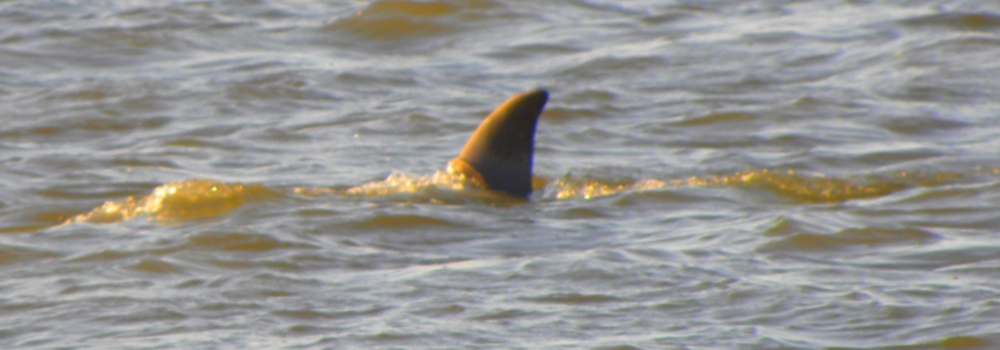
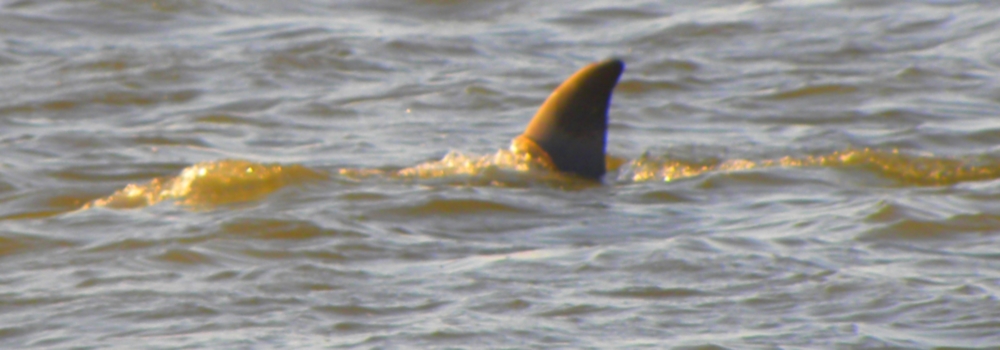
During the walk along the waterfront, the ranger points out a dolphin in the water.
|