The Wayƒarers Journal ©

The Journal

The Wayƒarers

The Selƒ

The Journey

The Burden

The Mountain

   The Ancients
   The Earth

     Geochronology
     Continents

       Africa
       Antarctica
       Asia
       Europe
       North America

       Arctic Mountains
       Greenland
       Canada Lowlands
       Canadian Shield
       Interior Lowlands
       Rocky Mountains
       Basin and Range
       Pacific Coast
       Great Plains
       Appalachian Mtns
       Interior Highland
       Coastal Plains
       N. Sierra Madre
       Trans Volcanic
       S. Sierra Madre
       S-Mad de Chipas
       S. Pacific Coaste
       Island Mountains
       Continental Shelf

       Oceania
       South America

       Antarctic Ocean
       Arctic Ocean
       Atlantic Ocean
       Indian Ocean
       Pacific Ocean

     Oceans

   The Life
   The Modern Man
   The Nonpareils
   The Steps
   The Way

The Appendix

The Wayƒarer
The Mountain
Go to bottom of this page
THE GEOGRAPHICAL REGIONS
The Great Plains, Texas

The Edwards Plateau Gallery Go Down Go Back
The Edwards Plateau is the bottom part of the Great Plains in Texas and are bordered on the south and east by the Balcones Fault, a geological line in Texas running east from Del Rio, through San Antonio, Austin and curving northward through the east side of Dallas. This geological line has the surface expression of the Balcones Escarpment consisting of cliffs and cliff-like structures.
Balcones Escarpment
This escarpment forms the southernmost and easternmost boundary of the Great Plains in the area of the Edwards Plateau, an area also call by the name Texas Hill Country. Below the Edwards Plateau at the bottom of these cliffs are the Texas Coastal Plains. The coastal plains in Texas extend southward and eastward to the Gulf of Mexico.
Balcones Fall Zone
The Balcones Fall Zone, also called the Fault Zone or Fall Line, is the area where an upland region and a coastal plain meet and is noticeable especially where rivers cross it, with resulting rapids or waterfalls. The uplands are relatively hard crystalline basement rock, whereas the coastal plain are softer sedimentary rock. A fall line often will recede upstream as a river cuts out the uphill dense material, forming "c-shaped" waterfalls and exposing bedrock shoals.
Because of these features, riverboats typically cannot travel any farther inland without portaging, unless locks are built. The rapid change of elevation of the water and resulting energy release make the fall line a good location for water mills, grist mills, and sawmills. Seeking a head of navigation with a ready supply of water power, people have long made settlements where rivers cross a fall line.
Too, the Balcones fall line is a demarcation line for certain ecological systems and species distributions.
Fault Risk
The Balcones Fault is one of the lowest risk zones on the North American continent and is believed to have been inactive for about 15 million years, with the last activity during the Miocene epoch.
Further, it is believed that the Balcones fault zone may have been a southwestern extension of the Ouachita Mountains in Oklahoma, but have long since been buried under thousands of feet of sediment.
Subterranean features such as caves and springs (see the lists below) are numerous along the Balcones fault zone. Many cities are located on or near the Edwards Plateau, most likely because the Balcones fault zone has numerous locations for spring water.
History:
Probably the most famous of all the historical trails that cross near the Balcones Escarpment is the Spanish Colonial trail known as El Camino Real de Los Tejas, which during that colonial time, the path followed the many water sources that were provided by the numerous springs just below the escarpment. (see The Steps below.)

The Ancients
Ancient Steps:

The Earth:
Geological:
Caves:
Cascade Caverns, 29.7634900, -98.680245
Kickapoo Caverns, 29.610379, -100.452502 (Stuart Bat Cave)
Longhorn Caverns, 30.684630, -98.350930
Natural Bridge Caverns, 29.692697, -98.342693
Caves of Sonora, 30.555224, -100.811931
Inner Space Cavern, 30.607991, -97.687935
Cave Without a Name, 29.886169, -98.618351
Springs:
Blue Hole, 30.003204, -98.090622
San Marcos Spring, 29.894677, -97.930275
San Marcos Spring Lake, 29.892910, -97.930390
Barton Spring, 30.263508, -97.772106
Salado spring, 30.943653, -97.536557
Parks:
Jacob′s Well Natural Area, 30.039080, -98.126319

The Steps
Pathway Journeys:
Steps Afoot
Footpath Journeys:

Steps Afield
Roadpath Journeys:
El Camino Real de Los Tejas

The Appendixes
Campgrounds:
Hill Country Natural Area, 29.627964, -99.181252
Inks Lake State Park, 30.737363, -98.368591
Lost Maples State Natural Area, 29.807732, -99.570521
Pedernales Falls State Park
San Angelo State Park
Seminole Canyon State Park

The 2020 Journey Edwards Plateau Go Down Go Up
The Great Plains
The Edwards Plateau The Great Plains
The Edwards Plateau
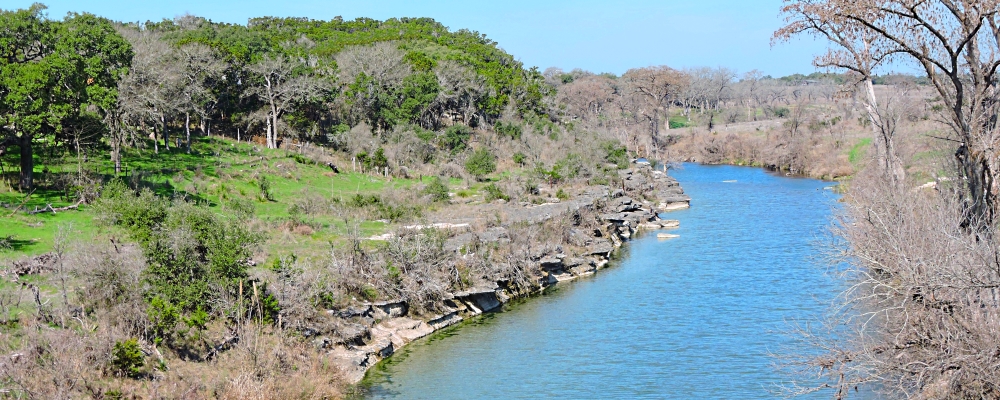
(m2gego-nam-09-tx-4k-2020-0222.1109) The Blanco River at Stone Canyon
The Great Plains
The Edwards Plateau The Great Plains
The Edwards Plateau
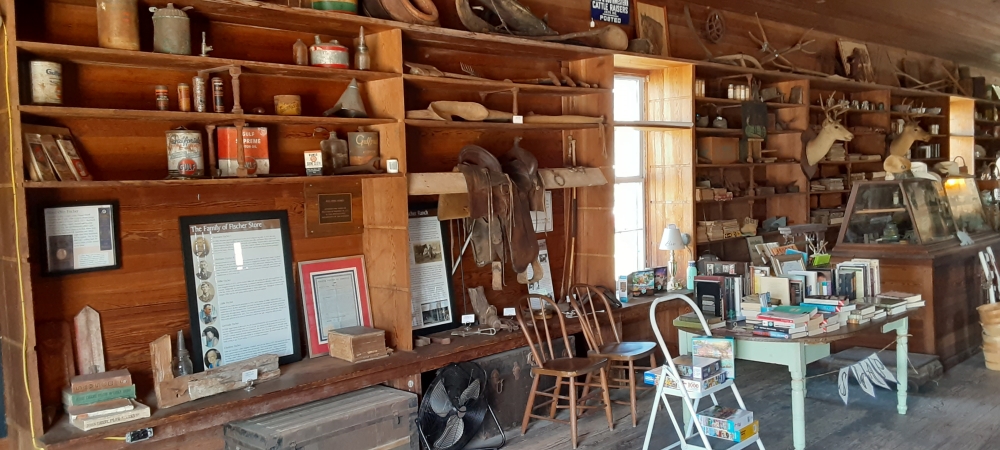
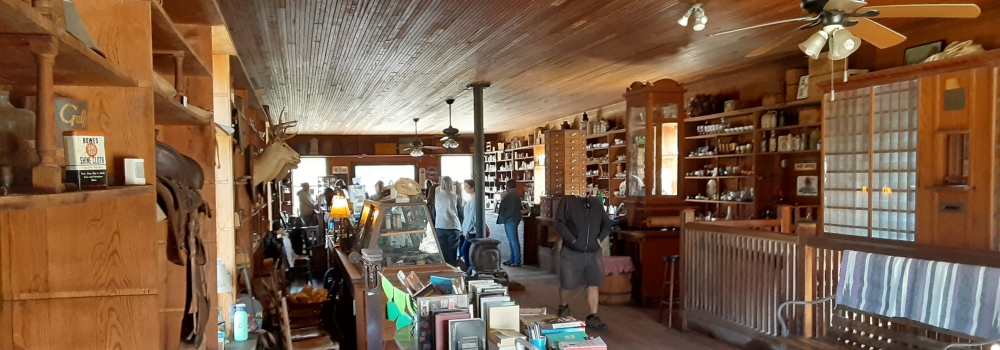
(m2gego-nam-09-tx-4k-2020-0222.1117) Inside the Fischer Store
The Great Plains
The Edwards Plateau
(m2gego-nam-09-tx-4k-2020-0222.1118) Inside the Fischer Store
The Great Plains
The Edwards Plateau The Great Plains
The Edwards Plateau
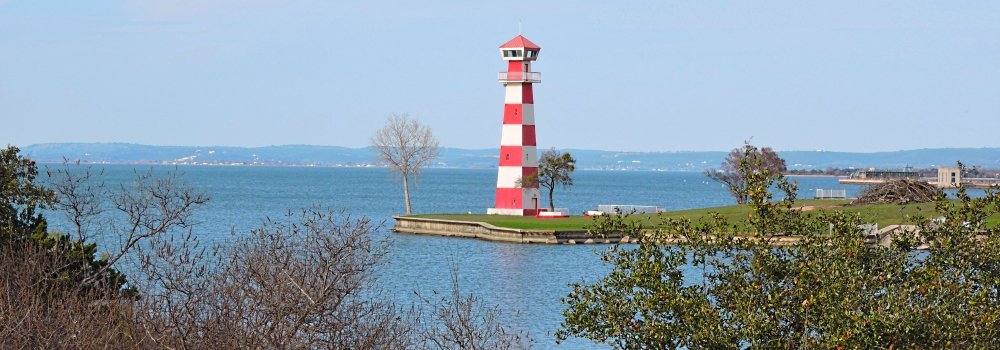
(m2gego-nam-09-tx-4k-2020-0222.1542 Lake Buchanan Light House
The Great Plains
The Edwards Plateau The Great Plains
The Edwards Plateau
16 February, 2020. Jacobs Well
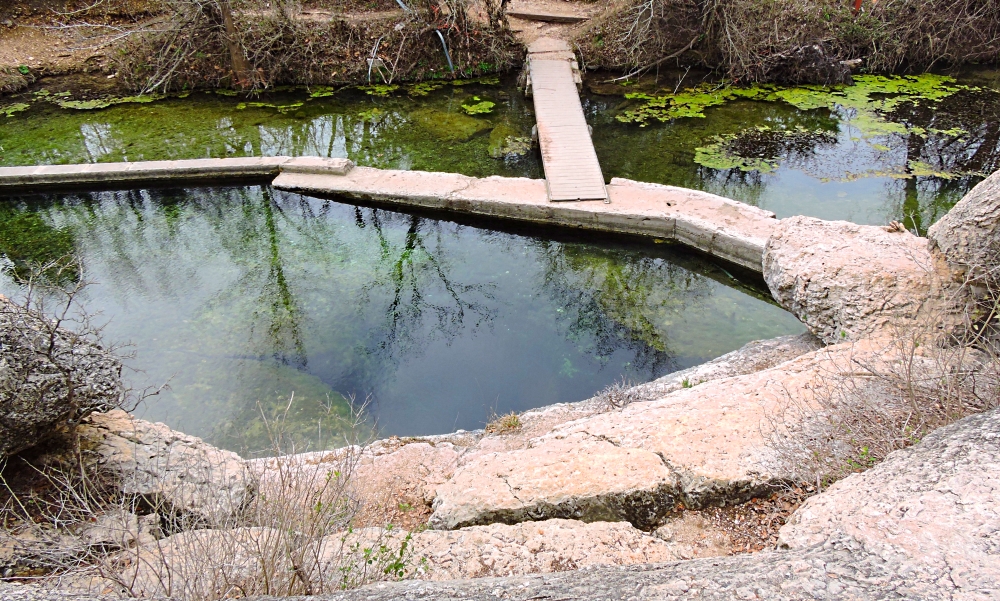
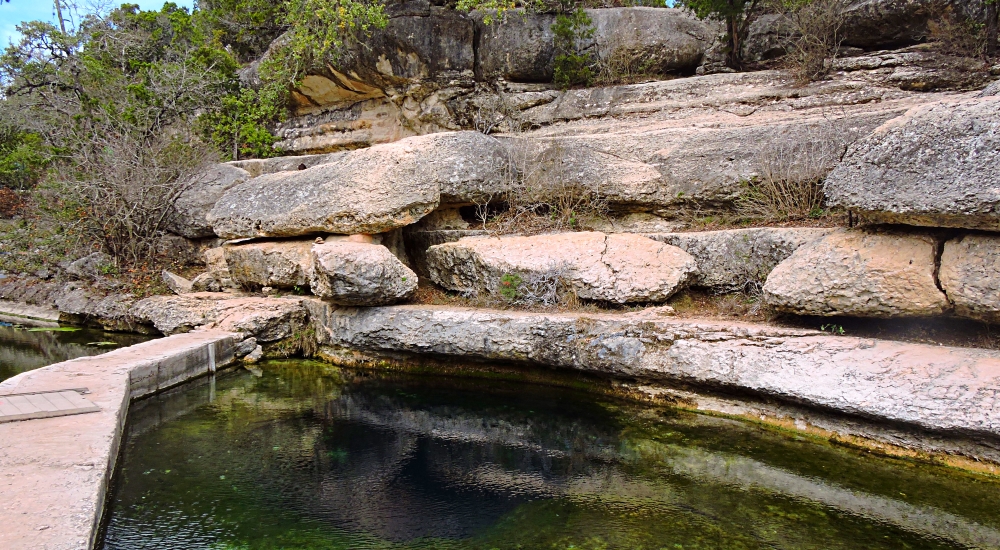
Found in the Balcones fault zone, Jacobs Well is an artesian spring and the headwaters of Cypress Creek located near the village of Wimberley, Texas. This spring formed in soft, porous limestone as rain water dissolved the rock on it′s return to the surface. This dissolving of the limestone forms karst features, which include holes, caves, and tunnels that eventually surfaces at the aquifer. Too, ground water that flows through limestone is filtered and is clear upon exiting the spring.
During the Cretaceous Period, some 100 million years ago, Texas was covered with vast inland seas teaming with life and as sea dwelling creatures died, there shells and skeletons dropped to the bottom of the seas. Over the millennia, their remains cemented together on the sea floor and eventually became the limestone that we see today.
Jacobs Well opens at the bottom of the Balcones fault zone and here a twelve foot opening descends vertically for twenty-three feet, then continues at an angle until it reaches its maximum depth of 140 feet. Here, a system of caves run under the Nature Center for about 4500 feet until arriving at the extent of the explored passageways.
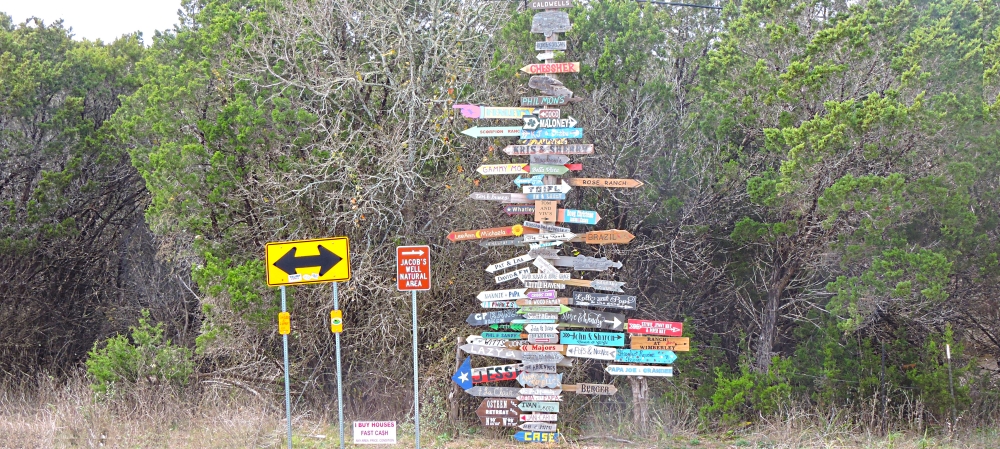
On Day 543 TG, while driving home from a weekend meeting, I stop to take a photo of the Sign Pole and notice another sign next to the pole giving me direction to Jacobs Well. Methinks, this Sign Pole, a normal telephone pole, has over the years, has acquired many of the signs attached it. I turn right and drive towards Jacobs Well.
The Great Plains
The Edwards Plateau
(m2gego-nam-09-tx-4k-2020-0216.1214) The Jacobs Well Directional Sign
Upon arriving at the natural area, I change into my walking clothes and then head to the visitors center but find all of the building closed, methinks because today is Sunday. Continuing along the trail, I begin the half mile walk to the spring.
I cross a shallow valley and turn right along the crest of the depression and watch as the valley deepens. After a short walk, I come upon a sign describing the history of Jacobs Well, from indigenous tribes, to how it got the name Jacobs Well and why the weir was built along side the spring. .
The Great Plains
The Edwards Plateau
(m2gego-nam-09-tx-4k-2020-0216.1233) The Balcones fault line at Jacobs Well
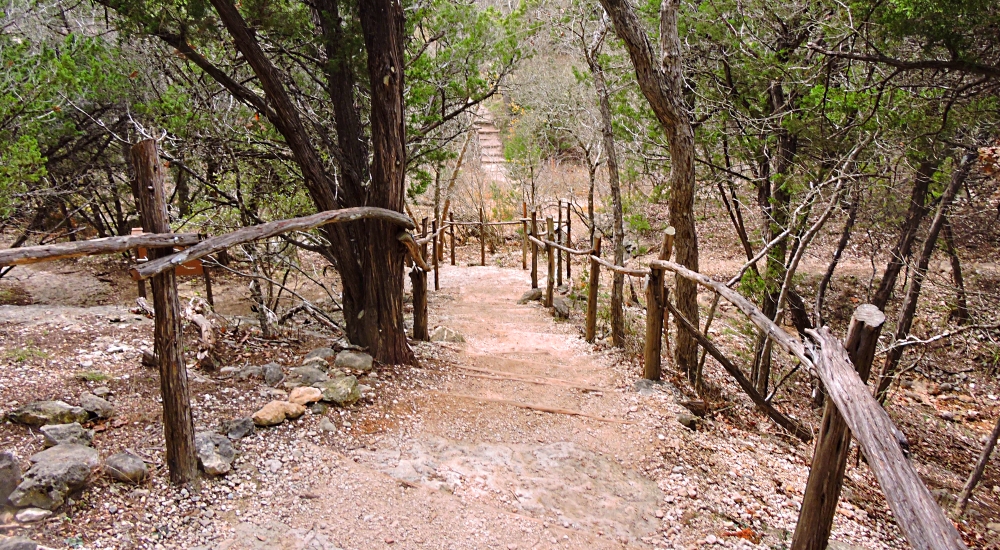
Walking further on the trail I come to another sign with a warning to watch your step. From here, the trail descends into the valley, much deeper now to a fork, one to the left to the spring along the limestone cliffs above it and one down into the valley and along the bottom to the spring. I arrive at the cliff above the spring and look down into the well.
The Great Plains
The Edwards Plateau
(m2gego-nam-09-tx-4k-2020-0216.1236) Jacobs Well from atop the Plateau
The Great Plains
The Edwards Plateau
(m2gego-nam-09-tx-4k-2020-0216.1244) Jacobs Well from below the Plateau

San Antonio
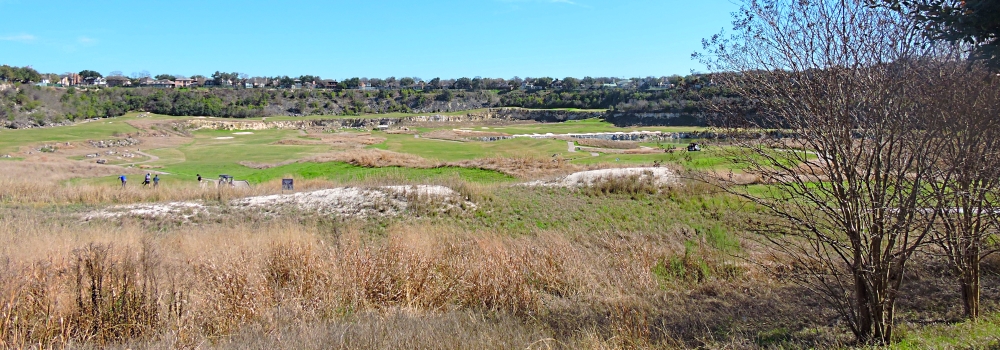
When going into San Antonio to replenish my food stores, I stopped at one hg-mart. After shopping and walking outside carrying my grocery bags, I notice something that methinks could be photo worthy. I talk to a man walking his dog and ask him if he knew that these cliffs are the Balcones Fault, to which he said, Yes, in fact, the houses atop the cliffs are in the neighborhood, I believe is called Balcones Heights. He goes on to tell me that the lower area on this side of the river where the people are playing golf, used to be a limestone quarry.
The Great Plains
The Edwards Plateau
(m2gego-nam-09-tx-4k-2020-0207.1412) The Balcones Escarpment in San Antonio

The 2019 Journey Edwards Plateau Go Down Go Up
The Balcones Escarpment
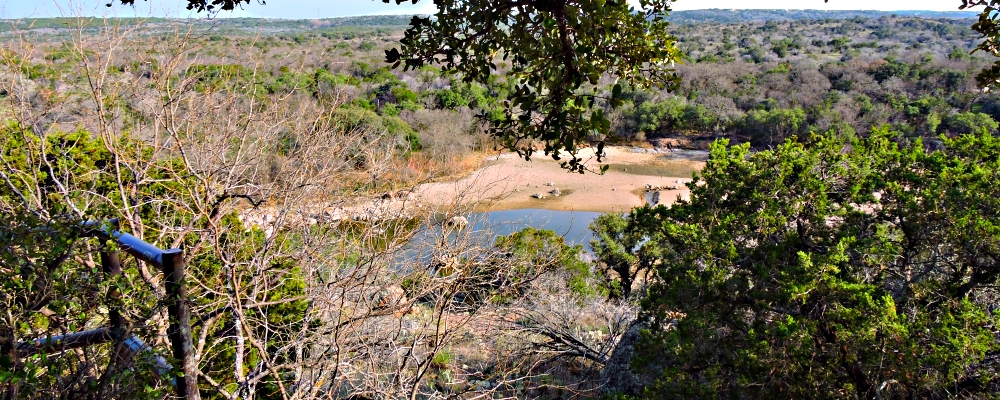
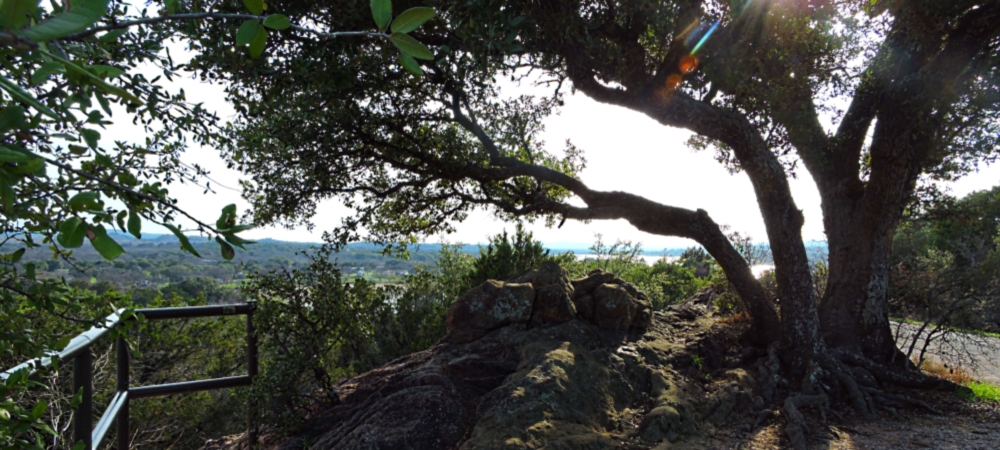
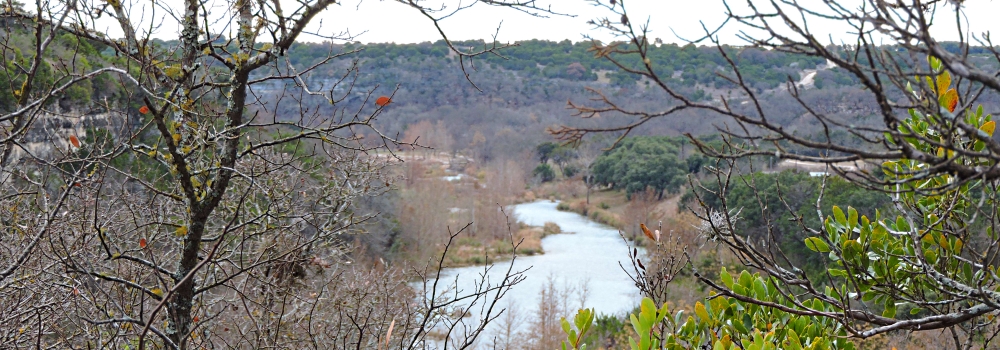
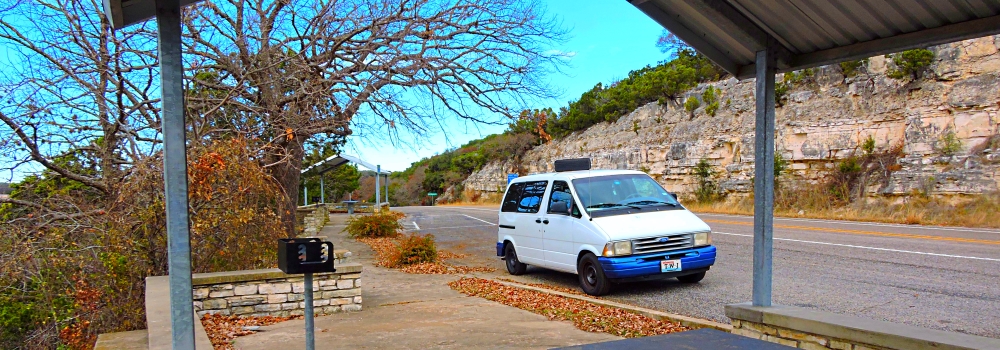
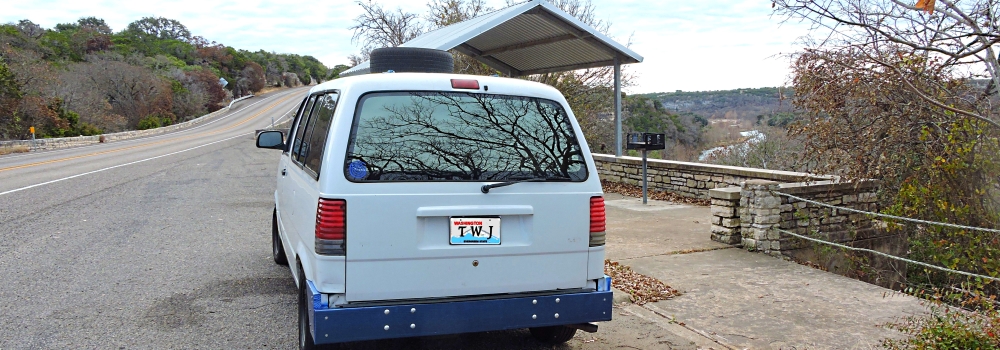
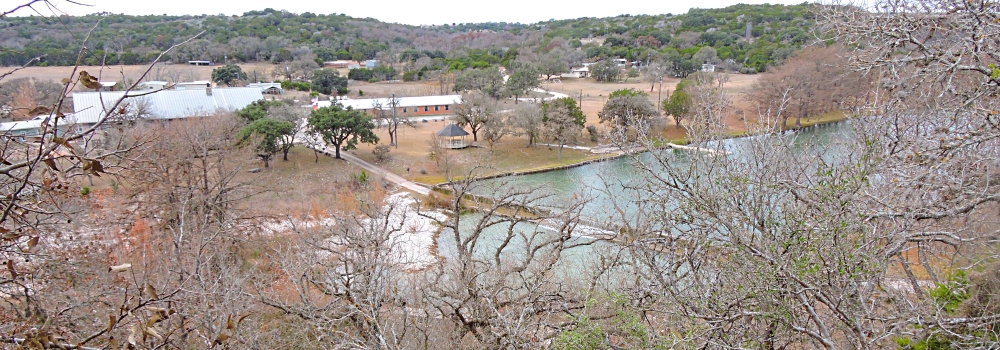
In December 2019, while stopping at an overlook along Johnston Creek near Kerrville, Texas, I enjoy the scenery and methinks, this is the Balcones fault, a geological structure that I had seen many times growing up but never understand what it was.
The Great Plains
The Edwards Plateau
(m2cont-nam-geog-09tx-4k-2019-1217.1106) Behind me is the Edwards Plateau
The Great Plains
The Edwards Plateau The Great Plains
The Edwards Plateau
(m2cont-nam-geog-09tx-4k-2019-1217.1109) Johnston Creek, Coastal Plains opposite

To go back to the Gallery Index, click on down arrow. Go Back Go to previous section
on this page

Thank you for visiting The Wayƒarers Journal.

See Ya above the Treeline!

This Page Last Updated: 31 March 2026


To continue to the next Episode Level page, Click here go to top
 
The Wayƒarers Journal © ::: Come Join the Journey ™
by Thom Buras
Come Join the Journey ™