|
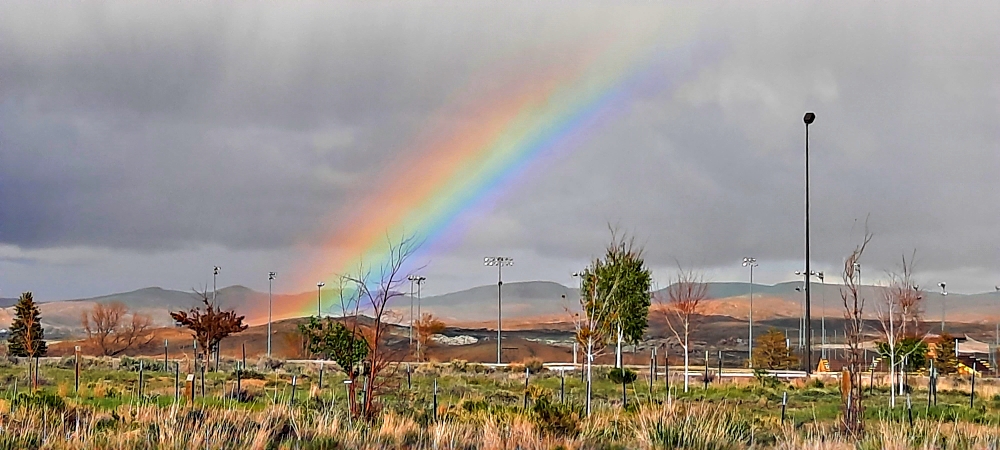
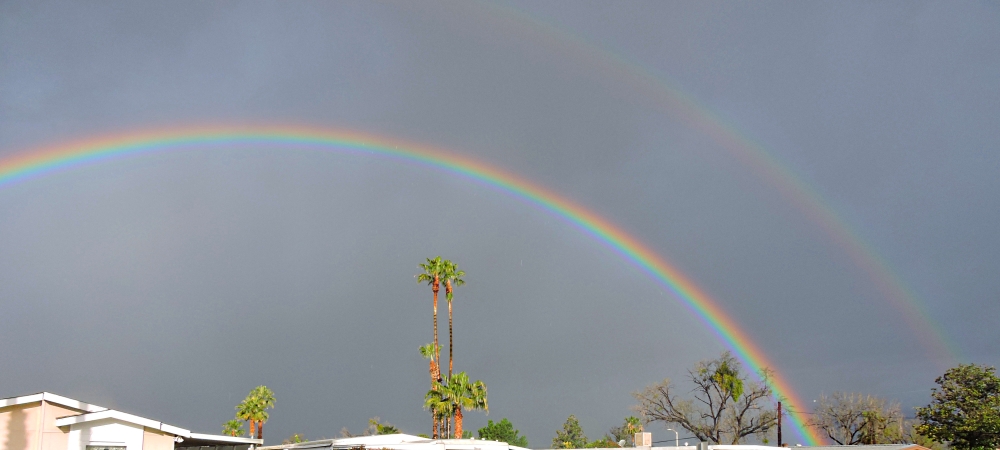
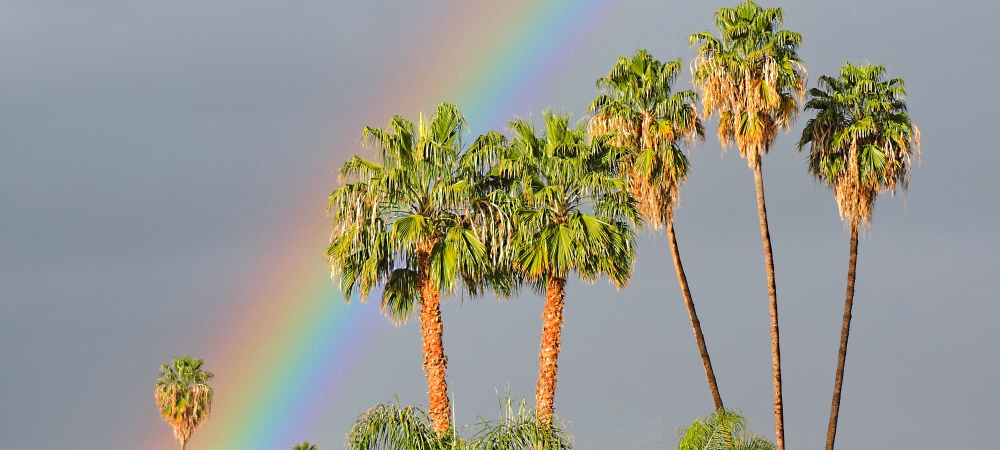
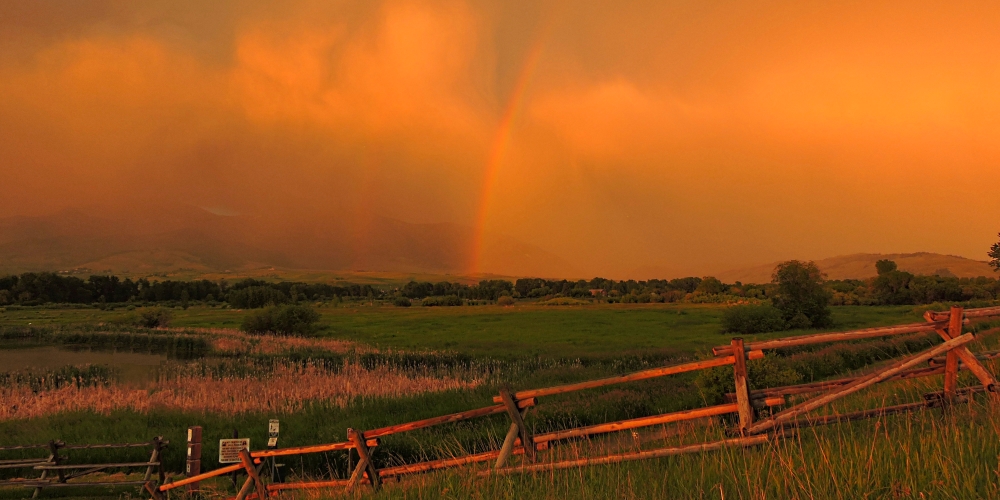
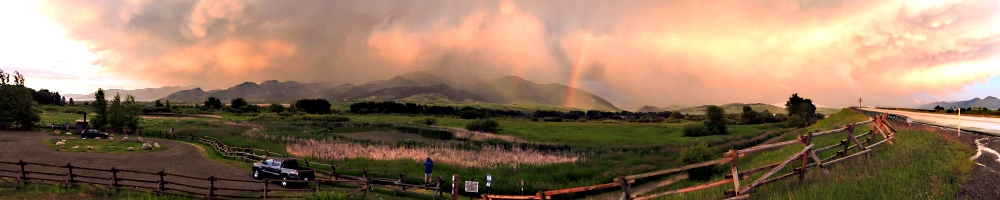
The primary rainbow, also known as a single rainbow is the most common of all rainbows and the one you will most likely see most often.
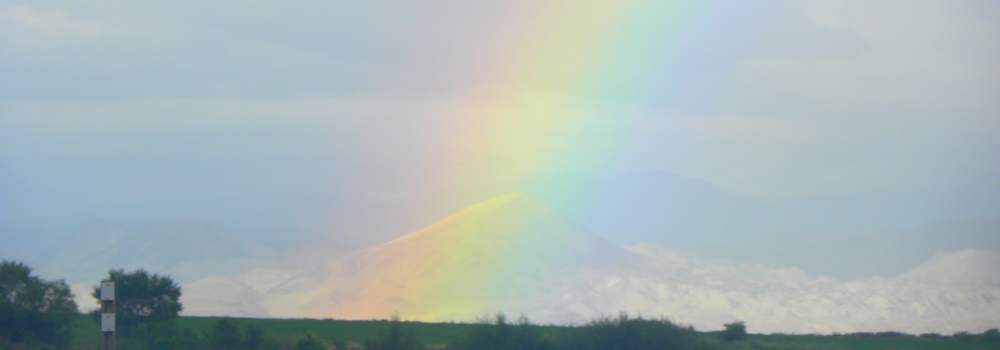
Red is always on the outermost edge of a primary rainbow with orange, yellow, green, blue, indigo and violet following progressively towards the center. The primary bow is a shining disk brightening very strongly towards its outer rim.
The sky outside and above the primary rainbow (or if a secondary rainbow exists, between the primary and secondary) is noticeably darker than elsewhere and this area is called the Alexander′s Dark Band.
Primary: Radius = 42°; Center = antisolar point; Brightness = 100% of primary.
Primary rainbows are about 42° in radius but how high they appear on the horizon varies considerably. If the sun is high in the sky,
three hands or more (over 30 degrees), and a rainbow is seen, then that rainbow will be just a small arc at the horizon. The higher the sun, the closer the top of the rainbow will be to the horizon.
However, as the sun becomes lower on the horizon, the rainbows will become proportionally higher.
Viewing Primary and Secondary Rainbows
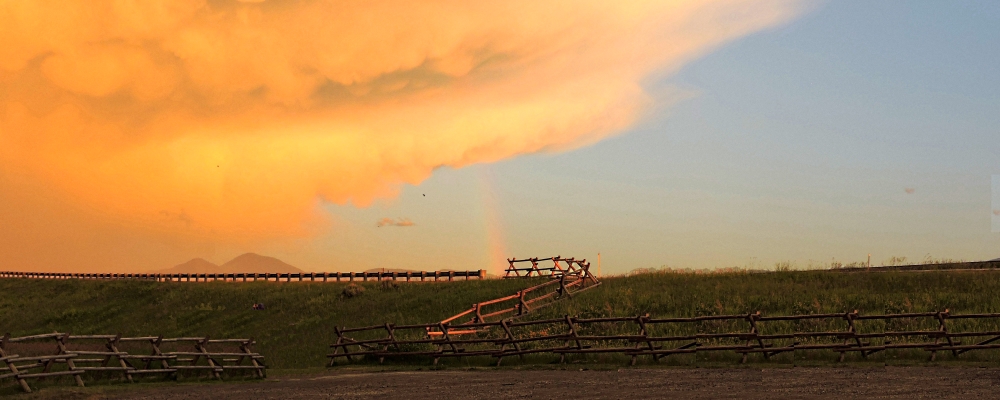
Early morning and late afternoon are the best times to see rainbows because they are most likely to occur when the sun is low in the sky.
Primary and secondary rainbows are always on the horizon with the exact center of any rainbow′s radius below the horizon and directly opposite the sun within the celestial sphere at a location called the
antisolar point.
|