|

|
|
|

|

|
|
The Rocky Mountains Region, Wyoming
|
|
|
The
Wyoming Basin Ecoregion


|
|
|
The Wyoming Basin Ecoregion covers approximately 49,774 square miles (128,914 square km) in Wyoming and parts of north western Colorado, northeastern Utah, southeastern Idaho, and southern Montana.
To the east of this ecoregion in Wyoming is the Northwestern Great Plains Ecoregion (9C). To the south and east is the Southern Rockies Ecoregion (6J) in Wyoming and Colorado. To the south is the Colorado Plateaus Ecoregion (7I). To the south and west are the Wasatch and Uinta Mountains in the Middle Rockies Ecoregion (). and on the north by the Middle Rockies Ecoregion and parts of the Montana Valley and Foothill Prairies Ecoregion.
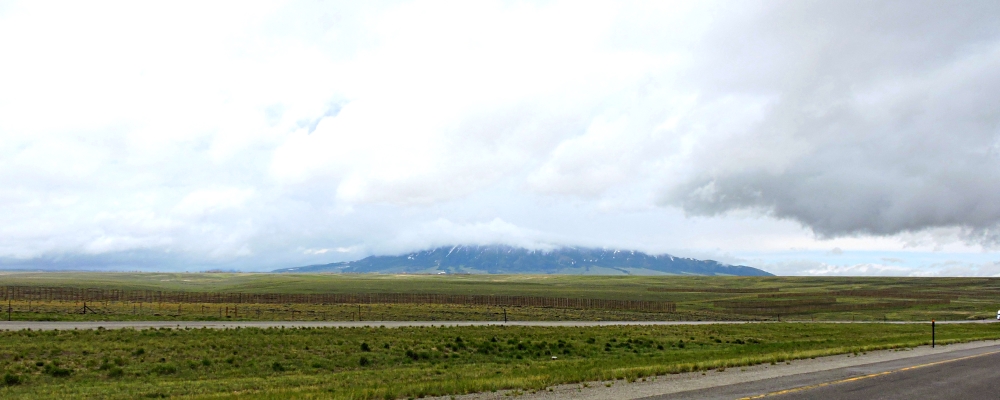
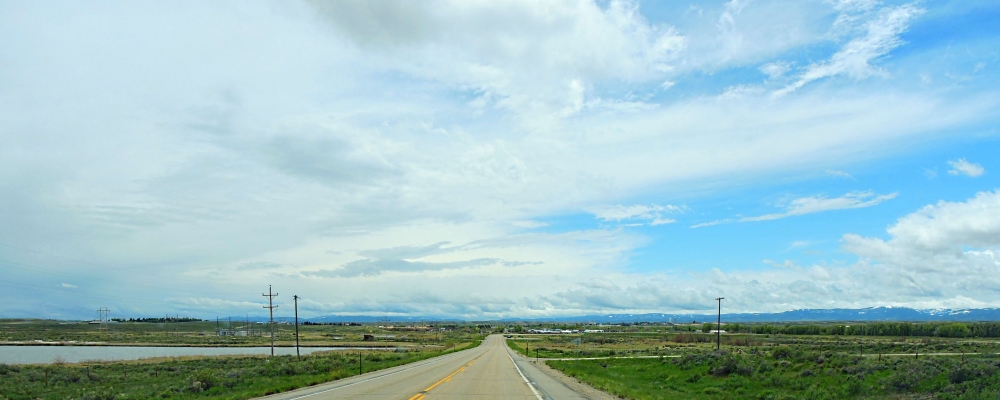
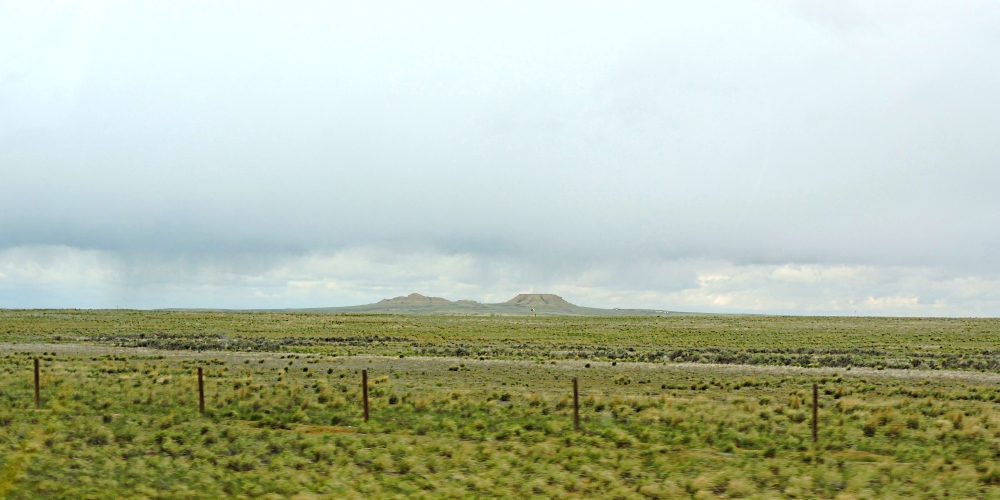
The ecoregion generally consists of broad intermountain basins dominated by arid grasslands and shrublands, as well as isolated hills and low mountains that merge to the south into a dissected plateau.
Climate
The climate in the Wyoming Basin Ecoregion is semi arid continental, and it is drier and windier than most places in the United States. The average annual precipitation from rain is 20 cm in Green River, Wyoming, 28 cm in Thermopolis, Wyoming, and 30 cm in Casper, Wyoming. The average annual snowfall is 74 cm in Green River, 76 cm in Thermopolis, and 198 cm in Casper. Average maximum monthly temperatures range from 32°C and above in July to near -17°C in January (Desert Research Institute, 2011). Nearly surrounded by forest-covered mountains, the region is some what drier than the Northwestern Great Plains Ecoregion to the northeast.
Flora
Vegetation consists of grasses intersperse d among big sagebrush (Artemisia tridentata). Higher elevations provide habitat to areas of quaking aspen (Populus tremuloides) and areas of coniferous forest. Open water is rare in this ecoregion, consisting mainly of reservoirs on the North Platte and Green Rivers, as well as on smaller rivers that traverse the area. Many minor waterways have been dammed to provide water for livestock. Stream beds are often dry in these riparian areas. Wetlands are especially rare and typically are riparian.
Much of the ecoregion is used for cattle and sheep grazing, often in managed pastures, and ranches are common, but many areas lack sufficient vegetation to support grazing. Agriculture is limited primarily to irrigated hay, corn, and sugar beets along river bottoms.
Early Settlement
This ecoregion has a rich history in the settlement of the American West. Several major trails cross through the ecoregion, as it provides a low pass across the Rocky Mountains. The Oregon Trail was used by settlers heading west during the 1840s to 1890s. The northern route of the Cherokee Trail, which crosses through southern Wyoming, was used primarily by travelers heading west to the California gold fields. The Mormon Trail was used between 1846 and 1857 by Mormons fleeing to Utah after persecution in the Midwest. The short-lived Pony Express also had stations lining an east-to-west route near the Oregon Trail. Evidence of many of these old trails is still visible. The Pony Express and overland movement along wagon trails started to decline with the increase in rail travel and telegraph use starting in the mid to late 1800s.
The Wyoming Basin Ecoregion Information:
Description:
This ecoregion is a high elevation broad basin located between mountain ranges and is interrupted by hills and low mountains and dominated by arid grasslands and shrublands.
Nearly surrounded by forest covered mountains, the region is somewhat drier than the Northern Great Plains (4C) to the northeast and does not have the extensive cover of pinyon-juniper woodland found in the Colorado Plateaus (2I) to the south.
Much of the region is used for livestock grazing, although many areas lack sufficient vegetation to support this activity.
The region contains major producing natural gas and petroleum fields. The Wyoming Basin also has extensive coal deposits along with areas of trona, bentonite, clay, and uranium mining.
Gannett Peak (13,810 feet) is located in the
Middle Rockies ecoregion, (Wind River Range) just to the north outside of the Wyoming Basin ecoregion.
Repeated journeys through this region has proved to me that this region is a high plateau with elevations from six thousand feet upwards to over seven thousand feet. Too, except for some natural occurring springs, this would be one of the driest areas in North America.
Location:
Coordinates:
44.38, -108.04
Elevation:
4000 feet
Geographical Region:
Rocky Mountains
The Ancients
Fossils:
Fossil Butte National Monument
The Earth
Flaming Gorge Dam and National Recreation Area
Harris Fork of the Green Rivers at Black Fork (41.5866123, -109.9765683)
Local Parks:
Pilot Butte Wild Horse Scenic Loop
North Access: US 191 at 14 Mile road (41.7435267, -109.3221961)
Pilot Butte Wild Horse Scenic Loop
West Access: Green River, Wyoming (41.5398255, -109.4715156)
The Modern Man
The Steps
Steps Afoot
Wyoming Footpath Journey Index
Steps Afield
Wyoming Roadpath Journey Index
The Appendixes
|
| |
|
The 2024 Journey,
Wyoming Basin Ecoregion
|
|
|
(Day 93 TS) 48°F. 6:00 am, sunny
Journey On, Day 93
Overnighting in a parking lot
Awake, climb into the front seat, start the engine, drive to the w-mart for a quick stop to use the facilities and then I return to the jammer, drive out of the parking lot, turn right on US 287 and drive north along the highway with the Great Plains on my right to the east with the foothills of the Rockies on my left. I continue in the foothills all the way to Wyoming and after crossing into Wyoming, continue in the Rocky Mountain foothills to Laramie.
Once, I arrive in Laramie, Wyoming, I turn right onto IH 80 and drive to the exit 316 and take Grand Avenue to the Tumbleweed Express af-mart where I fill up my fuel tank for $2.99 per gallon, the cheapest I have seen gasoline in many days. I found this low-prices af-mart several years ago and keep coming back here. Then, I drive on Grand Avenue the rest of the way through Laramie and drive under the IH 80 overpass onto SH 130 westbound, the
Snowy Range Scenic Highway through the
Medicine Bow National Forest, but after driving about five miles, I see a sign informing me that SH 130 is closed in about 30 miles west of here.
So, I will not get to enjoy the Snowy Range Scenic Byway this journey, and I make a u-turn, return the five miles back to IH 80 where I drive on IH 80 at entrance # 311 and then continue my travels west on the interstate for some 76 miles where I take exit 235, and here turn back onto the other end of SH 130.
After I drive the twenty-one miles south into Saratoga, Wyoming, I stop at the Hobo Hot Springs for some soak time in this free hot pool.

After the hot soak, I gather my things and walk up the stairs to the mens dressing room, which room also has a hot shower. I take off my wet shorts, grab my soap and then get into the hot shower to lather up and clean off any remaining dirt and/or body oil, after which I don clean, dry clothes.
Then, I pack out of the hot springs, drive to main street, which is SH 130 and stop at a local restaurant for my breakfast. Soon after, I am back on the road, driving first north on SH 130 back to IH 80 and here turn left and then continue my drive west for another 135 miles and arrive in Rock Springs, Wyoming.
|
| |
|
The 2022 Journey,
Wyoming Basin Ecoregion
|
|
|
(Day 373 TN) 50°F. 6:30 am, sunny, partly cloudy
Overnighting in a parking lot
Awake, drive to the ff-mart and sit with Gordon to drink coffee until the bank opens, when I drive to the bank to acquire the moneys that have just been deposited into my account. Later, I drive north on US 287 into Wyoming, and turn east on IH 80 to exit 316 where I exit north onto Grand Avenue and follow this road into Laramie until arriving at a w-mart.
I stay here in Laramie so that I can use my zoom to connect to the meetings Thursday evening and Sunday morning. After the Sunday morning meeting, I pack out of Laramie and begin my drive to Rock Springs, which will be my next respite for attending the meetings.

|
| |
|
The 2017 Journey,
Wyoming Basin Ecoregion
|
|
|
On the Road to the Path of Totality
(Day
634 TB) 40°F. 6:00 am, sunny
Overnighting in a roadside pullout
Up early, start the jammer and continue east on SR 28 towards the path of totality. When I arrive at US 287, I turn north and drive into the path at about eight this morning. Soon after, I arrive in Lander, Wyoming where I stop at a ff-mart for coffee, breakfast burrito and check on my com. Then, at nine, I leave the mart, gas up, buy a pair of eclipse glasses and continue my drive to Burris, Wyoming which is in the middle of the path and has two minutes and twenty-two seconds of shadow. I arrive at US 26 turn east and drive thru Crowheart, and arrive in Burris at nine-forty this morning just about half an hour before the eclipse begins.
By ten o'clock, I have my camera set and I am ready for the eclipse with only minutes to spare. Then, with my eclipse glasses on, I begin looking at the sun and see the first indication of the encroaching moon in the upper right of the sun. When trying to photograph the eclipse, I immediately see the need for a filter for my camera and think to use the eclipse glasses which work fairly well. So, I begin using the glasses to both look at the eclipse and to photograph it.
However, the results are anything but what I have wished to achieve and realize that there must be an art to doing this photography correctly.
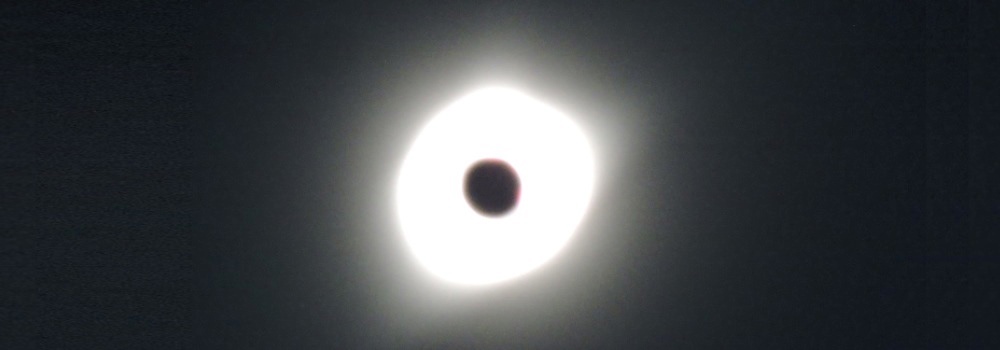
When the moon shadow arrives in Burris, Wyoming, it is the most unusual experience I have ever had. At the very moment of totality, when the area goes dark, I hear the collective cheers of awe and satisfaction from numerous people somewhere south of me.
Looking up from my camera, I see that the entire area has dimmed considerable. I suppose it is likened to the amount or light there is during a full moon, and the glow from the sun has colored the horizon as if it was the suntouch.
I then begin taking photos of the totality and the sunglow on the horizon but all too soon, I run out of time.
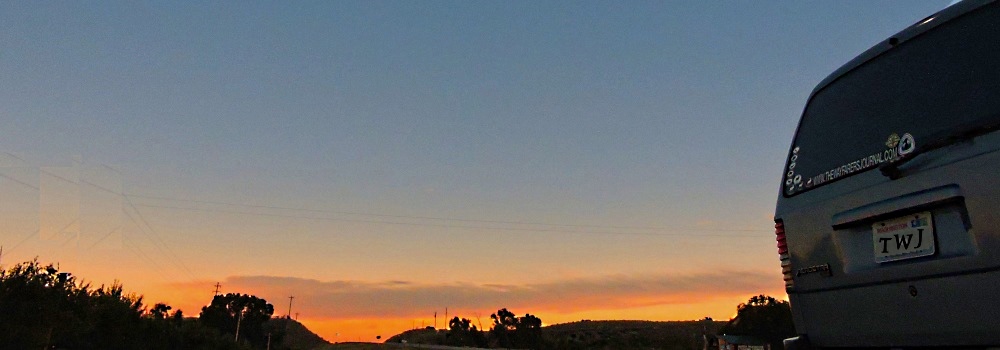
This is the strangest phenomena I have ever seen and methinks these one hundred and forty-two seconds within the moon shadow have caused me to become an umbraphile, (literally a shadow lover) and do so wish to experience this again in the future.
I only have time to take just a few photos during the totality, and then before I realize it, the moon shadow has left Burris, Wyoming for places east of here, the sun comes back out from behind the moon into direct view and I am bludgeoned right back into the sunlight.
|
| |
|
The 2016 Journey,
Wyoming Basin Ecoregion
|
|
|
(Day 258 TB) 56°F. 6:00 am
Overnighting in a parking lot
Elevation 6388 feet
Upon awaking, I drive down to the w-mart, park and go in for coffee and WiFi. I make one more correction to my book and then upload it once again. Then, I drive west on IH 80 and soon get off just after passing the Green River taking SR 372 north in a dry desert-like landscape.
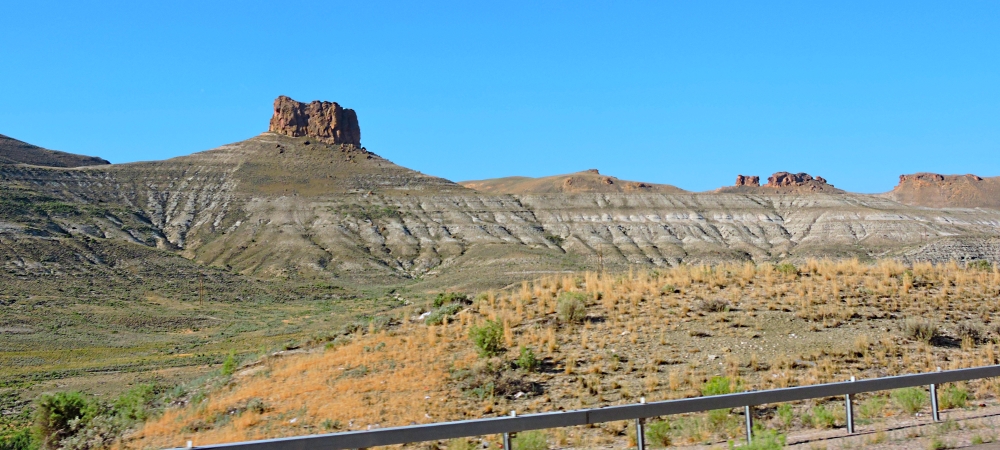
When I arrive at the Seedskadee Wildlife Refuge along the
Green River, I see several animals, including a
bald eagle, a
pigmy rabbit,
great blue heron,
Canada geese, and in the distance several
white pelicans.
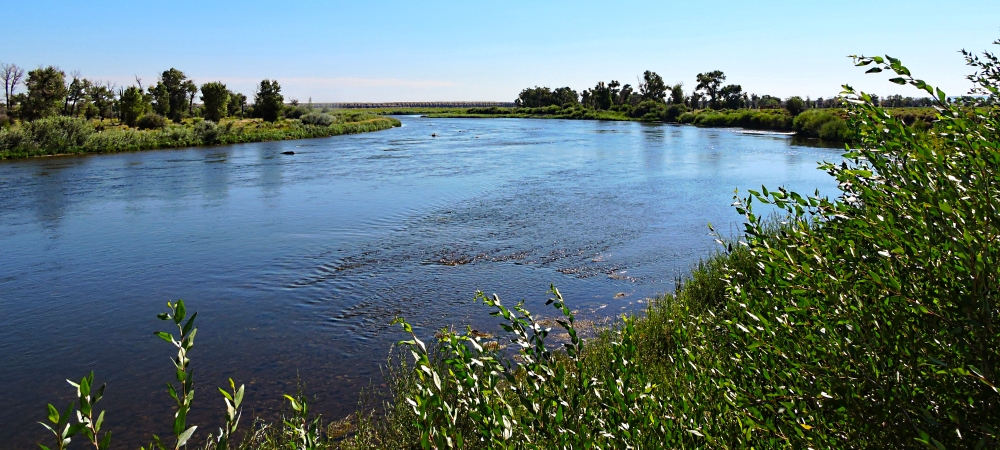
Here I turn east on SR 28 and drive to the
Green River bridge crossing where I get off of the highway and drive a short distance into the park to see the location of the old Lombard Ferry that helped many an emigrant to get to the west side of the river, first the Oregon bound wagons, then Brigham Young in 1847.
|
| |
| |
|
To go back to the Gallery Index, click on down arrow.
|
|
|
Thank you for visiting
The Wayƒarers Journal.
| |
See Ya above the Treeline!
| |
This Page Last Updated: 31 March 2026
|
|
|
|
To continue to the next Episode Level page,
Click here

|
|
| |