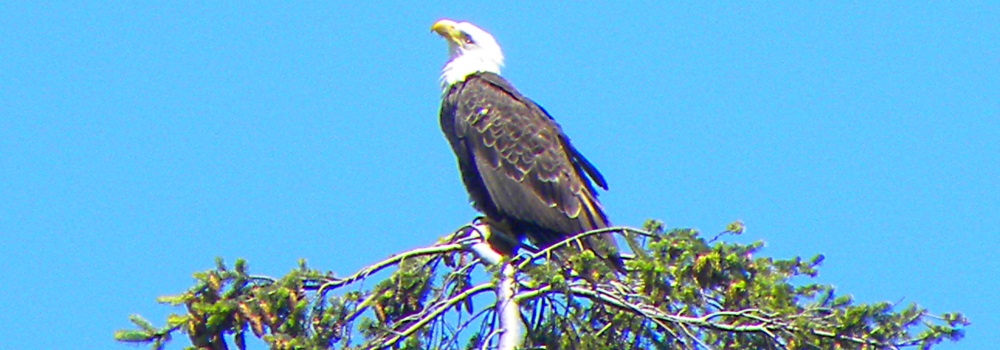
Taxonomy:
Kingdom:
Animalia
Phylum:
Chordata
Class:
Aves
Order:
Accipitriformes
Family:
Acipitridae
Genus:
Haliaeetus
Species:
Leucocephalus
Common Name:
Bald Eagle
Subspecies:
Description
Length:
36 inches
Wingspan:
84 inches
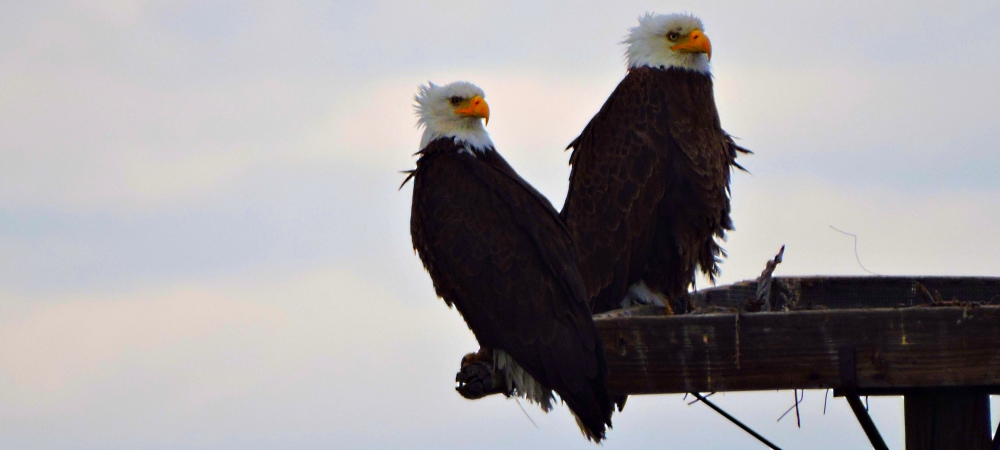
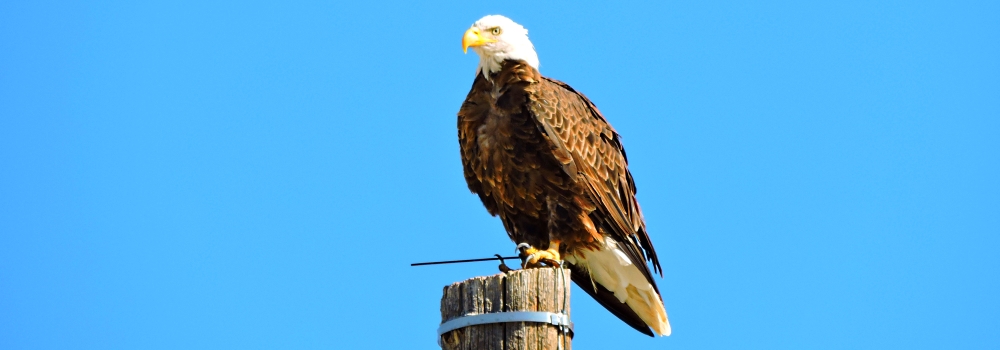
Male: White head, neck and tail. Brown body. Large yellow bill.
In flight, the head and tail projects about equally front and rear.
Female: are identical to the male
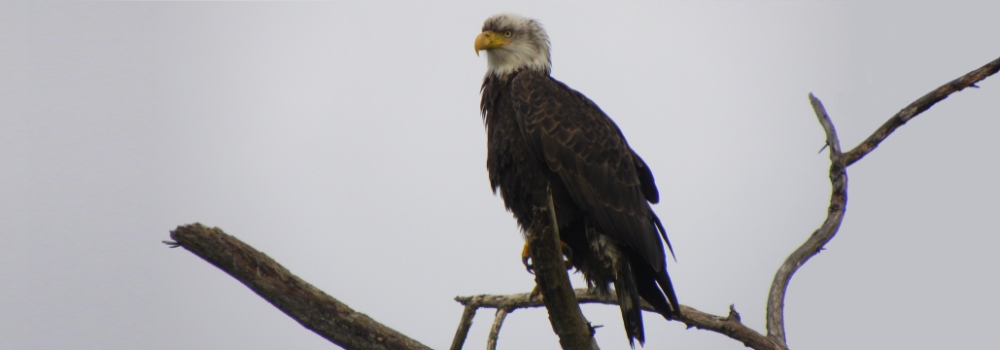
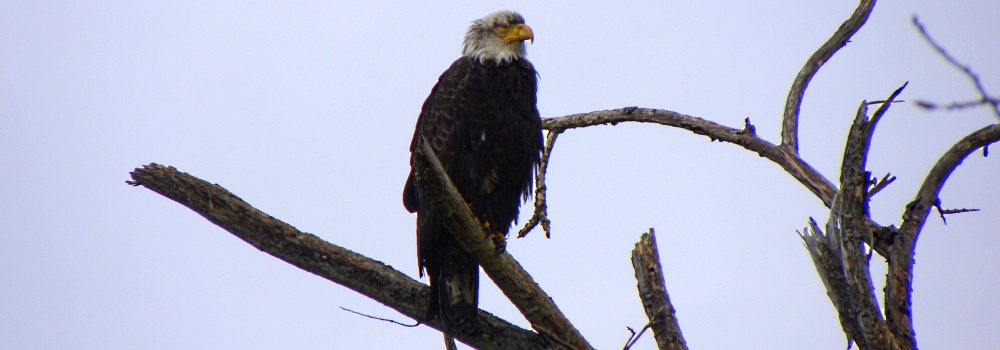
Juvenile: Longer tail feathers, variable white on underbody and flight feathers.
Acquires adult plumage by forth or fifth year.
Habitat
Concentrations are found at lakes and reservoirs.
Preys on fish and fresh carrion but also takes waterfowl and small mammals,
including small dogs and cats in suburban nears forested areas.
Range
The range of the bald eagle is then entire North American Continent and are found year round in the Pacific Coast region of Alaska, Yukon, British Columbia, Washington, Oregon and northern Californi.
Too, this eagle can be found year round in the Basin and Range region as well as the Rocky Mountain region of southern British Columbia, Washington, Oregon, Idaho, Montana, Wyoming, and Colorado. Also, the bald eagle can be found year round on the coasts of east Texas, west Louisiana, Alabama, Florida, and all of the east coast except North Carolina, as well as the east coast of Canada and all the Great lakes.
Migratory areas include the entire rest of North America and winter location include the North Carolina Appalachians, the Mississippi river valley areas, and south central Arizona, usually at lakes and reservoirs.
Nesting periods find many of the bald eagle in the southern reaches of Canada and up through the Yukon, Northwest Territory and inland Alsaka.
Comparison:
Adult bald eagle are distinctive from the golden eagle but the immature birds
are very similar, both have white in the wings and tails.
Discussion
This bird was serious reduced by human encroachment, pesticides, shootings
but is now recovering with winter concentration developing widely at
lakes and reservoirs.